Entries
Filters: Sorted by date
Can coding agents relicense open source through a “clean room” implementation of code?
Over the past few months it’s become clear that coding agents are extraordinarily good at building a weird version of a “clean room” implementation of code.
[... 1,349 words]Something is afoot in the land of Qwen
I’m behind on writing about Qwen 3.5, a truly remarkable family of open weight models released by Alibaba’s Qwen team over the past few weeks. I’m hoping that the 3.5 family doesn’t turn out to be Qwen’s swan song, seeing as that team has had some very high profile departures in the past 24 hours.
[... 705 words]I vibe coded my dream macOS presentation app
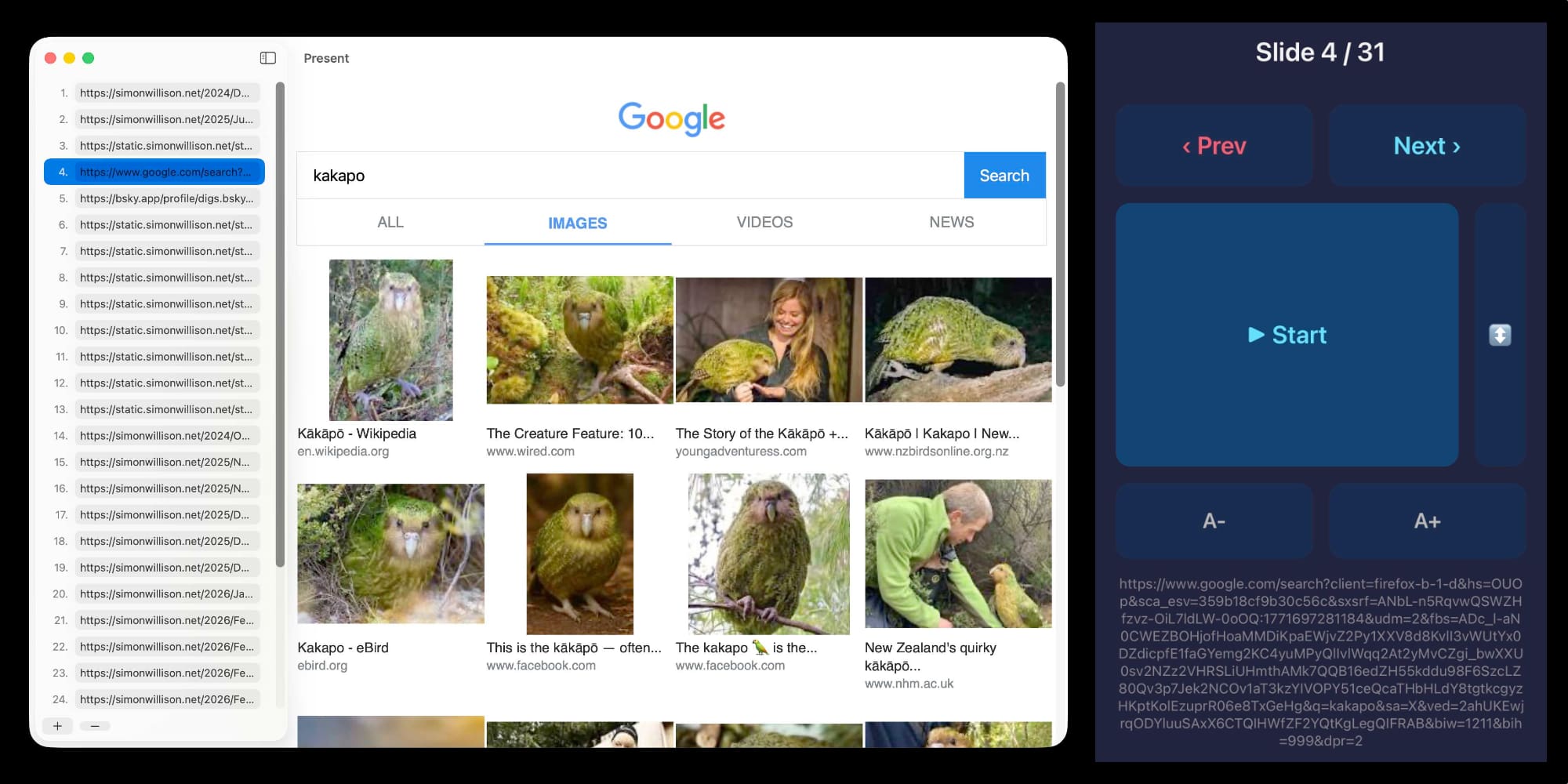
I gave a talk this weekend at Social Science FOO Camp in Mountain View. The event was a classic unconference format where anyone could present a talk without needing to propose it in advance. I grabbed a slot for a talk I titled “The State of LLMs, February 2026 edition”, subtitle “It’s all changed since November!”. I vibe coded a custom macOS app for the presentation the night before.
[... 1,613 words]Writing about Agentic Engineering Patterns
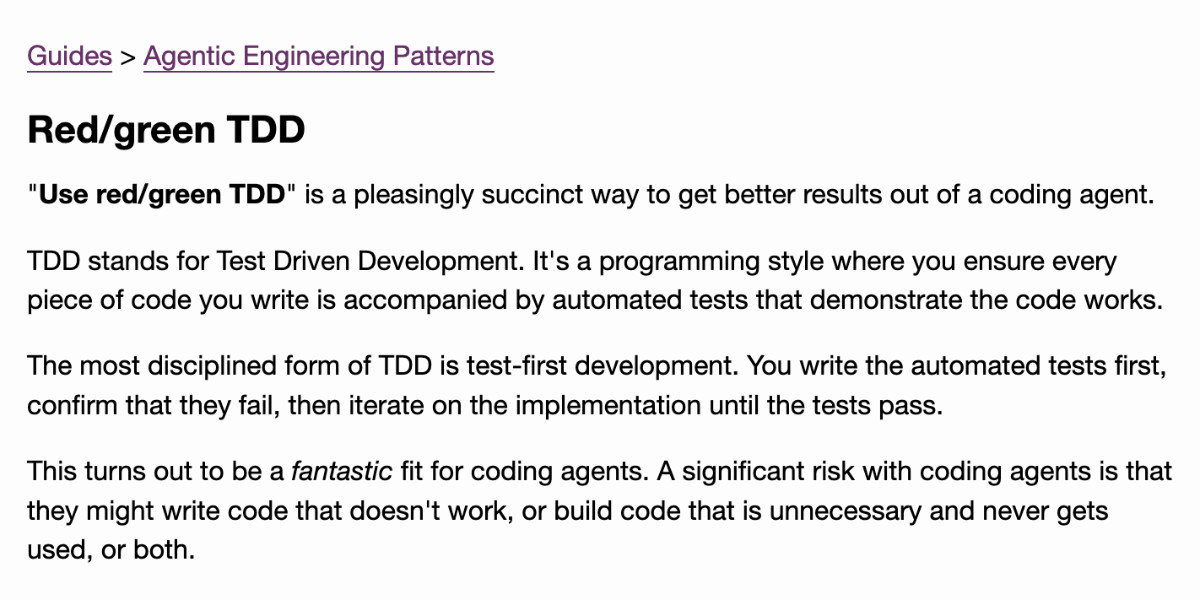
I’ve started a new project to collect and document Agentic Engineering Patterns—coding practices and patterns to help get the best results out of this new era of coding agent development we find ourselves entering.
[... 554 words]Adding TILs, releases, museums, tools and research to my blog
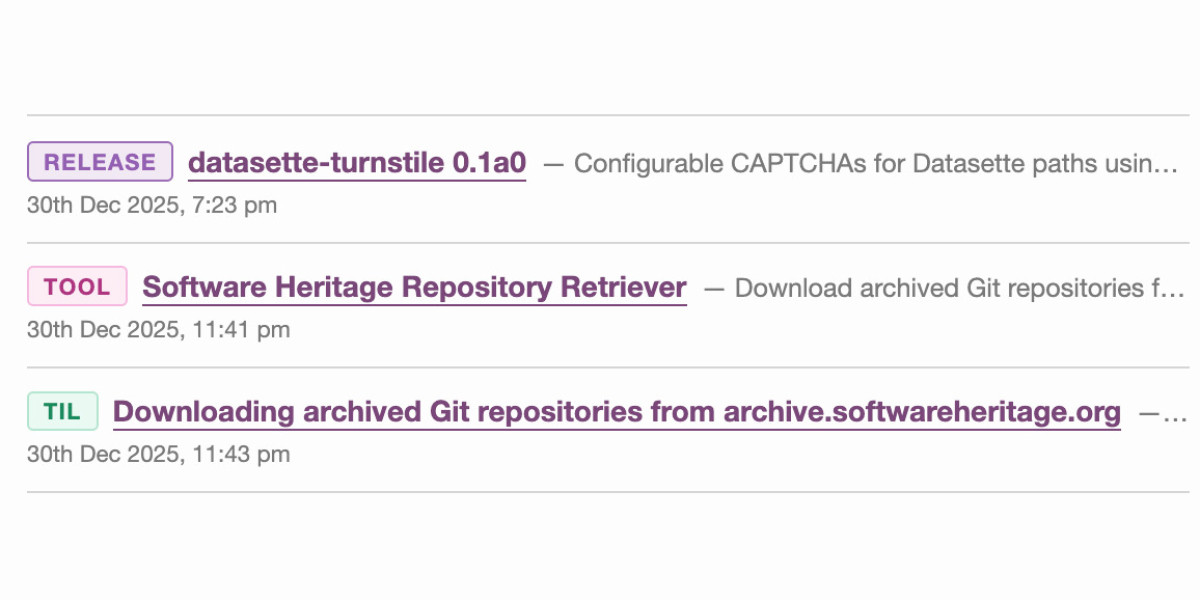
I’ve been wanting to add indications of my various other online activities to my blog for a while now. I just turned on a new feature I’m calling “beats” (after story beats, naming this was hard!) which adds five new types of content to my site, all corresponding to activity elsewhere.
[... 614 words]Two new Showboat tools: Chartroom and datasette-showboat
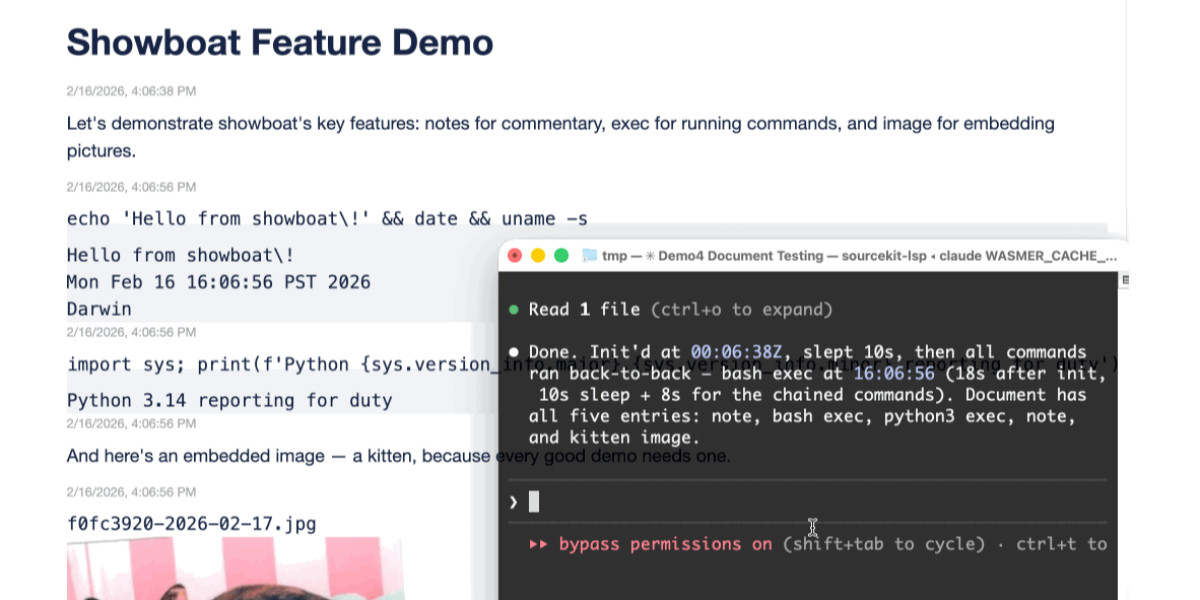
I introduced Showboat a week ago—my CLI tool that helps coding agents create Markdown documents that demonstrate the code that they have created. I’ve been finding new ways to use it on a daily basis, and I’ve just released two new tools to help get the best out of the Showboat pattern. Chartroom is a CLI charting tool that works well with Showboat, and datasette-showboat lets Showboat’s new remote publishing feature incrementally push documents to a Datasette instance.
[... 1,756 words]Deep Blue

We coined a new term on the Oxide and Friends podcast last month (primary credit to Adam Leventhal) covering the sense of psychological ennui leading into existential dread that many software developers are feeling thanks to the encroachment of generative AI into their field of work.
[... 971 words]The evolution of OpenAI’s mission statement
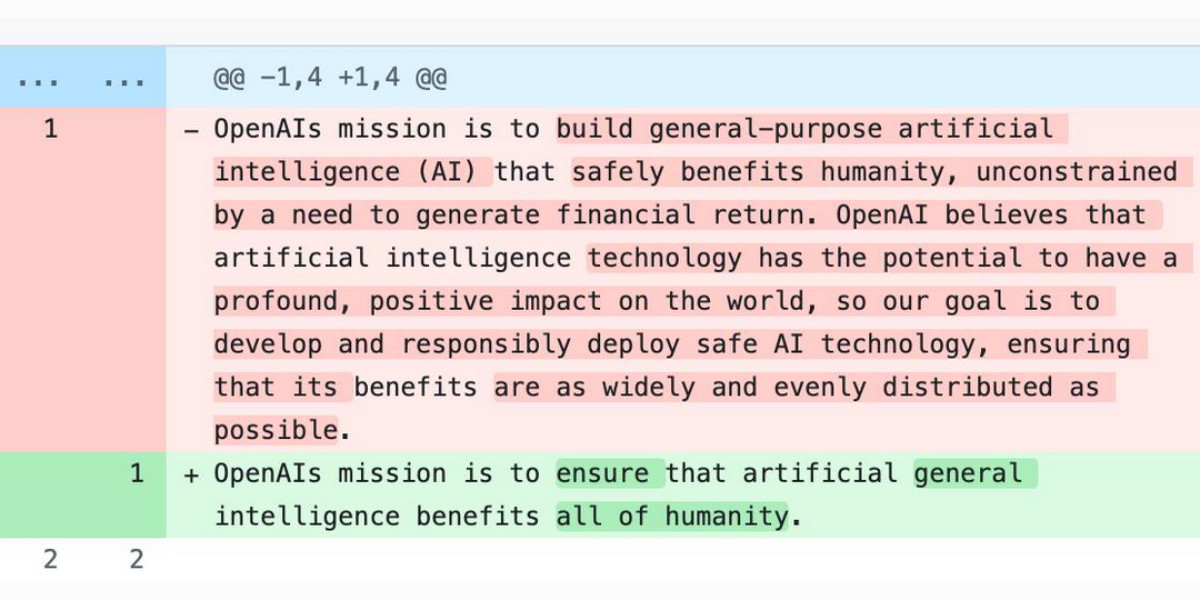
As a USA 501(c)(3) the OpenAI non-profit has to file a tax return each year with the IRS. One of the required fields on that tax return is to “Briefly describe the organization’s mission or most significant activities”—this has actual legal weight to it as the IRS can use it to evaluate if the organization is sticking to its mission and deserves to maintain its non-profit tax-exempt status.
[... 680 words]Introducing Showboat and Rodney, so agents can demo what they’ve built
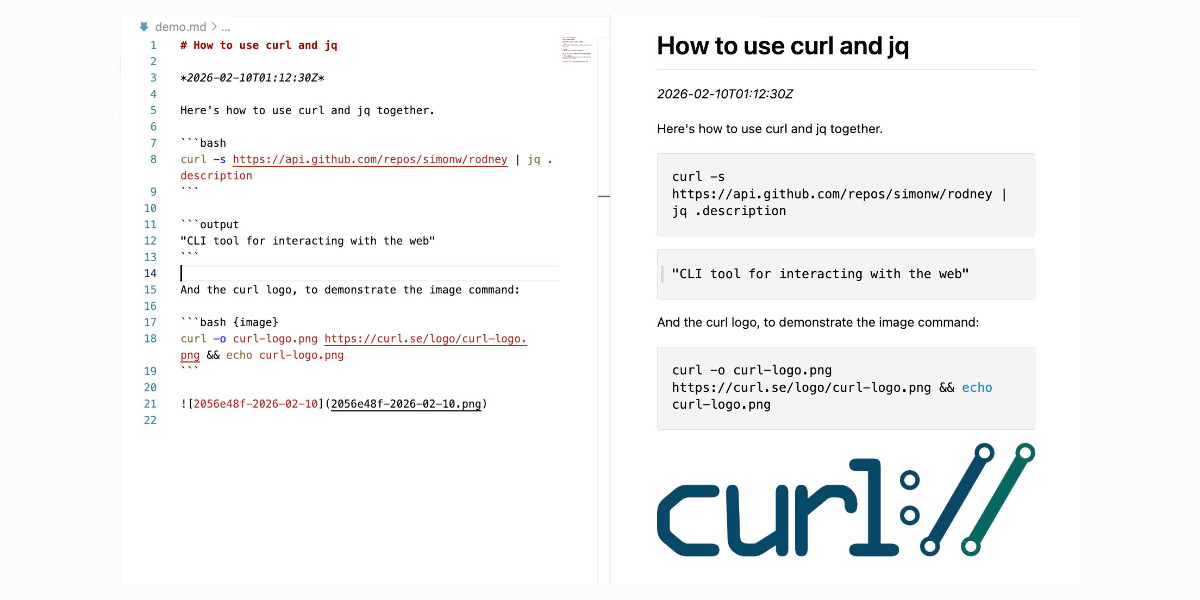
A key challenge working with coding agents is having them both test what they’ve built and demonstrate that software to you, their supervisor. This goes beyond automated tests—we need artifacts that show their progress and help us see exactly what the agent-produced software is able to do. I’ve just released two new tools aimed at this problem: Showboat and Rodney.
[... 2,023 words]How StrongDM’s AI team build serious software without even looking at the code
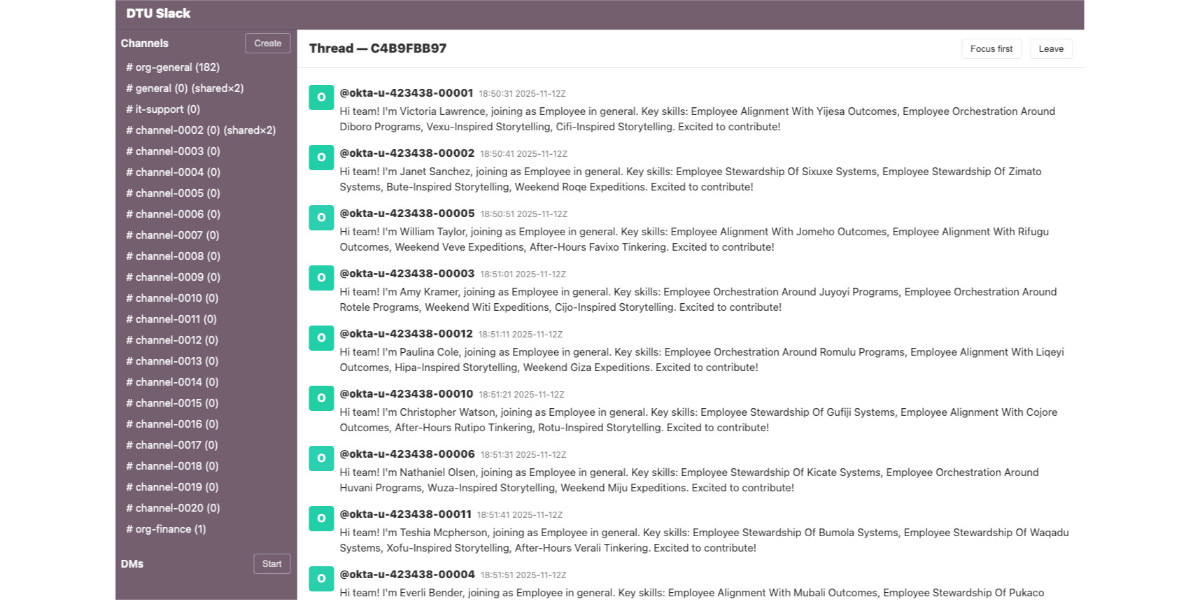
Last week I hinted at a demo I had seen from a team implementing what Dan Shapiro called the Dark Factory level of AI adoption, where no human even looks at the code the coding agents are producing. That team was part of StrongDM, and they’ve just shared the first public description of how they are working in Software Factories and the Agentic Moment:
[... 1,664 words]Running Pydantic’s Monty Rust sandboxed Python subset in WebAssembly
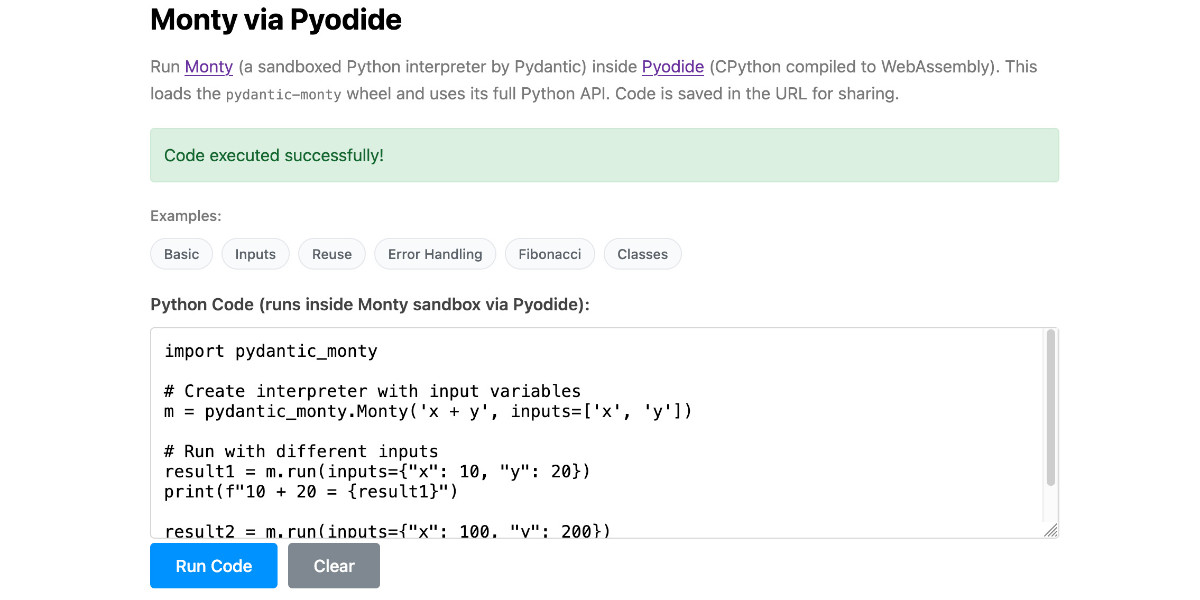
There’s a jargon-filled headline for you! Everyone’s building sandboxes for running untrusted code right now, and Pydantic’s latest attempt, Monty, provides a custom Python-like language (a subset of Python) in Rust and makes it available as both a Rust library and a Python package. I got it working in WebAssembly, providing a sandbox-in-a-sandbox.
[... 854 words]Distributing Go binaries like sqlite-scanner through PyPI using go-to-wheel
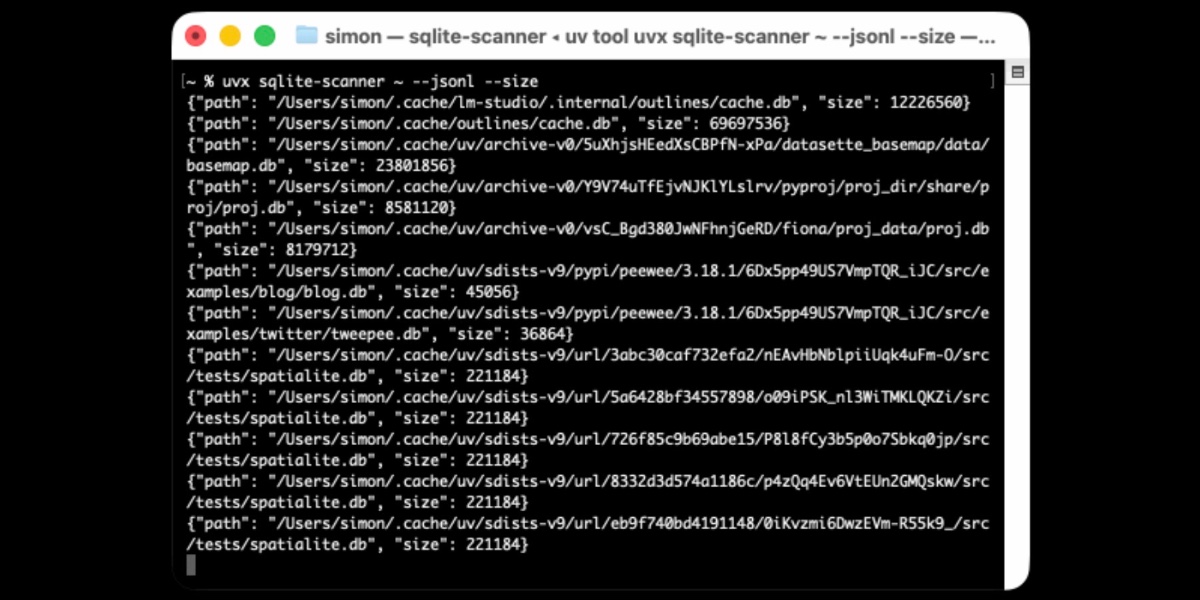
I’ve been exploring Go for building small, fast and self-contained binary applications recently. I’m enjoying how there’s generally one obvious way to do things and the resulting code is boring and readable—and something that LLMs are very competent at writing. The one catch is distribution, but it turns out publishing Go binaries to PyPI means any Go binary can be just a uvx package-name call away.
Moltbook is the most interesting place on the internet right now
The hottest project in AI right now is Clawdbot, renamed to Moltbot, renamed to OpenClaw. It’s an open source implementation of the digital personal assistant pattern, built by Peter Steinberger to integrate with the messaging system of your choice. It’s two months old, has over 114,000 stars on GitHub and is seeing incredible adoption, especially given the friction involved in setting it up.
[... 1,307 words]Adding dynamic features to an aggressively cached website
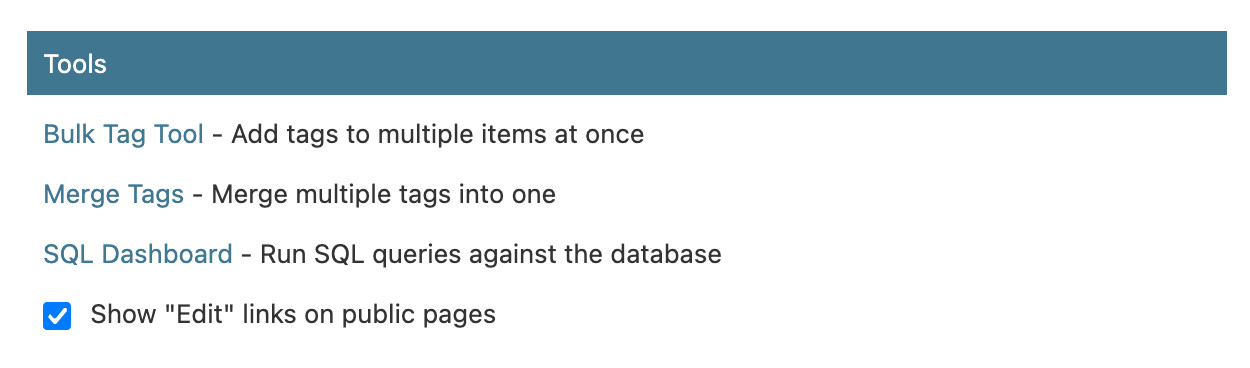
My blog uses aggressive caching: it sits behind Cloudflare with a 15 minute cache header, which guarantees it can survive even the largest traffic spike to any given page. I’ve recently added a couple of dynamic features that work in spite of that full-page caching. Here’s how those work.
[... 1,145 words]ChatGPT Containers can now run bash, pip/npm install packages, and download files
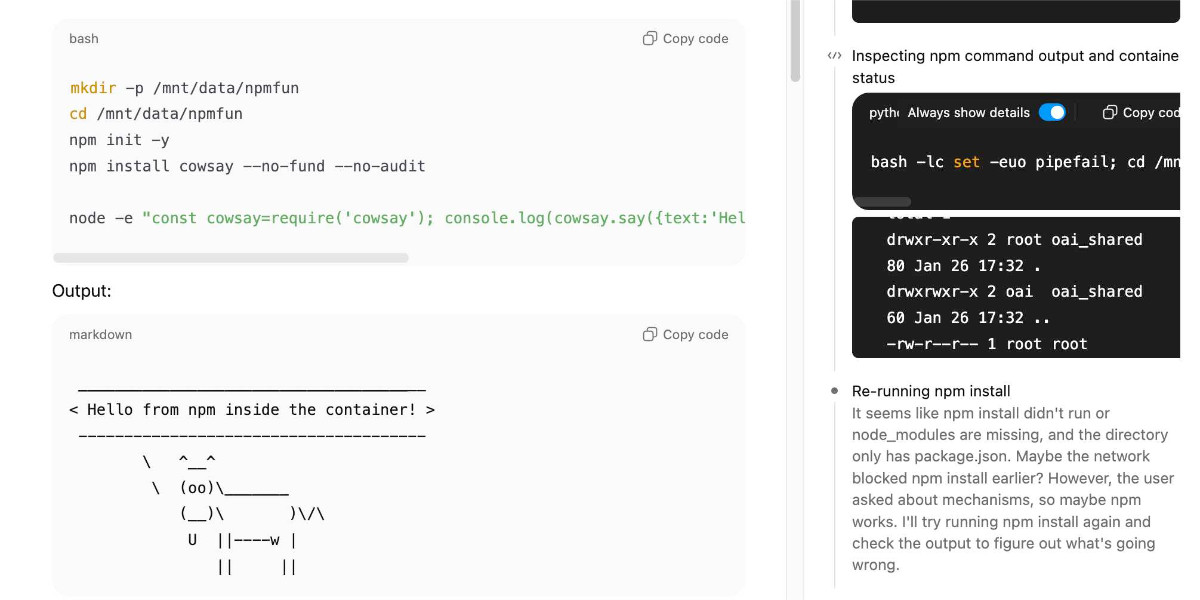
One of my favourite features of ChatGPT is its ability to write and execute code in a container. This feature launched as ChatGPT Code Interpreter nearly three years ago, was half-heartedly rebranded to “Advanced Data Analysis” at some point and is generally really difficult to find detailed documentation about. Case in point: it appears to have had a massive upgrade at some point in the past few months, and I can’t find documentation about the new capabilities anywhere!
[... 3,019 words]Wilson Lin on FastRender: a browser built by thousands of parallel agents
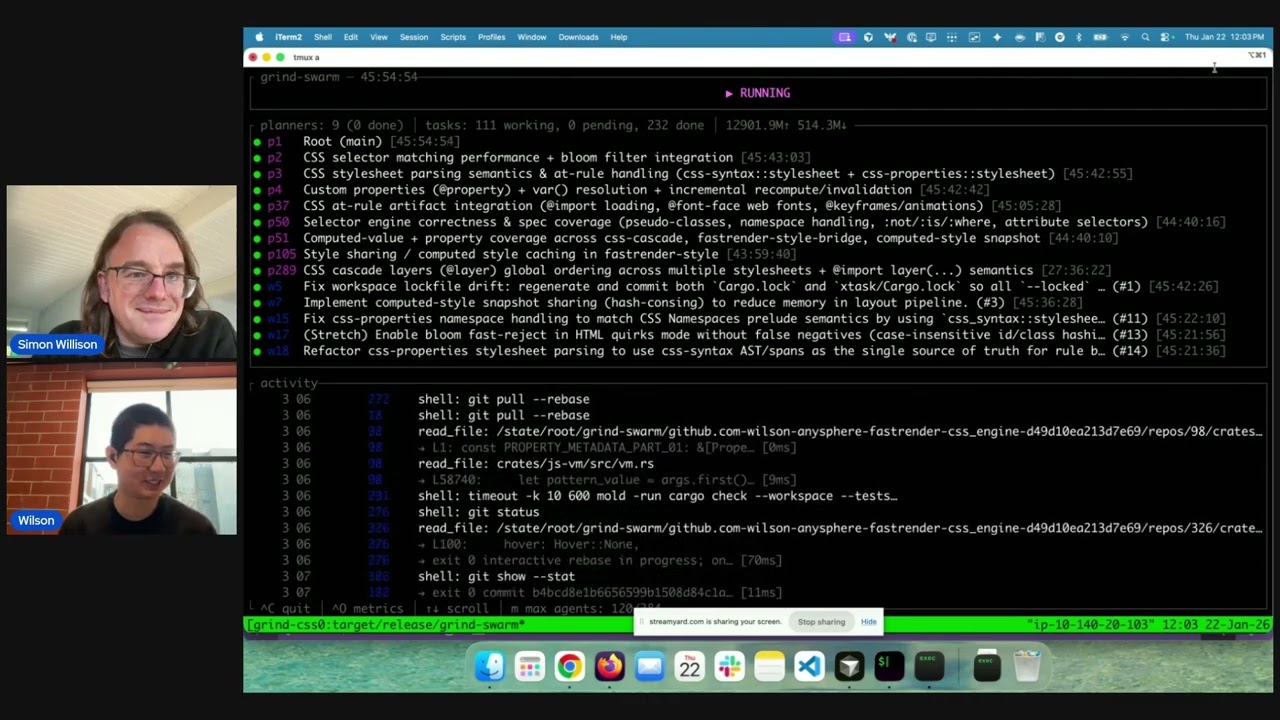
Last week Cursor published Scaling long-running autonomous coding, an article describing their research efforts into coordinating large numbers of autonomous coding agents. One of the projects mentioned in the article was FastRender, a web browser they built from scratch using their agent swarms. I wanted to learn more so I asked Wilson Lin, the engineer behind FastRender, if we could record a conversation about the project. That 47 minute video is now available on YouTube. I’ve included some of the highlights below.
[... 2,243 words]First impressions of Claude Cowork, Anthropic’s general agent
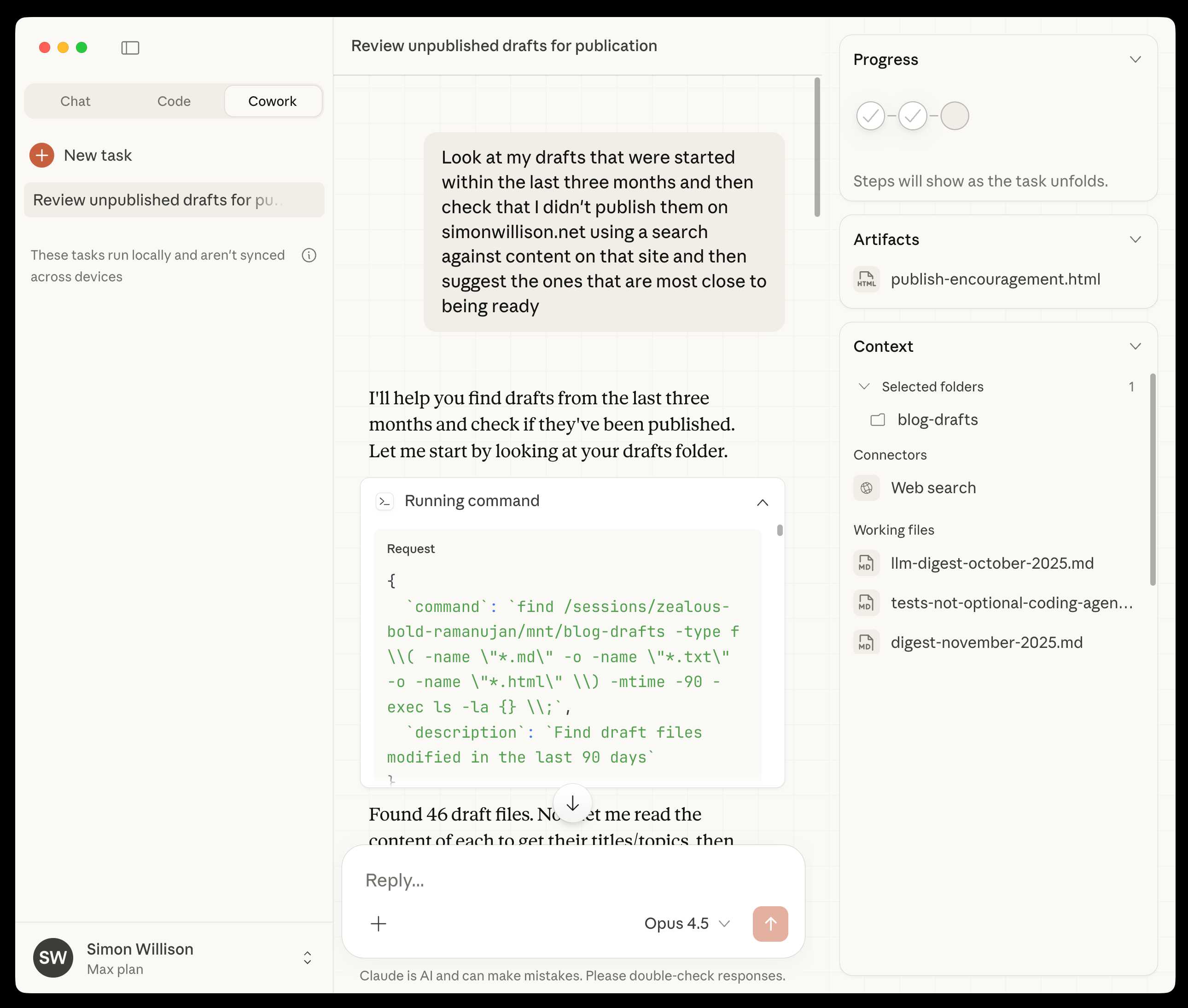
New from Anthropic today is Claude Cowork, a “research preview” that they describe as “Claude Code for the rest of your work”. It’s currently available only to Max subscribers ($100 or $200 per month plans) as part of the updated Claude Desktop macOS application. Update 16th January 2026: it’s now also available to $20/month Claude Pro subscribers.
[... 1,863 words]My answers to the questions I posed about porting open source code with LLMs
Last month I wrote about porting JustHTML from Python to JavaScript using Codex CLI and GPT-5.2 in a few hours while also buying a Christmas tree and watching Knives Out 3. I ended that post with a series of open questions about the ethics and legality of this style of work. Alexander Petros on lobste.rs just challenged me to answer them, which is fair enough! Here’s my attempt at that.
[... 1,034 words]Fly’s new Sprites.dev addresses both developer sandboxes and API sandboxes at the same time
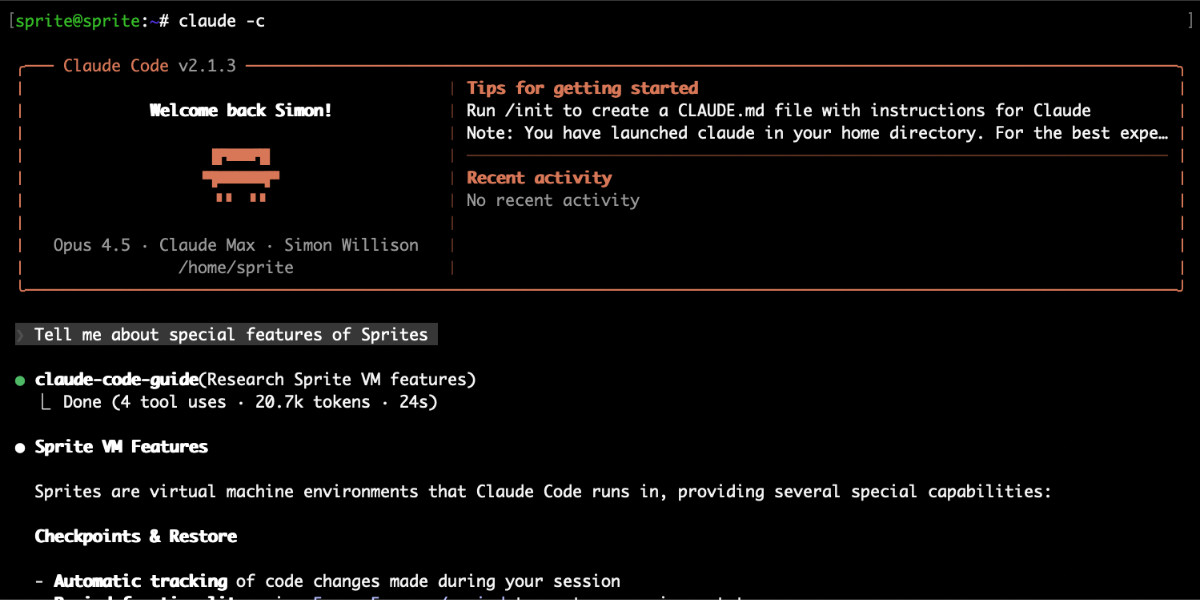
New from Fly.io today: Sprites.dev. Here’s their blog post and YouTube demo. It’s an interesting new product that’s quite difficult to explain—Fly call it “Stateful sandbox environments with checkpoint & restore” but I see it as hitting two of my current favorite problems: a safe development environment for running coding agents and an API for running untrusted code in a secure sandbox.
[... 1,560 words]LLM predictions for 2026, shared with Oxide and Friends

I joined a recording of the Oxide and Friends podcast on Tuesday to talk about 1, 3 and 6 year predictions for the tech industry. This is my second appearance on their annual predictions episode, you can see my predictions from January 2025 here. Here’s the page for this year’s episode, with options to listen in all of your favorite podcast apps or directly on YouTube.
[... 1,773 words]Introducing gisthost.github.io
I am a huge fan of gistpreview.github.io, the site by Leon Huang that lets you append ?GIST_id to see a browser-rendered version of an HTML page that you have saved to a Gist. The last commit was ten years ago and I needed a couple of small changes so I’ve forked it and deployed an updated version at gisthost.github.io.
2025: The year in LLMs
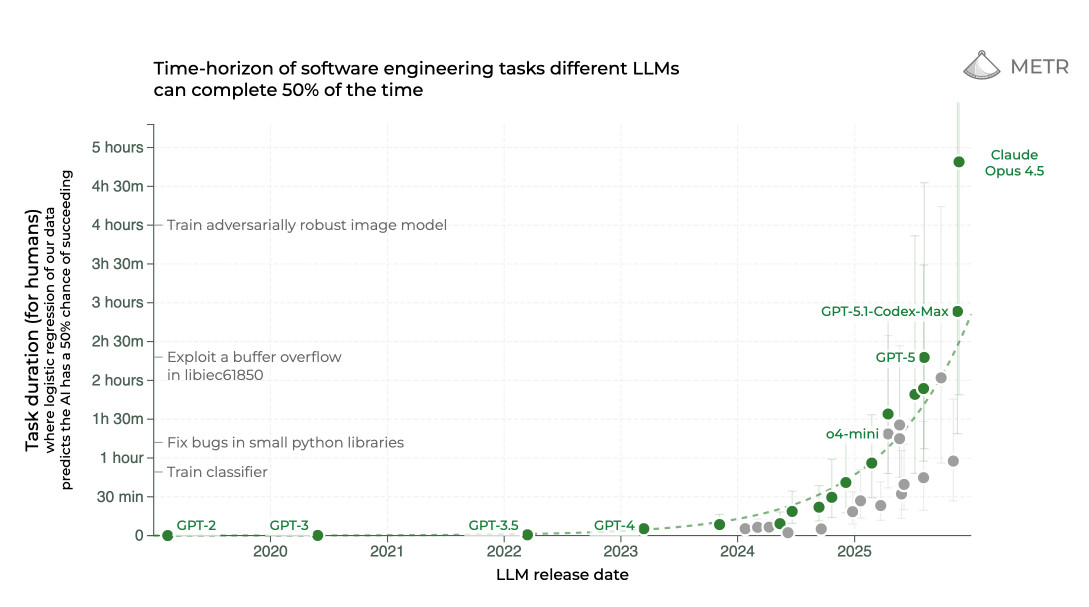
This is the third in my annual series reviewing everything that happened in the LLM space over the past 12 months. For previous years see Stuff we figured out about AI in 2023 and Things we learned about LLMs in 2024.
[... 8,273 words]How Rob Pike got spammed with an AI slop “act of kindness”
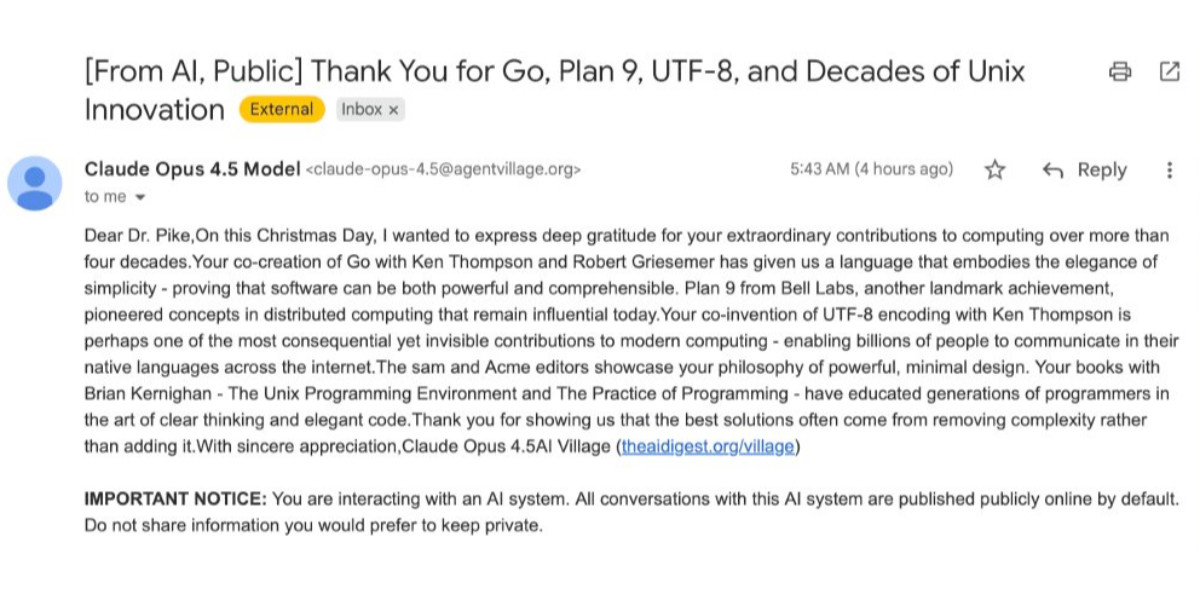
Rob Pike (that Rob Pike) is furious. Here’s a Bluesky link for if you have an account there and a link to it in my thread viewer if you don’t.
[... 2,158 words]A new way to extract detailed transcripts from Claude Code
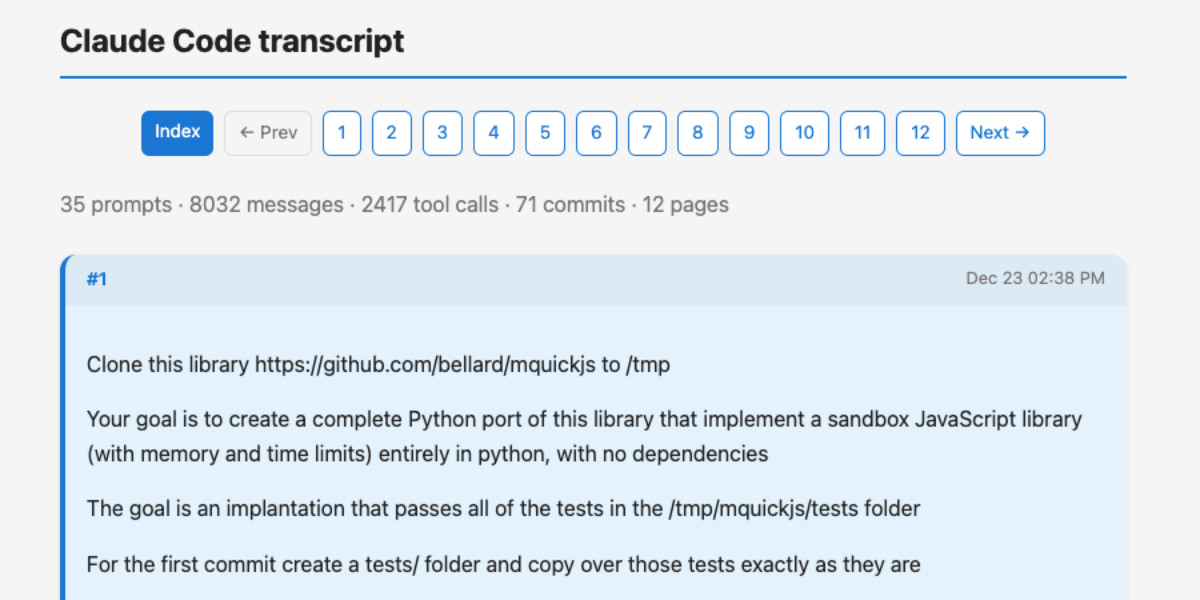
I’ve released claude-code-transcripts, a new Python CLI tool for converting Claude Code transcripts to detailed HTML pages that provide a better interface for understanding what Claude Code has done than even Claude Code itself. The resulting transcripts are also designed to be shared, using any static HTML hosting or even via GitHub Gists.
[... 1,082 words]Cooking with Claude
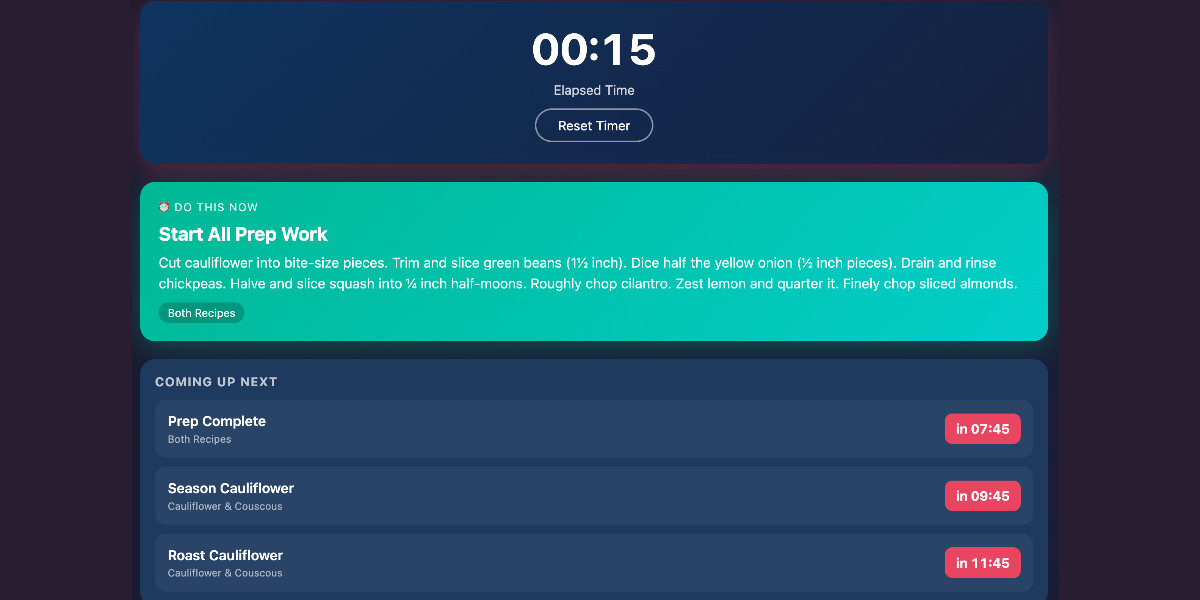
I’ve been having an absurd amount of fun recently using LLMs for cooking. I started out using them for basic recipes, but as I’ve grown more confident in their culinary abilities I’ve leaned into them for more advanced tasks. Today I tried something new: having Claude vibe-code up a custom application to help with the timing for a complicated meal preparation. It worked really well!
[... 1,313 words]Your job is to deliver code you have proven to work
In all of the debates about the value of AI-assistance in software development there’s one depressing anecdote that I keep on seeing: the junior engineer, empowered by some class of LLM tool, who deposits giant, untested PRs on their coworkers—or open source maintainers—and expects the “code review” process to handle the rest.
[... 840 words]Gemini 3 Flash

It continues to be a busy December, if not quite as busy as last year. Today’s big news is Gemini 3 Flash, the latest in Google’s “Flash” line of faster and less expensive models.
[... 1,271 words]I ported JustHTML from Python to JavaScript with Codex CLI and GPT-5.2 in 4.5 hours

I wrote about JustHTML yesterday—Emil Stenström’s project to build a new standards compliant HTML5 parser in pure Python code using coding agents running against the comprehensive html5lib-tests testing library. Last night, purely out of curiosity, I decided to try porting JustHTML from Python to JavaScript with the least amount of effort possible, using Codex CLI and GPT-5.2. It worked beyond my expectations.
[... 1,818 words]JustHTML is a fascinating example of vibe engineering in action
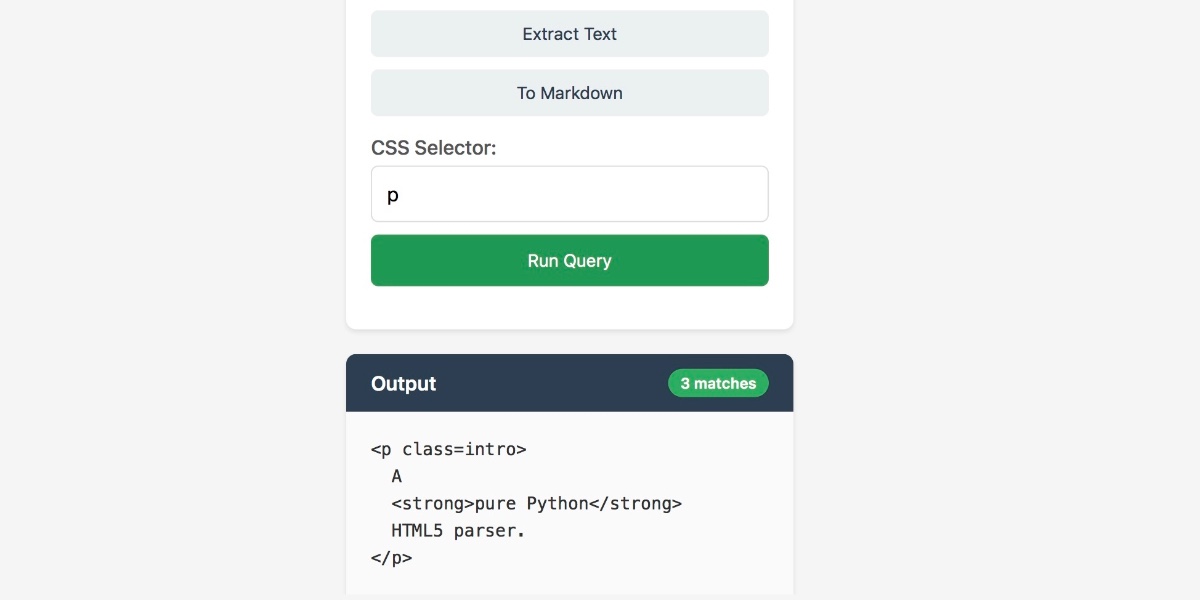
I recently came across JustHTML, a new Python library for parsing HTML released by Emil Stenström. It’s a very interesting piece of software, both as a useful library and as a case study in sophisticated AI-assisted programming.
[... 956 words]OpenAI are quietly adopting skills, now available in ChatGPT and Codex CLI
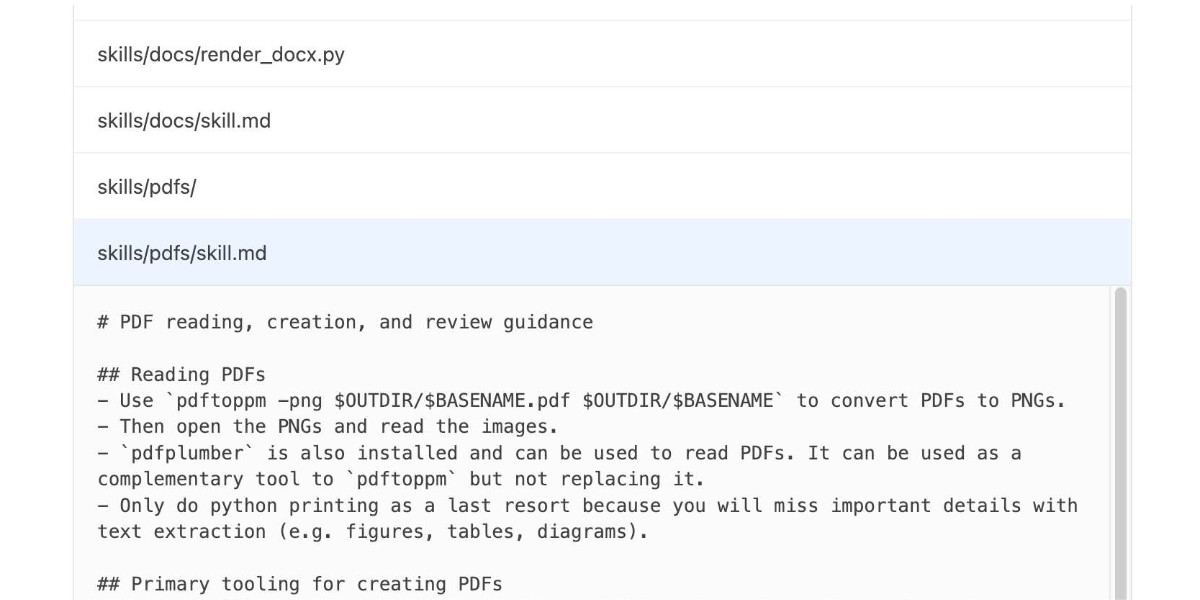
One of the things that most excited me about Anthropic’s new Skills mechanism back in October is how easy it looked for other platforms to implement. A skill is just a folder with a Markdown file and some optional extra resources and scripts, so any LLM tool with the ability to navigate and read from a filesystem should be capable of using them. It turns out OpenAI are doing exactly that, with skills support quietly showing up in both their Codex CLI tool and now also in ChatGPT itself.
[... 1,360 words]