Entries
Filters: Sorted by date
Anthropic’s Project Glasswing—restricting Claude Mythos to security researchers—sounds necessary to me
Anthropic didn’t release their latest model, Claude Mythos (system card PDF), today. They have instead made it available to a very restricted set of preview partners under their newly announced Project Glasswing.
[... 1,296 words]The Axios supply chain attack used individually targeted social engineering
The Axios team have published a full postmortem on the supply chain attack which resulted in a malware dependency going out in a release the other day, and it involved a sophisticated social engineering campaign targeting one of their maintainers directly. Here’s Jason Saayman’a description of how that worked:
[... 357 words]Highlights from my conversation about agentic engineering on Lenny’s Podcast
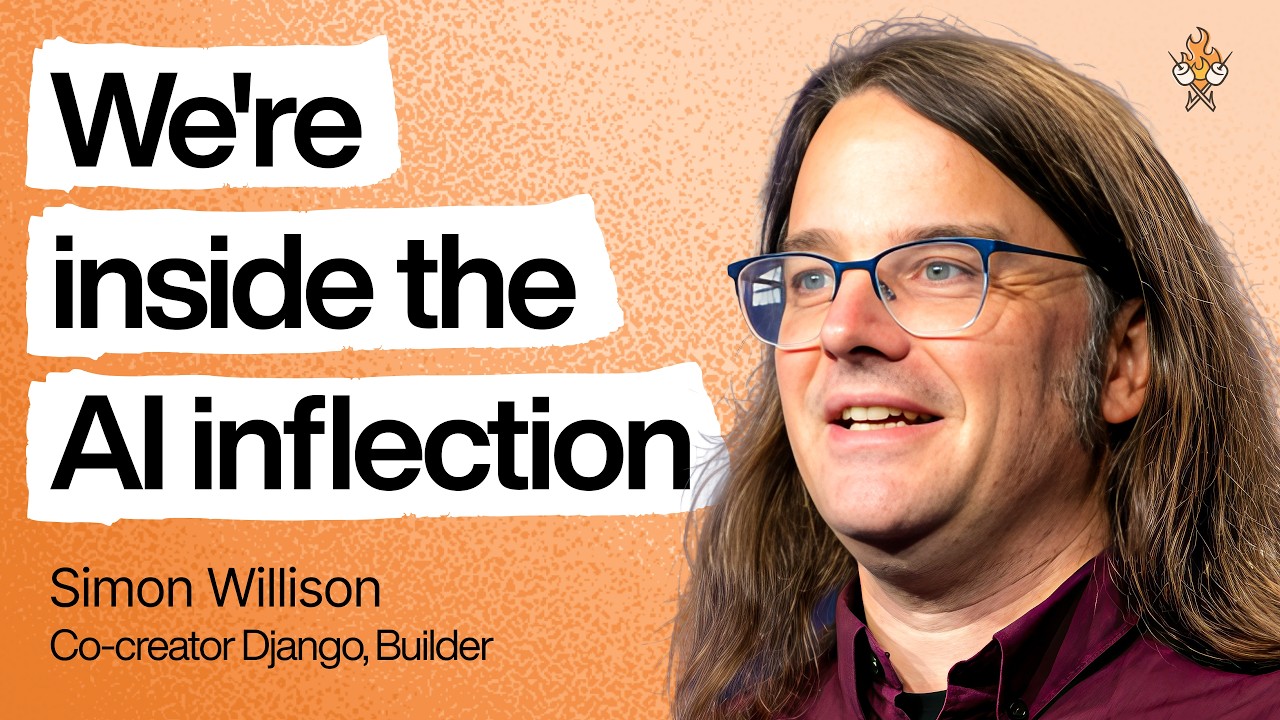
I was a guest on Lenny Rachitsky’s podcast, in a new episode titled An AI state of the union: We’ve passed the inflection point, dark factories are coming, and automation timelines. It’s available on YouTube, Spotify, and Apple Podcasts. Here are my highlights from our conversation, with relevant links.
[... 3,558 words]Mr. Chatterbox is a (weak) Victorian-era ethically trained model you can run on your own computer
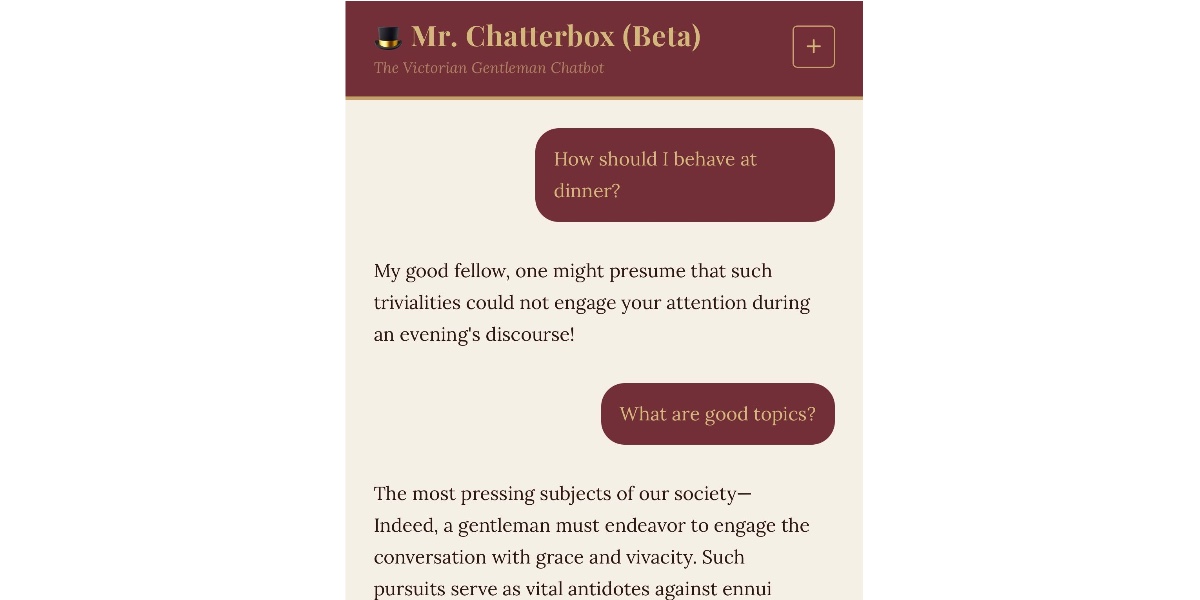
Trip Venturella released Mr. Chatterbox, a language model trained entirely on out-of-copyright text from the British Library. Here’s how he describes it in the model card:
[... 952 words]Vibe coding SwiftUI apps is a lot of fun
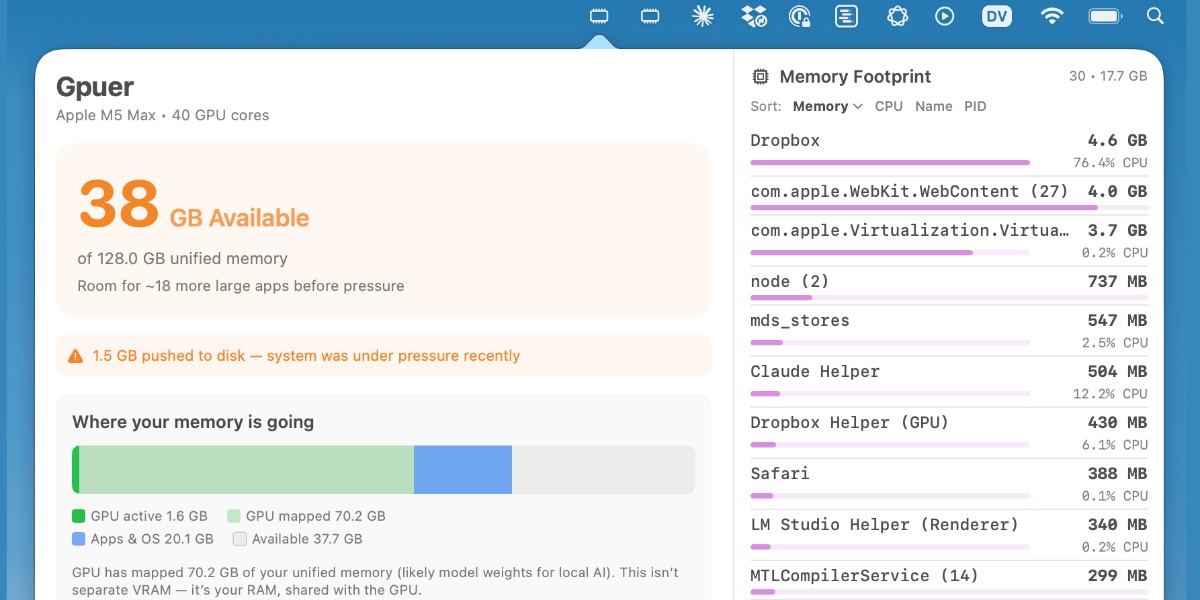
I have a new laptop—a 128GB M5 MacBook Pro, which early impressions show to be very capable for running good local LLMs. I got frustrated with Activity Monitor and decided to vibe code up some alternative tools for monitoring performance and I’m very happy with the results.
[... 1,195 words]Experimenting with Starlette 1.0 with Claude skills
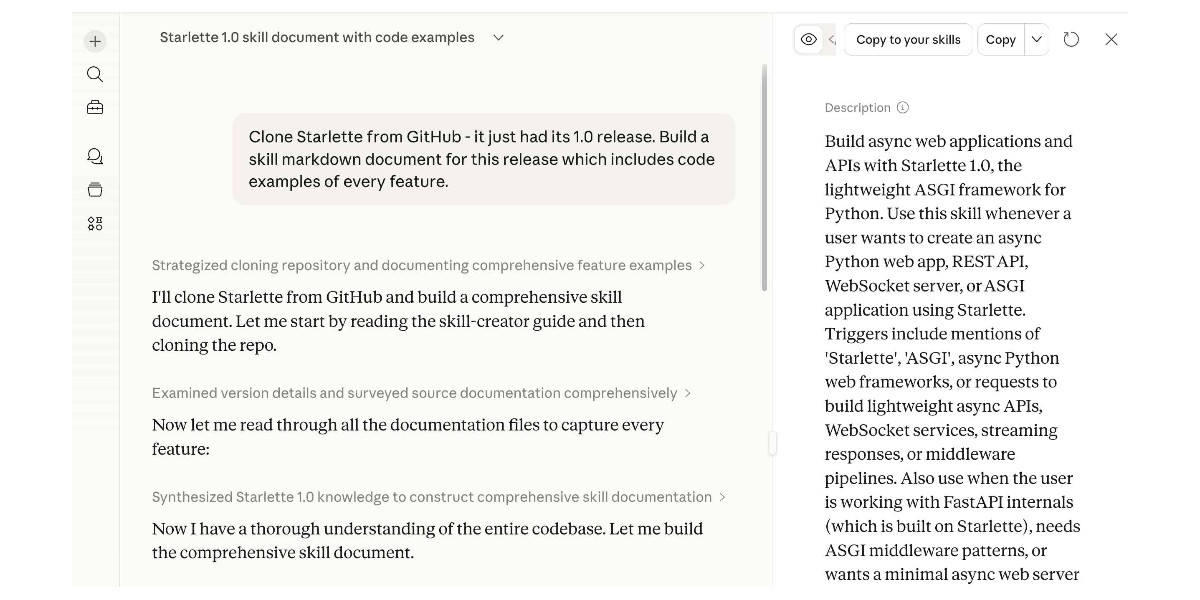
Starlette 1.0 is out! This is a really big deal. I think Starlette may be the Python framework with the most usage compared to its relatively low brand recognition because Starlette is the foundation of FastAPI, which has attracted a huge amount of buzz that seems to have overshadowed Starlette itself.
[... 1,194 words]Profiling Hacker News users based on their comments
Here’s a mildly dystopian prompt I’ve been experimenting with recently: “Profile this user”, accompanied by a copy of their last 1,000 comments on Hacker News.
[... 976 words]Thoughts on OpenAI acquiring Astral and uv/ruff/ty
The big news this morning: Astral to join OpenAI (on the Astral blog) and OpenAI to acquire Astral (the OpenAI announcement). Astral are the company behind uv, ruff, and ty—three increasingly load-bearing open source projects in the Python ecosystem. I have thoughts!
[... 1,378 words]GPT-5.4 mini and GPT-5.4 nano, which can describe 76,000 photos for $52
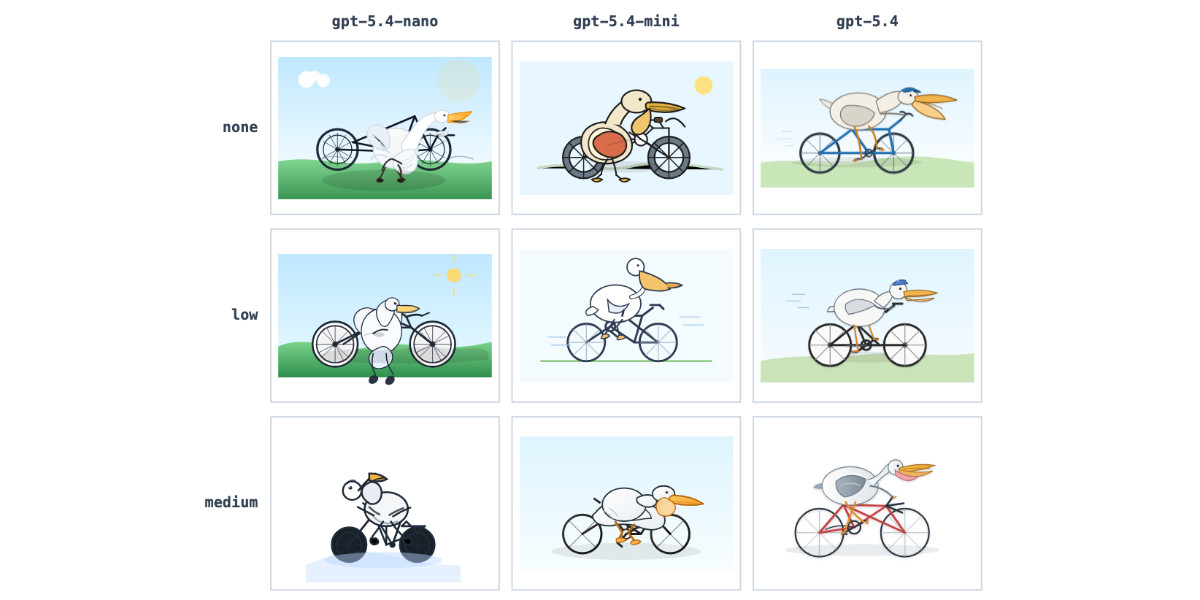
OpenAI today: Introducing GPT‑5.4 mini and nano. These models join GPT-5.4 which was released two weeks ago.
[... 717 words]My fireside chat about agentic engineering at the Pragmatic Summit
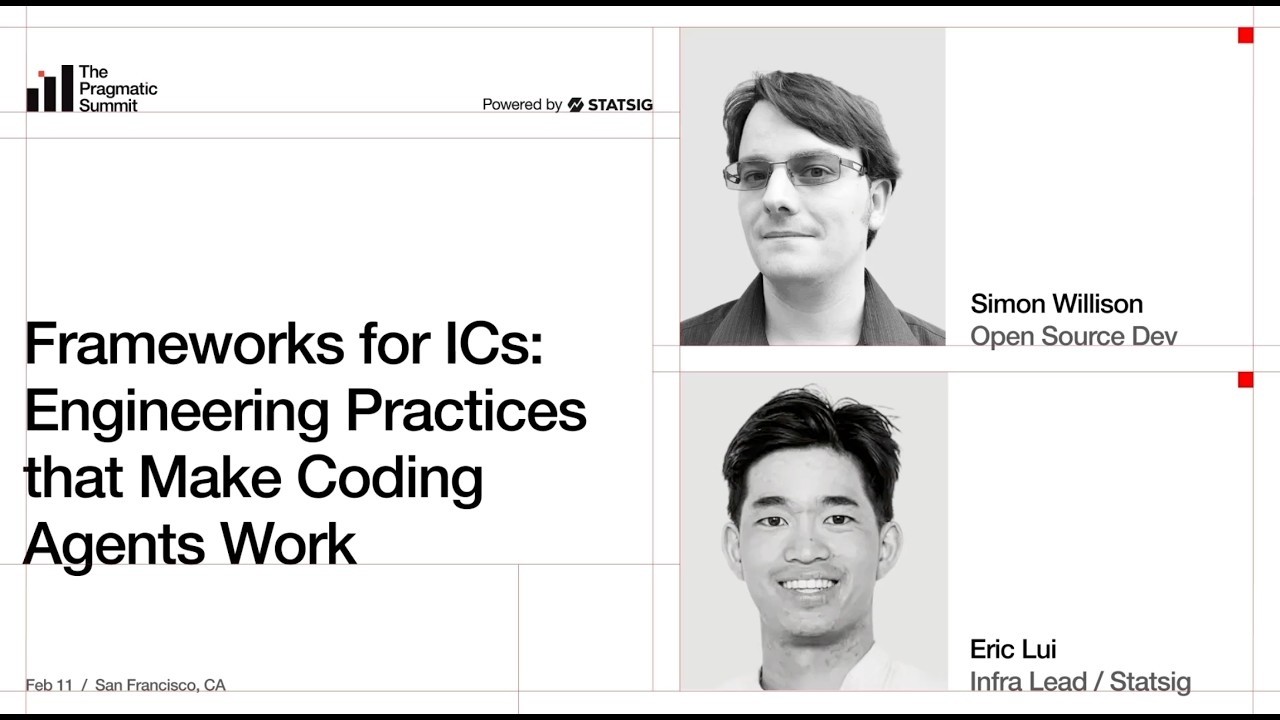
I was a speaker last month at the Pragmatic Summit in San Francisco, where I participated in a fireside chat session about Agentic Engineering hosted by Eric Lui from Statsig.
[... 3,350 words]Perhaps not Boring Technology after all
A recurring concern I’ve seen regarding LLMs for programming is that they will push our technology choices towards the tools that are best represented in their training data, making it harder for new, better tools to break through the noise.
[... 391 words]Can coding agents relicense open source through a “clean room” implementation of code?
Over the past few months it’s become clear that coding agents are extraordinarily good at building a weird version of a “clean room” implementation of code.
[... 1,349 words]Something is afoot in the land of Qwen
I’m behind on writing about Qwen 3.5, a truly remarkable family of open weight models released by Alibaba’s Qwen team over the past few weeks. I’m hoping that the 3.5 family doesn’t turn out to be Qwen’s swan song, seeing as that team has had some very high profile departures in the past 24 hours.
[... 705 words]I vibe coded my dream macOS presentation app
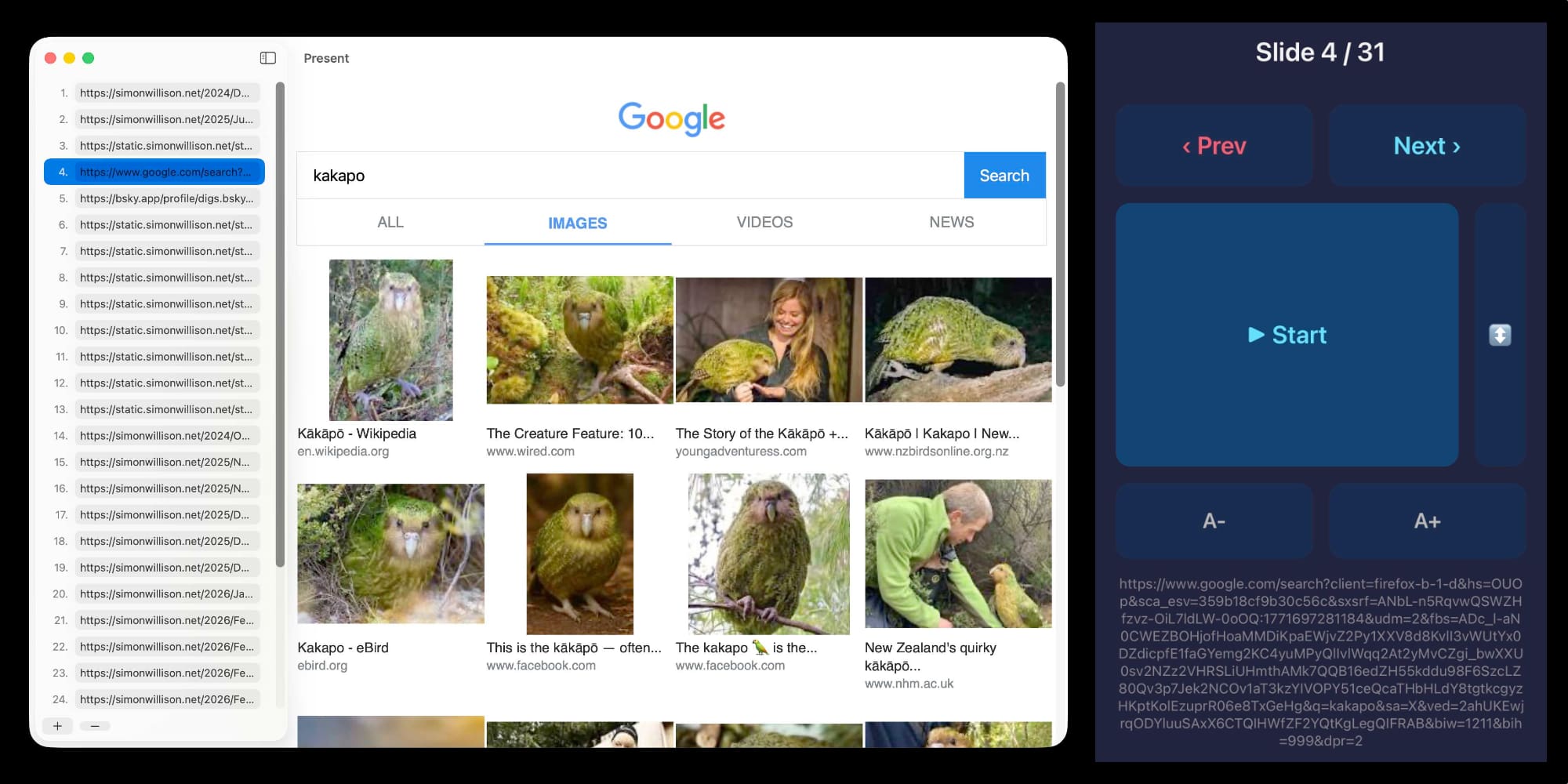
I gave a talk this weekend at Social Science FOO Camp in Mountain View. The event was a classic unconference format where anyone could present a talk without needing to propose it in advance. I grabbed a slot for a talk I titled “The State of LLMs, February 2026 edition”, subtitle “It’s all changed since November!”. I vibe coded a custom macOS app for the presentation the night before.
[... 1,613 words]Writing about Agentic Engineering Patterns
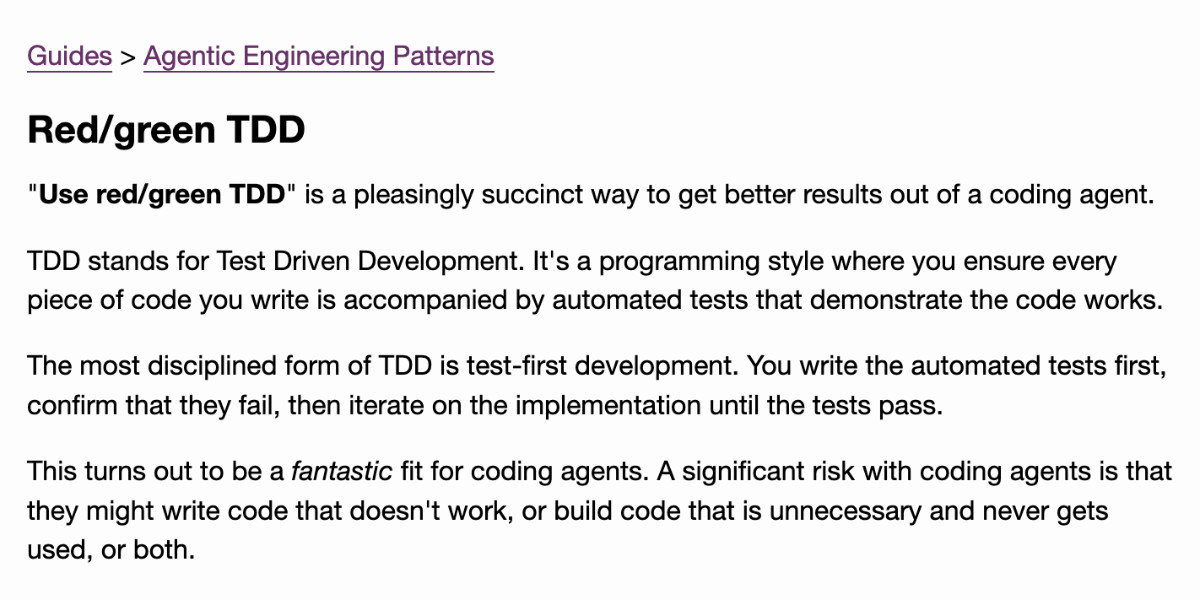
I’ve started a new project to collect and document Agentic Engineering Patterns—coding practices and patterns to help get the best results out of this new era of coding agent development we find ourselves entering.
[... 554 words]Adding TILs, releases, museums, tools and research to my blog
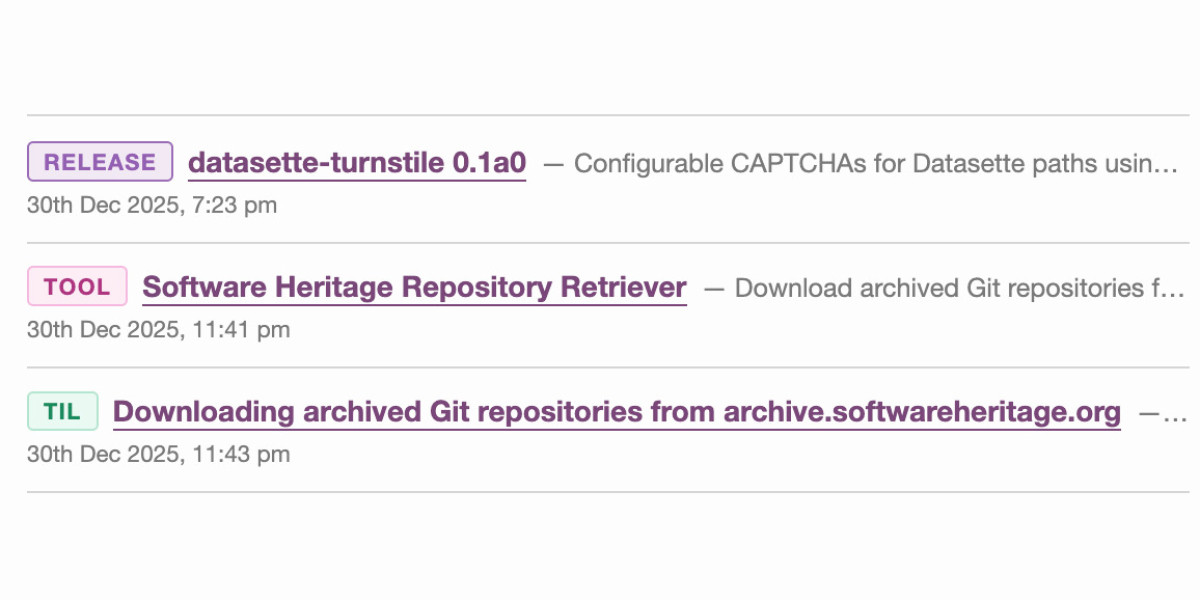
I’ve been wanting to add indications of my various other online activities to my blog for a while now. I just turned on a new feature I’m calling “beats” (after story beats, naming this was hard!) which adds five new types of content to my site, all corresponding to activity elsewhere.
[... 614 words]Two new Showboat tools: Chartroom and datasette-showboat
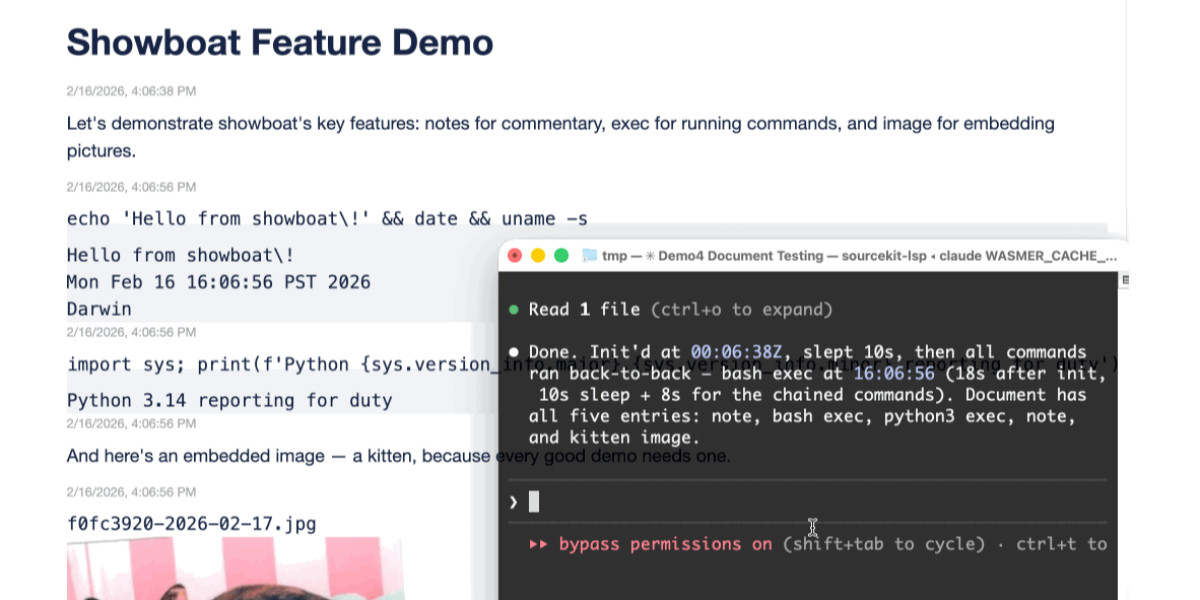
I introduced Showboat a week ago—my CLI tool that helps coding agents create Markdown documents that demonstrate the code that they have created. I’ve been finding new ways to use it on a daily basis, and I’ve just released two new tools to help get the best out of the Showboat pattern. Chartroom is a CLI charting tool that works well with Showboat, and datasette-showboat lets Showboat’s new remote publishing feature incrementally push documents to a Datasette instance.
[... 1,756 words]Deep Blue

We coined a new term on the Oxide and Friends podcast last month (primary credit to Adam Leventhal) covering the sense of psychological ennui leading into existential dread that many software developers are feeling thanks to the encroachment of generative AI into their field of work.
[... 971 words]The evolution of OpenAI’s mission statement
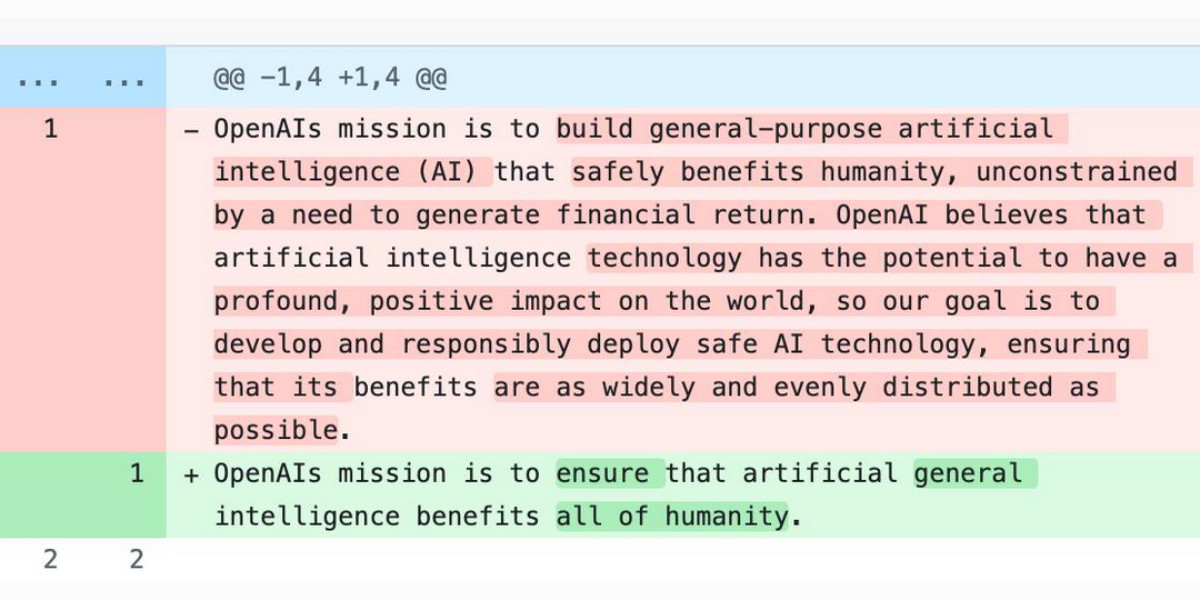
As a USA 501(c)(3) the OpenAI non-profit has to file a tax return each year with the IRS. One of the required fields on that tax return is to “Briefly describe the organization’s mission or most significant activities”—this has actual legal weight to it as the IRS can use it to evaluate if the organization is sticking to its mission and deserves to maintain its non-profit tax-exempt status.
[... 680 words]Introducing Showboat and Rodney, so agents can demo what they’ve built
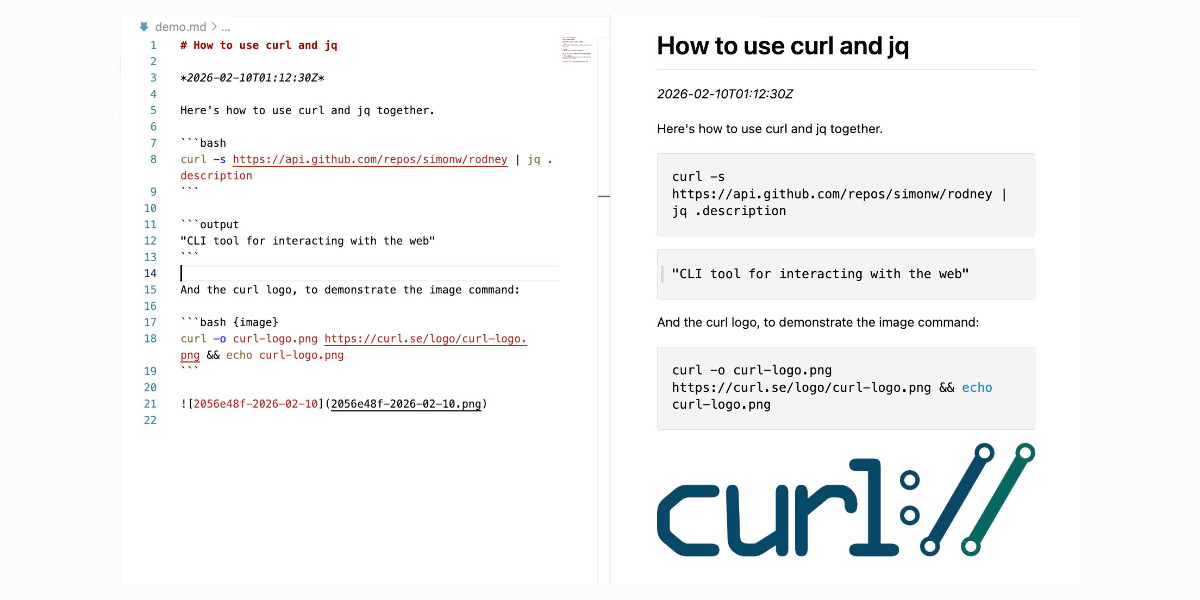
A key challenge working with coding agents is having them both test what they’ve built and demonstrate that software to you, their supervisor. This goes beyond automated tests—we need artifacts that show their progress and help us see exactly what the agent-produced software is able to do. I’ve just released two new tools aimed at this problem: Showboat and Rodney.
[... 2,023 words]How StrongDM’s AI team build serious software without even looking at the code
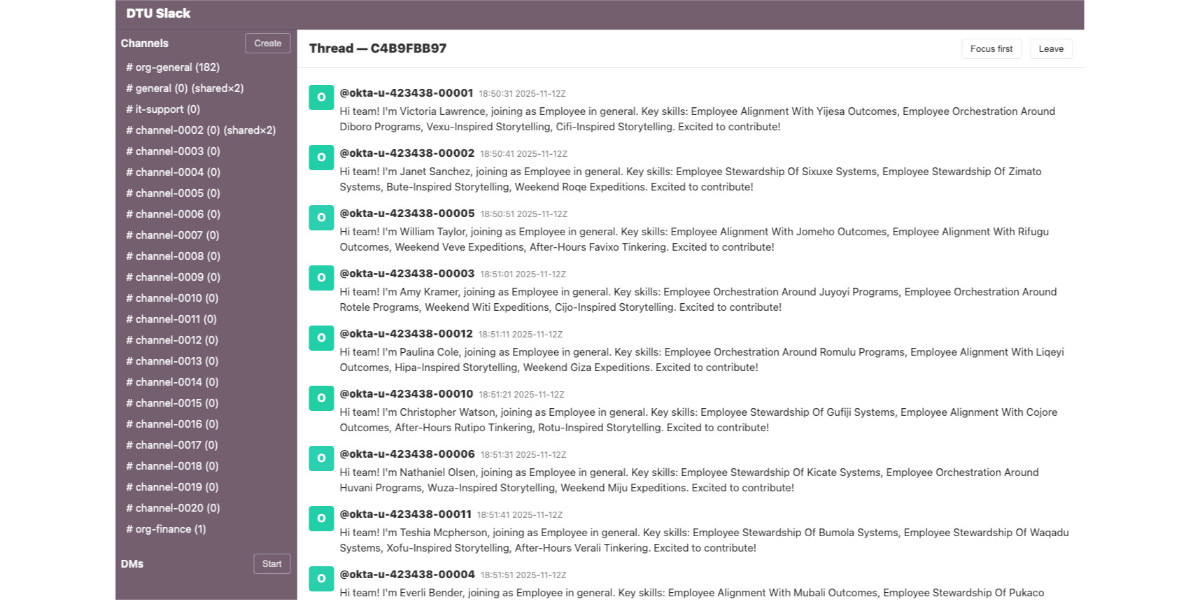
Last week I hinted at a demo I had seen from a team implementing what Dan Shapiro called the Dark Factory level of AI adoption, where no human even looks at the code the coding agents are producing. That team was part of StrongDM, and they’ve just shared the first public description of how they are working in Software Factories and the Agentic Moment:
[... 1,664 words]Running Pydantic’s Monty Rust sandboxed Python subset in WebAssembly
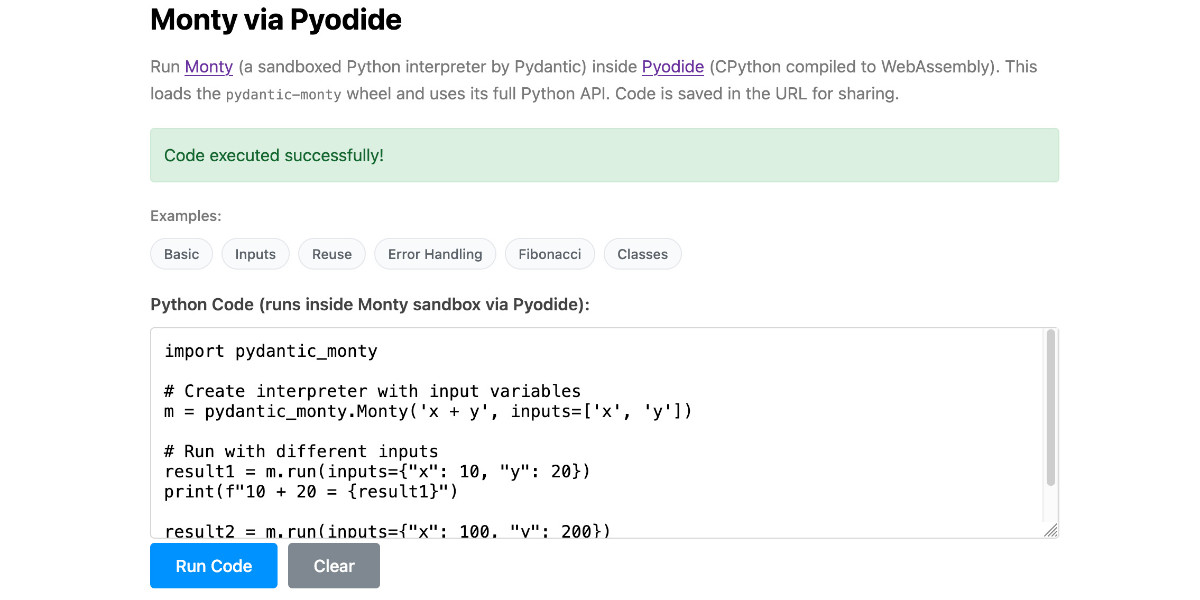
There’s a jargon-filled headline for you! Everyone’s building sandboxes for running untrusted code right now, and Pydantic’s latest attempt, Monty, provides a custom Python-like language (a subset of Python) in Rust and makes it available as both a Rust library and a Python package. I got it working in WebAssembly, providing a sandbox-in-a-sandbox.
[... 854 words]Distributing Go binaries like sqlite-scanner through PyPI using go-to-wheel
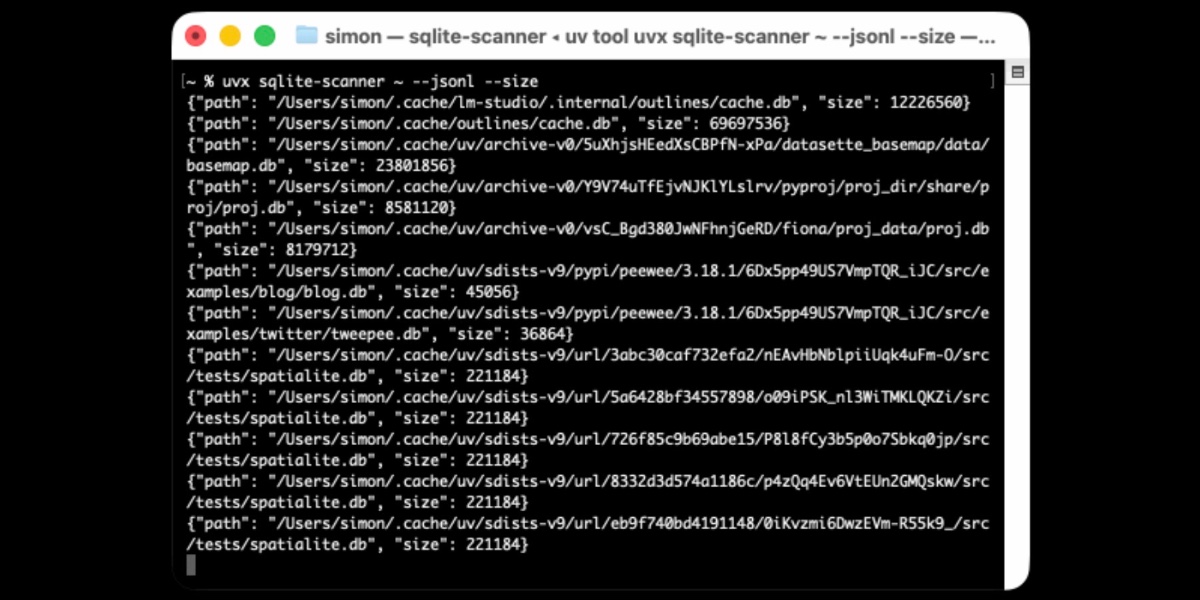
I’ve been exploring Go for building small, fast and self-contained binary applications recently. I’m enjoying how there’s generally one obvious way to do things and the resulting code is boring and readable—and something that LLMs are very competent at writing. The one catch is distribution, but it turns out publishing Go binaries to PyPI means any Go binary can be just a uvx package-name call away.
Moltbook is the most interesting place on the internet right now
The hottest project in AI right now is Clawdbot, renamed to Moltbot, renamed to OpenClaw. It’s an open source implementation of the digital personal assistant pattern, built by Peter Steinberger to integrate with the messaging system of your choice. It’s two months old, has over 114,000 stars on GitHub and is seeing incredible adoption, especially given the friction involved in setting it up.
[... 1,307 words]Adding dynamic features to an aggressively cached website
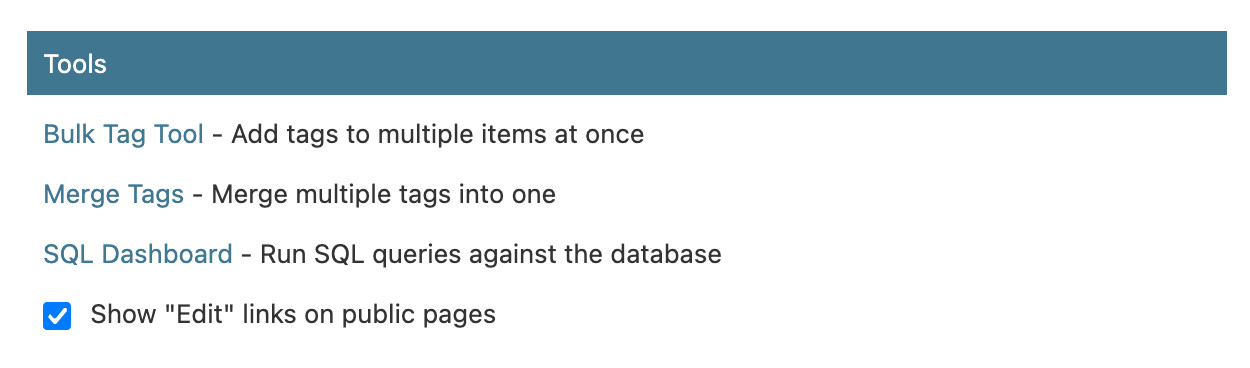
My blog uses aggressive caching: it sits behind Cloudflare with a 15 minute cache header, which guarantees it can survive even the largest traffic spike to any given page. I’ve recently added a couple of dynamic features that work in spite of that full-page caching. Here’s how those work.
[... 1,145 words]ChatGPT Containers can now run bash, pip/npm install packages, and download files
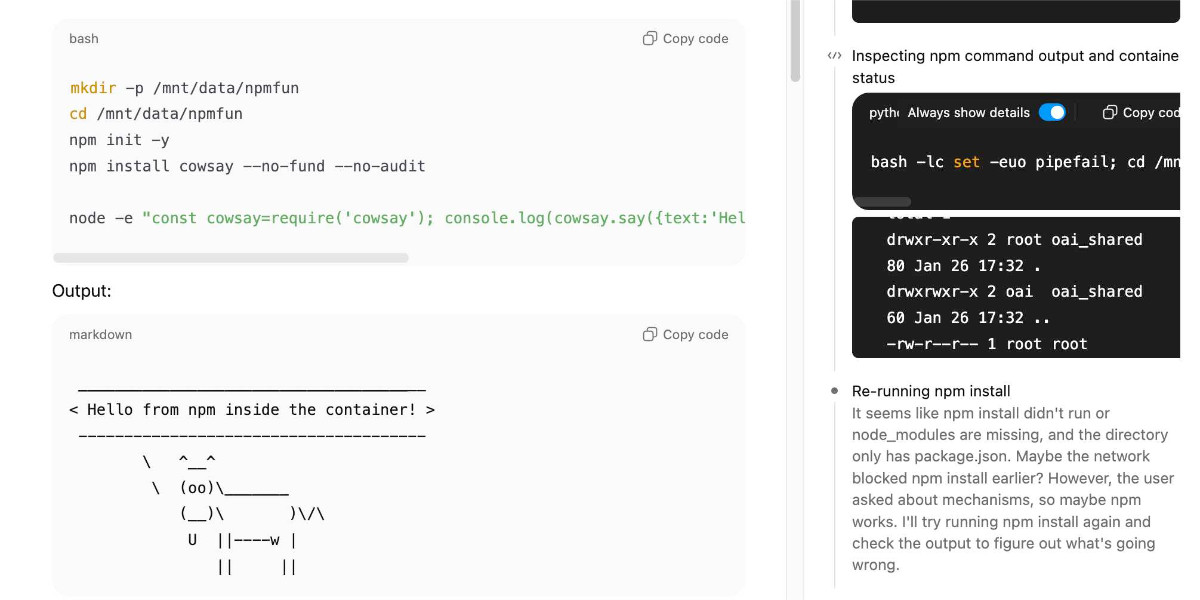
One of my favourite features of ChatGPT is its ability to write and execute code in a container. This feature launched as ChatGPT Code Interpreter nearly three years ago, was half-heartedly rebranded to “Advanced Data Analysis” at some point and is generally really difficult to find detailed documentation about. Case in point: it appears to have had a massive upgrade at some point in the past few months, and I can’t find documentation about the new capabilities anywhere!
[... 3,019 words]Wilson Lin on FastRender: a browser built by thousands of parallel agents
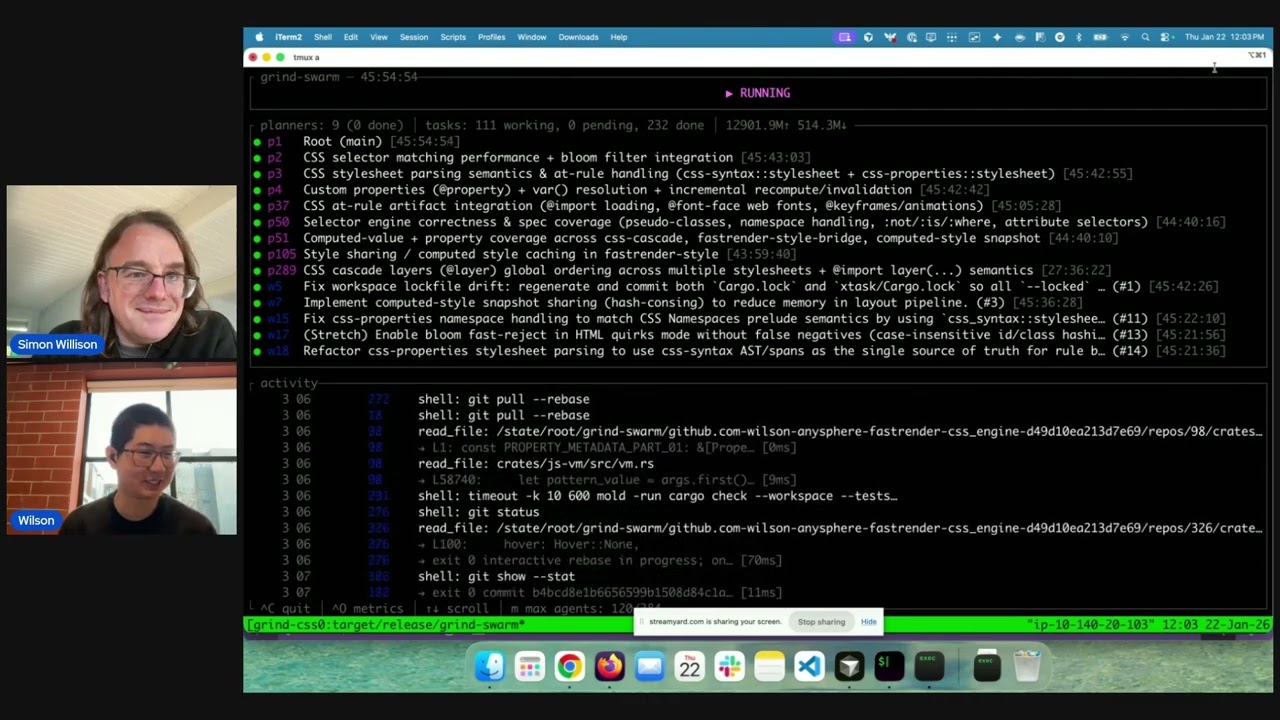
Last week Cursor published Scaling long-running autonomous coding, an article describing their research efforts into coordinating large numbers of autonomous coding agents. One of the projects mentioned in the article was FastRender, a web browser they built from scratch using their agent swarms. I wanted to learn more so I asked Wilson Lin, the engineer behind FastRender, if we could record a conversation about the project. That 47 minute video is now available on YouTube. I’ve included some of the highlights below.
[... 2,243 words]First impressions of Claude Cowork, Anthropic’s general agent
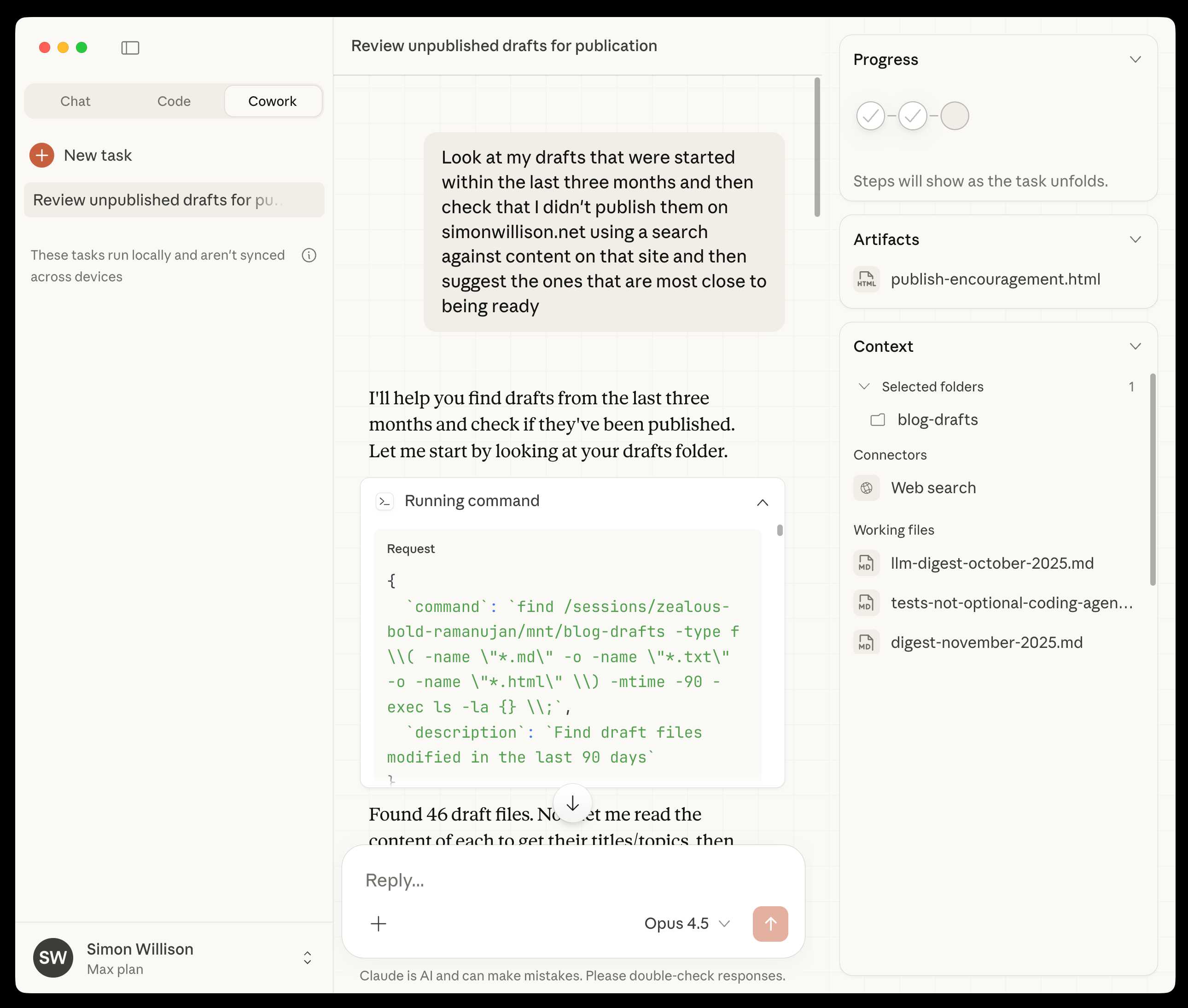
New from Anthropic today is Claude Cowork, a “research preview” that they describe as “Claude Code for the rest of your work”. It’s currently available only to Max subscribers ($100 or $200 per month plans) as part of the updated Claude Desktop macOS application. Update 16th January 2026: it’s now also available to $20/month Claude Pro subscribers.
[... 1,863 words]My answers to the questions I posed about porting open source code with LLMs
Last month I wrote about porting JustHTML from Python to JavaScript using Codex CLI and GPT-5.2 in a few hours while also buying a Christmas tree and watching Knives Out 3. I ended that post with a series of open questions about the ethics and legality of this style of work. Alexander Petros on lobste.rs just challenged me to answer them, which is fair enough! Here’s my attempt at that.
[... 1,034 words]Fly’s new Sprites.dev addresses both developer sandboxes and API sandboxes at the same time
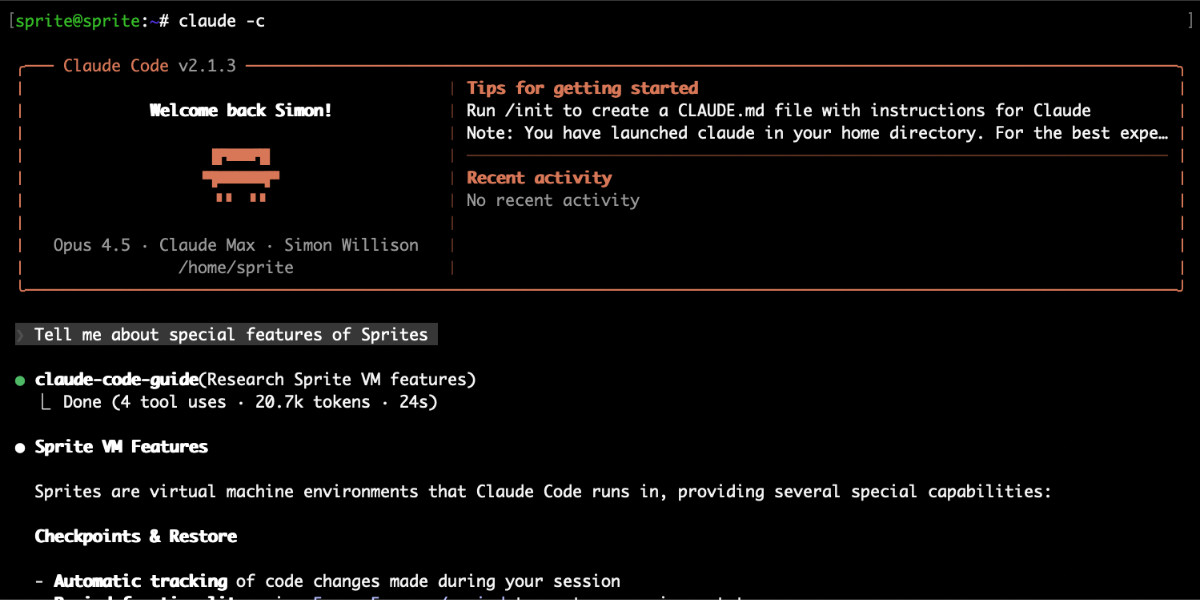
New from Fly.io today: Sprites.dev. Here’s their blog post and YouTube demo. It’s an interesting new product that’s quite difficult to explain—Fly call it “Stateful sandbox environments with checkpoint & restore” but I see it as hitting two of my current favorite problems: a safe development environment for running coding agents and an API for running untrusted code in a secure sandbox.
[... 1,560 words]