485 posts tagged “sqlite”
SQLite is the world's most widely deployed database engine.
2021
git-history: a tool for analyzing scraped data collected using Git and SQLite
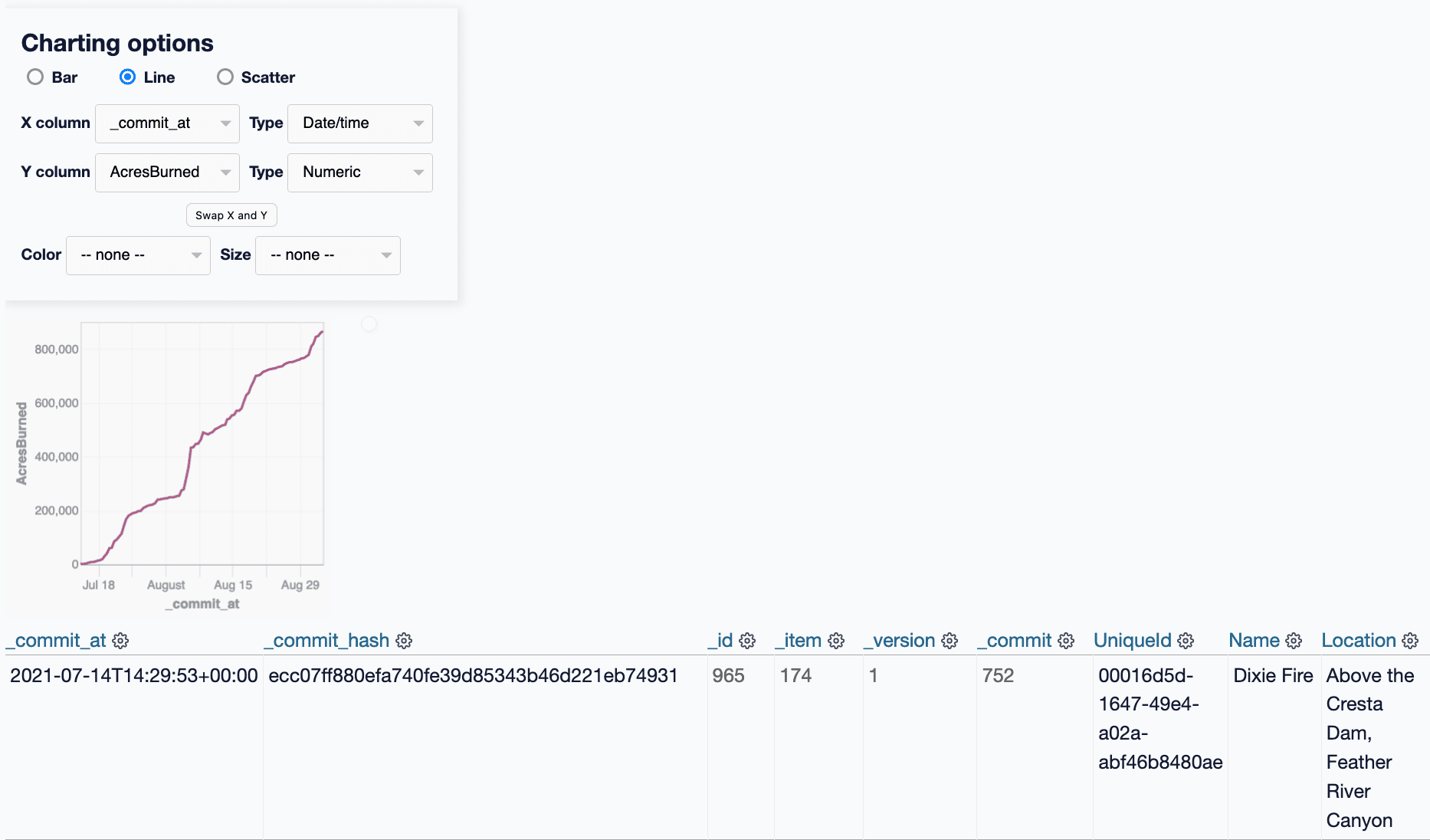
I described Git scraping last year: a technique for writing scrapers where you periodically snapshot a source of data to a Git repository in order to record changes to that source over time.
[... 2,002 words]DuckDB-Wasm: Efficient Analytical SQL in the Browser (via) First SQLite, now DuckDB: options for running database engines in the browser using WebAssembly keep on growing. DuckDB means browsers now have a fast, intuitive mechanism for querying Parquet files too. This also supports the same HTTP Range header trick as the SQLite demo from a while back, meaning it can query large databases loaded over HTTP without downloading the whole file.
SQLite: STRICT Tables (draft). Draft documentation for a feature that sounds like it could be arriving in SQLite 3.37 (the next release)—adding a “STRICT” table-option keyword to a CREATE TABLE statement will cause the table to strictly enforce typing rules for data in that table, rejecting inserts that fail to match the column’s datatypes.
I’ve seen many programmers dismiss SQLite due to its loose typing, so this feature is really exciting to me: it will hopefully remove a common objection to embracing SQLite for projects.
Datasette on Codespaces, sqlite-utils API reference documentation and other weeknotes
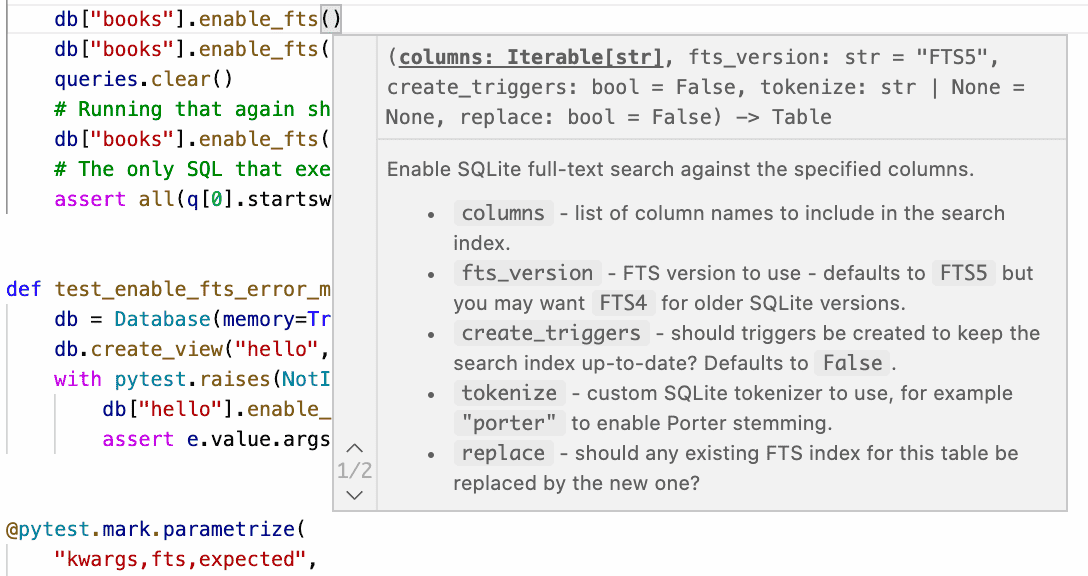
This week I broke my streak of not sending out the Datasette newsletter, figured out how to use Sphinx for Python class documentation, worked out how to run Datasette on GitHub Codespaces, implemented Datasette column metadata and got tantalizingly close to a solution for an elusive Datasette feature.
[... 2,164 words]Bare columns in an aggregate queries. This is a really nice SQL tweak implemented in SQLite: If you run a query like “SELECT a, b, max(c) FROM tab1 GROUP BY a” SQLite will find the row with the highest value for c and use the columns of that row as the returned values for the other columns mentioned in the query.
Apply conversion functions to data in SQLite columns with the sqlite-utils CLI tool
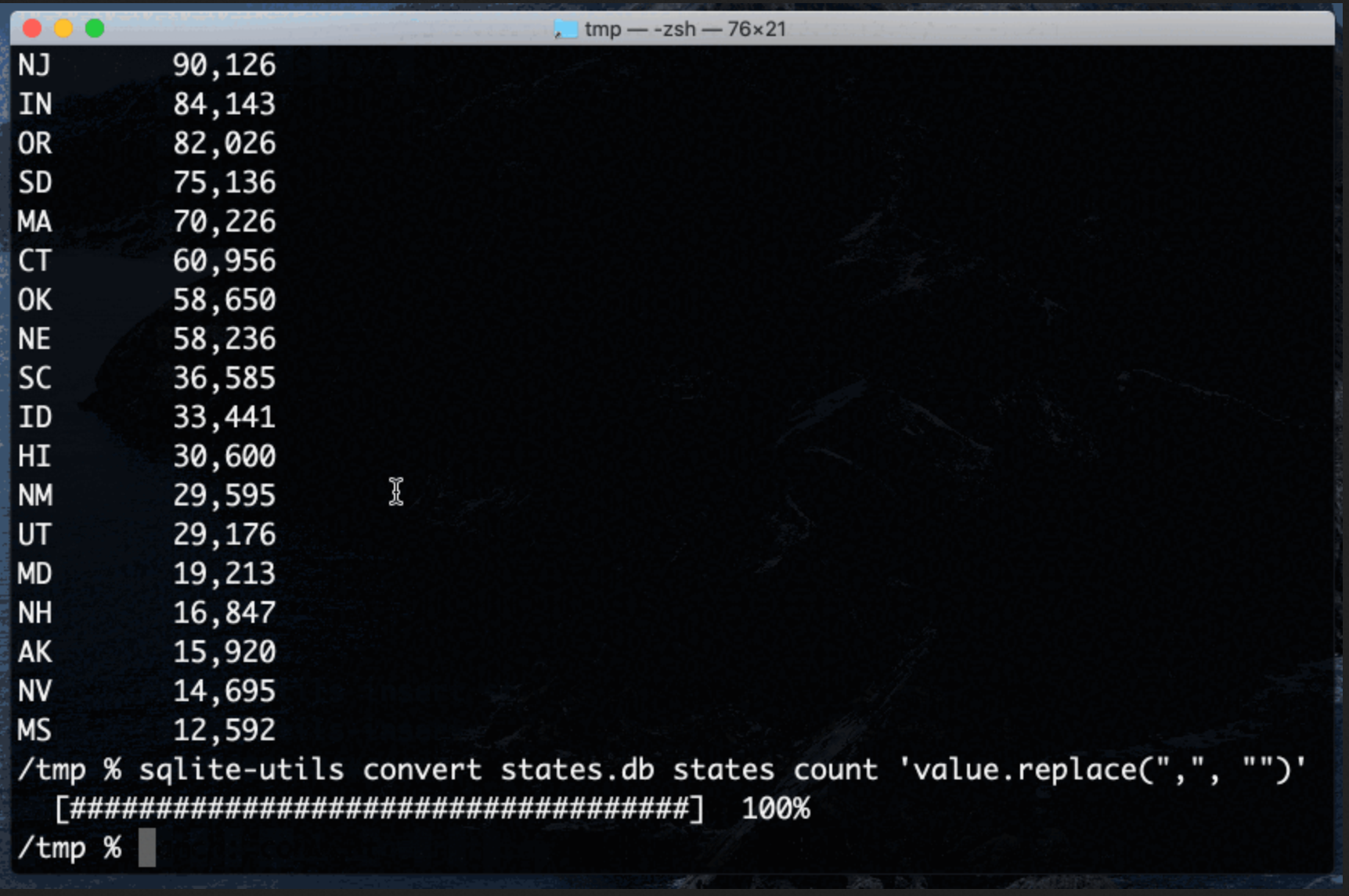
Earlier this week I released sqlite-utils 3.14 with a powerful new command-line tool: sqlite-utils convert, which applies a conversion function to data stored in a SQLite column.
Weeknotes: datasette-remote-metadata, sqlite-transform --multi
I mentioned Project Pelican (still a codename until the end of the embargo) last week. This week it inspired a new plugin, datasette-remote-metadata.
[... 595 words]The Baked Data architectural pattern
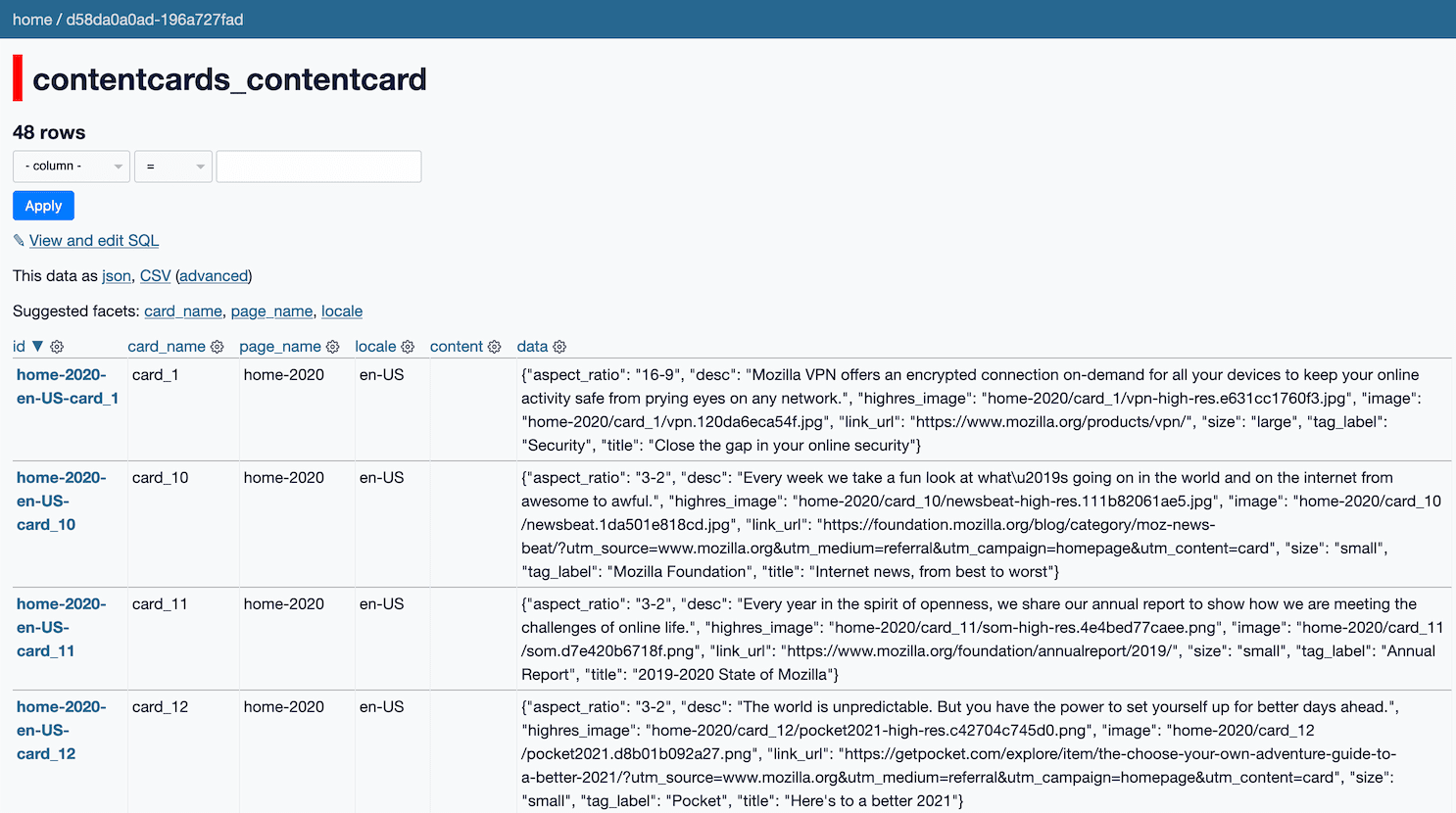
I’ve been exploring an architectural pattern for publishing websites over the past few years that I call the “Baked Data” pattern. It provides many of the advantages of static site generators while avoiding most of their limitations. I think it deserves to be used more widely.
[... 1,896 words]Datasette—an ecosystem of tools for working with small data
This is the transcript and video from a talk I gave at PyGotham 2020 about using SQLite, Datasette and Dogsheep to work with small data.
[... 4,655 words]Weeknotes: sqlite-transform 1.1, Datasette 0.58.1, datasette-graphql 1.5
Work on Project Pelican inspires new features and improvements across a number of different projects.
[... 1,419 words]Inserting One Billion Rows in SQLite Under a Minute (via) Avinash Sajjanshetty experiments with accelerating writes to a test table in SQLite, using various SQLite pragmas to accelerate inserts followed by a rewrite of Python code to Rust. Also of note: running the exact same code in PyPy saw a 3.5x speed-up!
The Untold Story of SQLite With Richard Hipp. This is a really interesting interview with SQLite creator D. Richard Hipp—it covers all sorts of aspects of the SQLite story I hadn’t heard before, from its inspiration by a software challenge on a battleship to the first income from clients such as AOL and Symbian to the formation of the SQLite Consortium (based on advice from Mozilla’s Mitchell Baker) and more.
Datasette 0.58: The annotated release notes
I released Datasette 0.58 last night, with new plugin hooks, Unix domain socket support, a major faceting performance fix and a few other improvements. Here are the annotated release notes.
[... 1,062 words]
- New db.query(sql, params) method, which executes a SQL query and returns the results as an iterator over Python dictionaries. (#290)
- This project now uses
flake8and has started to usemypy. (#291)- New documentation on contributing to this project. (#292)
Joining CSV and JSON data with an in-memory SQLite database
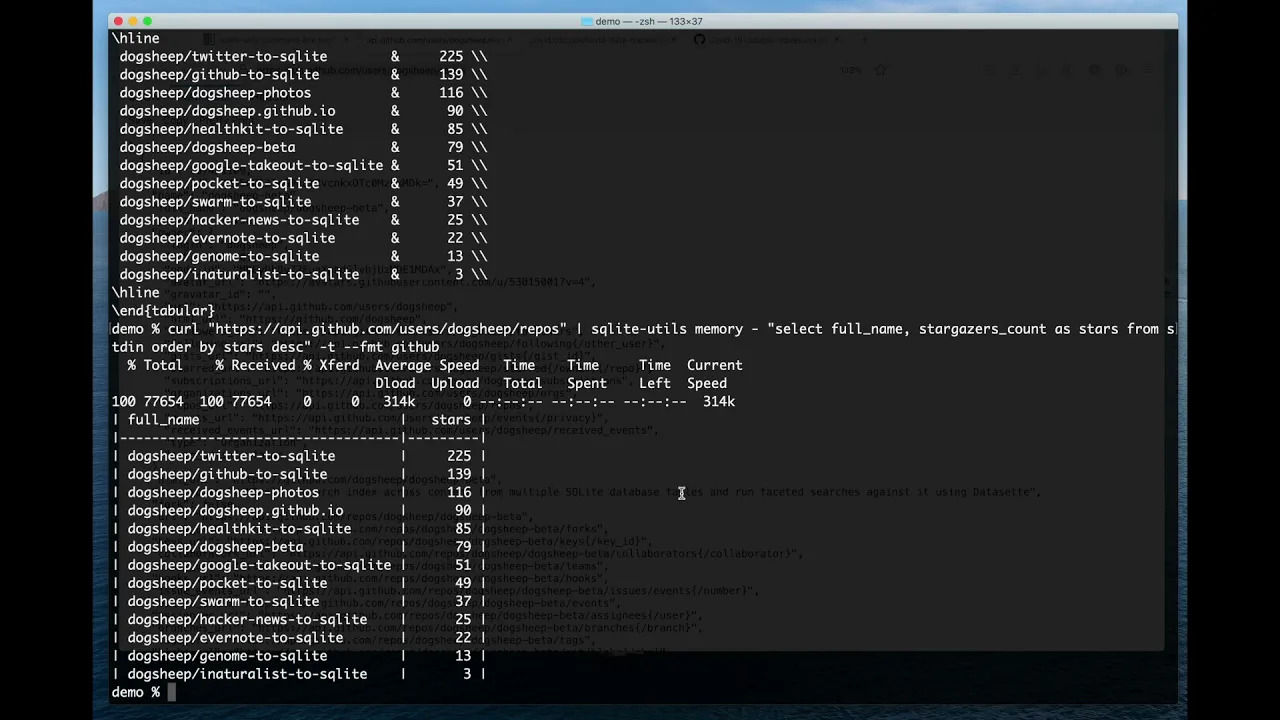
The new sqlite-utils memory command can import CSV and JSON data directly into an in-memory SQLite database, combine and query it using SQL and output the results as CSV, JSON or various other formats of plain text tables.