133 posts tagged “gpt”
The GPT series of Large Language Models from OpenAI.
2026
Claude Opus 5.5, GPT-6 Sol, GPT-6 Luna, and a new price war
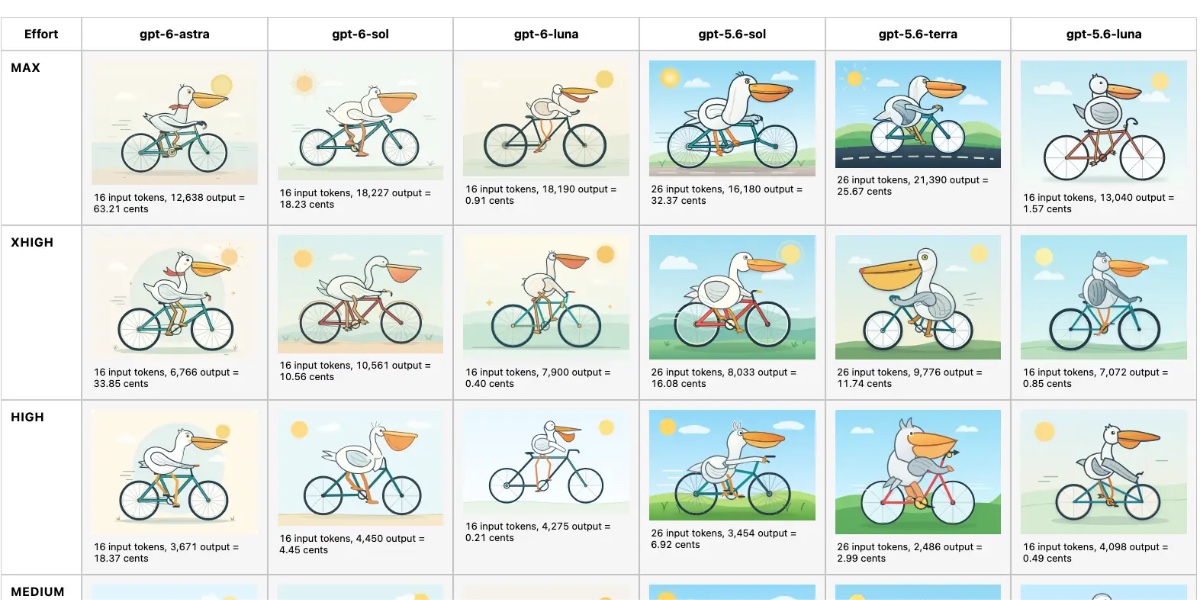
Yesterday was Grok 4.7 (pelicans) and MiMo v2.6 Flash/Pro (more pelicans). Today Anthropic released Claude Opus 5.5, and around an hour later OpenAI released GPT-6 Sol and GPT-6 Luna. It’s going to take a while to get a good read on all of these new models, but here are my impressions so far.
[... 1,153 words]Moonlight & Mayhem (Raccoon Heist by Codex + GPT-5.6 Sol Ultra). On Wednesday I wrote about One-shotting a Raccoon Heist game using Claude Fable 5, where I had Claude Fable 5 build a full working game from a premise I generated with GPT-3 and DALL-E four years ago.
I decided to pose the exact same prompt to Codex Desktop running GPT-5.6 Sol Ultra - the mode where Sol makes aggressive use of sub-agents - to see how it would do.
It produced a much better game! Here's Moonlight & Mayhem - GitHub repository here, including the textures and prompts it generated using gpt-image-2.
The original GPT-3 generated game description included:
In “Raccoon Heist”, you and your team of thieving raccoons are tasked with pulling off a series of daring heists. From robbing banks to stealing priceless art, no job is too big or too small for your furry crew.
Fable's version had you as a single raccoon running around a back yard collecting coins and fish. GPT-5.6 Sol has you in a museum, rescuing your two other raccoon crewmates in order to stack on top of each other and bust the golden sardine out of its case.
Much more heisty!
There was one catch though: the version produced from the one-shot prompt had a bug where each raccoon had an eyeball that was enlarged to the size of a giant sphere floating over their head!

You can play that version here.
Despite reviewing screenshots during development Codex failed to spot and correct this bug.
I fixed it by prompting:
Why do the raccoons have huge black spheres on them?
And then:
Fix it
Which resulted in this fix.
I shared the full Codex transcript in the repository - I wish Claude Code had the same "copy as Markdown" feature.
Codex spent 52 minutes on the project. Here's the AgentsView cost estimate for that session if I had been paying full API prices as opposed to using my monthly Codex subscription:

DOOMQL (via) Peter Gostev built this using GPT-5.6 Sol. This is a lot of fun:
DOOMQL started with a deliberately unreasonable question: what if SQLite were the game engine, not merely the place where a game stores data?
The result is a small, original Doom-like game in which SQL owns movement, collision, enemies, combat, progression and every RGB pixel on screen.
It's implemented as a Python terminal script - I tried it out like this:
cd /tmp
git clone https://github.com/petergpt/doomql
cd doomql
uv run host/doomql.py
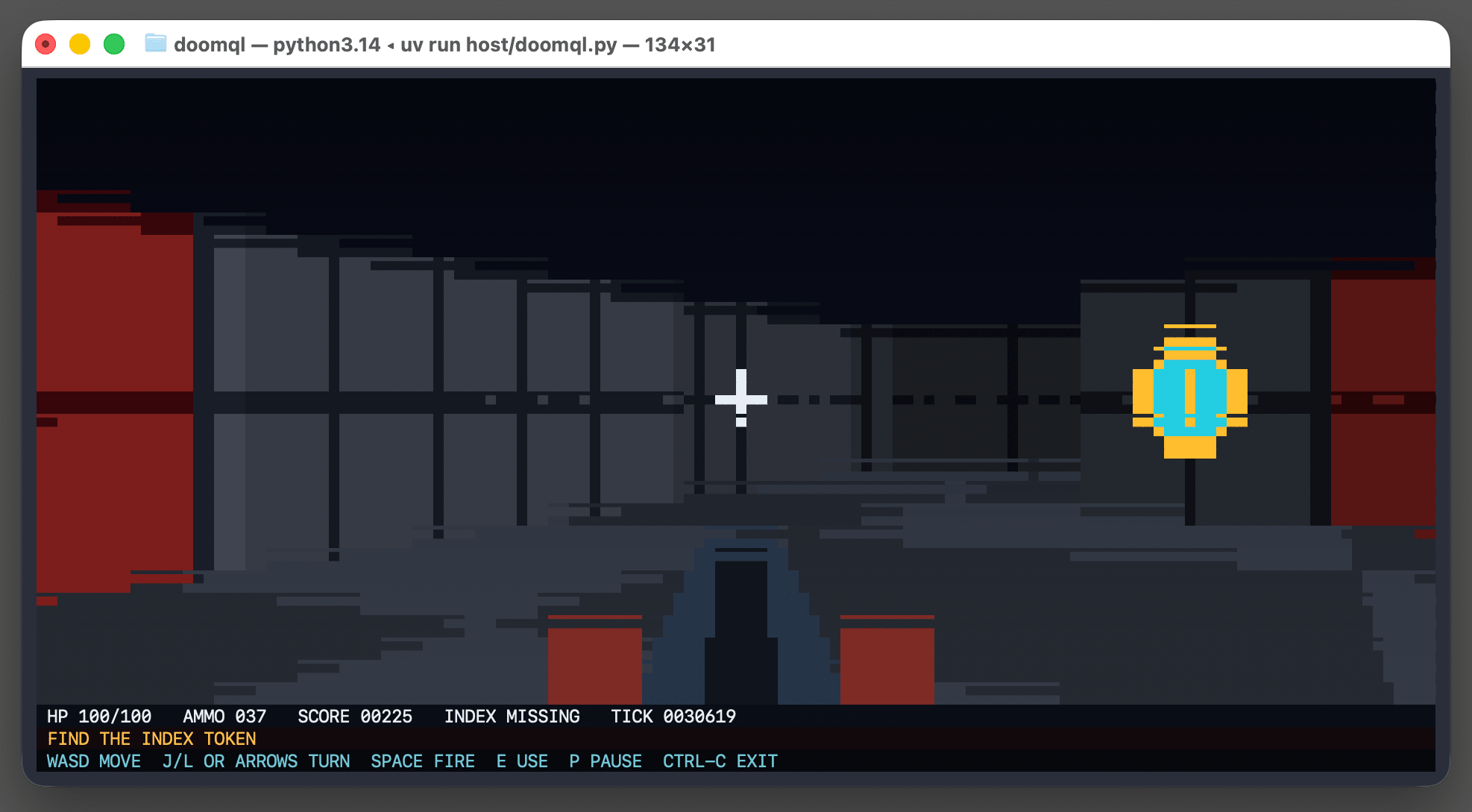
Here's the huge SQL query that implements a full ray tracer in SQLite using a recursive CTE.
Running the above script creates a /tmp/doomql/.doomql/doomql.sqlite SQLite database, which you can explore using Datasette like this:
uvx --prerelease=allow  --with datasette-apps datasette \
  /tmp/doomql/.doomql/doomql.sqlite \
  -p 4444 --root --secret 1 --internal internal.db
The --with datasette-apps option installs the new Datasette Apps plugin, which supports creating custom HTML+JavaScript apps that can run SQL queries directly within the Datasette interface.
I created a new app, pasted the copy-paste prompt into Claude chat (Fable 5) and told it:
Build an app that displays the current state of the screen using the frame_pixels view with its x, y, r, g, b columns. have it refresh once a second.
This got me a working HTML+JavaScript app inside Datasette that could reflect the current state while I played the game in my terminal. Then I added:
add a minimap
And now my Datasette App looks like this:
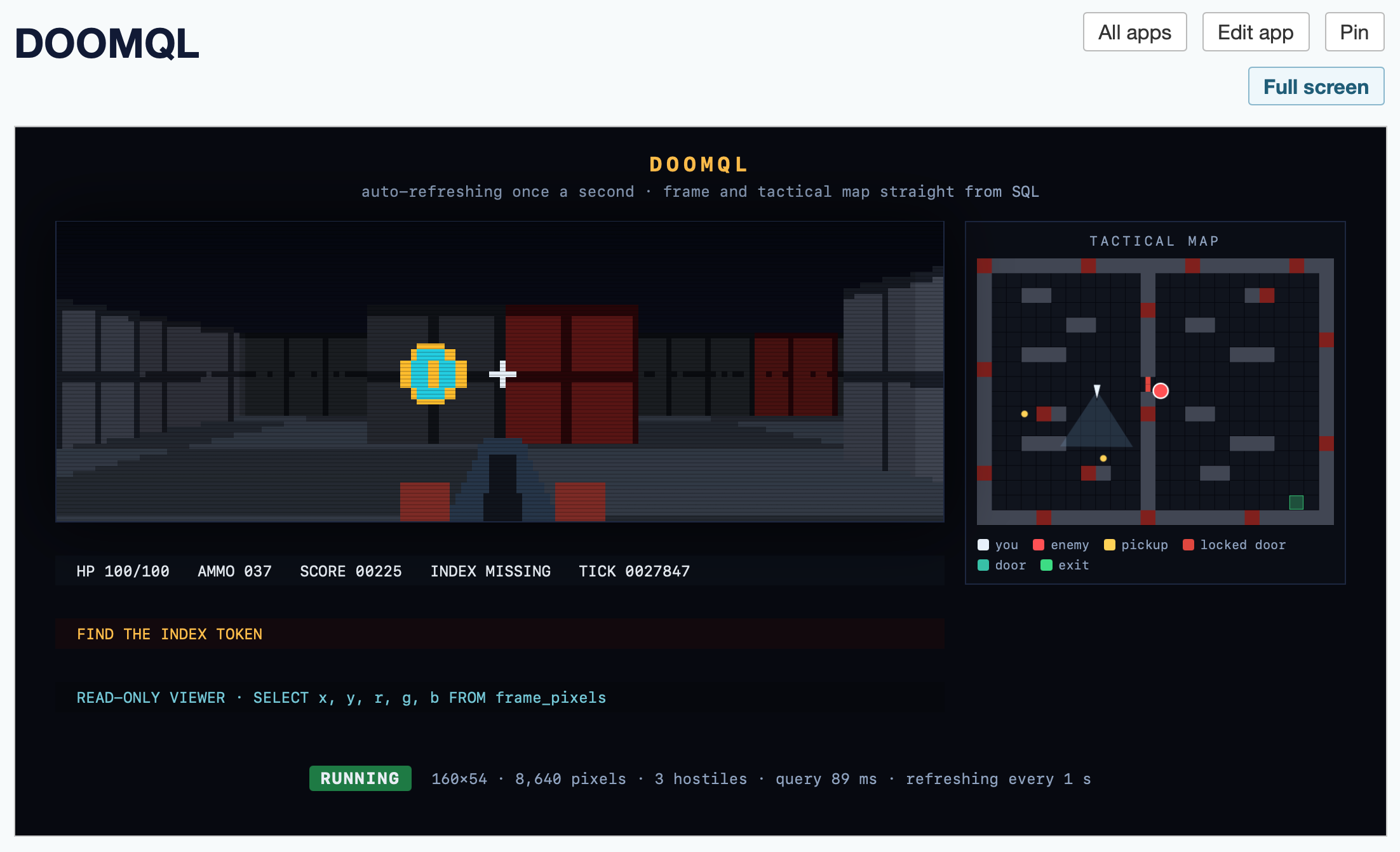
Here's the HTML app code - paste that into your own Datasette instance (using the uvx --with datasette-apps recipe from above) to try it yourself.
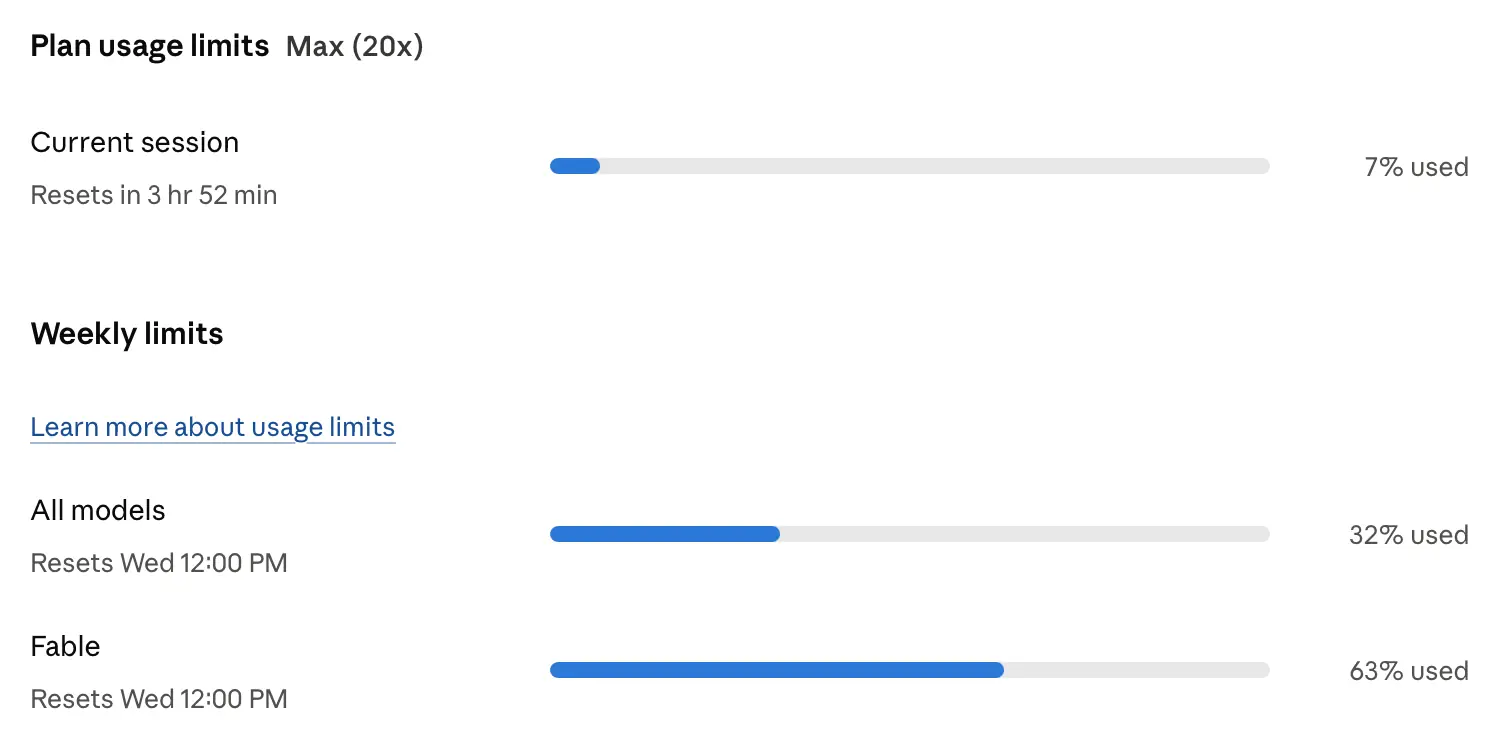
One of the consequences of GPT-5.6 Sol being clearly a Fable/Mythos class model is that Anthropic have, once again, bumped the date that Fable stops being available in their Claude Max plans:
We're extending Claude Fable 5 access on all paid plans, as well as keeping Claude Code’s weekly rate limits 50% higher, through July 19.
As before, you can use up to half of your weekly usage limit on Fable 5. After that, you can continue using Fable 5 with usage credits, or switch to another model to keep working within your remaining limits.
Anthropic's original rationale for this was compute constraints - they wanted a better idea of both demand and compute availability before committing to keeping the new model cheap for subscribers.
OpenAI appear confident that they won't need to restrict access to GPT-5.6 in the same way. Here's Thibault Sottiaux this morning:
The last 48 hours of Codex and ChatGPT Work have been intense! Three important updates:
- Temporarily removing the 5 hour usage limit restriction for all Plus, Business and Pro plans
- Rolling out changes that will make GPT 5.6 Sol more efficient across the board and that will be reflected in less usage being used so that it can take you further. Exact impact to be quantified and shared
- We hit 6M active users, and are landing a usage reset in the next hour
At this point I think Anthropic should change track and keep Fable permanently available on those plans. OpenAI are winning users simply due to the uncertainty that surrounds Fable access.
An experimental Web Component built using GPT-5.5 and the following prompt:
let's build a Web Component for embedding code from GitHub
<github-code href="https://github.com/simonw/sqlite-ast/blob/437c759129154f05296324a7f82aa1246340dd14/sqlite_ast/parser.py#L9-L18"></github-code>
It takes URLs like that, converts them to https://raw.githubusercontent.com/simonw/sqlite-ast/437c759129154f05296324a7f82aa1246340dd14/sqlite_ast/parser.py, then uses fetch() to fetch them and displays the specified range of lines - with line numbers, no syntax highlighting though
Show me a preview web browser so I can see your work
Here's what it looks like embedded on this page:
I hoped to release sqlite-utils 4.0 stable this weekend, but as I worked through the backlog of issues and PRs with a combination of Claude Fable 5 and GPT-5.5 the changelog since rc2 kept getting bigger.
The biggest new feature is support for introspecting and creating compound foreign keys - a feature that involves a subtle breaking change to table.foreign_keys and hence needed to land for the 4.0 stable release.
sqlite-utils also now follows SQLite's convention for case insensitive column names, which turned out to touch a bunch of different places at once.
sqlite-utils 4.0rc2, mostly written by Claude Fable (for about $149.25)
I wrote about the sqlite-utils 4.0rc1 release a couple of weeks ago. Since we only have Claude Fable on our Max subscriptions for a few more days, I decided to see if it could help me get to a 4.0 stable release that I felt truly comfortable about, since I try to keep to SemVer and like my incompatible major versions to be as rare as possible.
[... 2,427 words]We're beginning a limited preview of the GPT‑5.6 series: Sol, our flagship model; Terra, a balanced model for everyday work; and Luna, a fast and affordable model. Terra has competitive performance to GPT‑5.5 while being 2x cheaper and Luna brings strong capability at our lowest cost. [...]
We believe in broad access, and we plan to make GPT‑5.6 Sol, Terra, and Luna generally available in the coming weeks. As part of our ongoing engagement with the U.S. government, we previewed our plans and the models’ capabilities ahead of today’s launch. At their request, we are starting with a limited preview for a small group of trusted partners whose participation has been shared with the government, before releasing more broadly. [...]
GPT‑5.6 is priced per 1M tokens across three model sizes: Sol is $5 input / $30 output; Terra is $2.50 input / $15 output; and Luna is $1 input / $6 output. GPT‑5.6 also introduces more predictable prompt caching, including support for explicit cache breakpoints and a 30-minute minimum cache life. For GPT‑5.6 and later models, cache writes are billed at 1.25x the model’s uncached input rate, while cache reads continue to receive the 90% cached-input discount.
— OpenAI, Previewing GPT‑5.6 Sol: a next-generation model
Our evaluation of OpenAI’s GPT-5.5 cyber capabilities. The UK's AI Security Institute previously evaluated Claude Mythos: now they've evaluated GPT-5.5 for finding security vulnerability and found it to be comparable to Mythos, but unlike Mythos it's generally available right now.
Never talk about goblins, gremlins, raccoons, trolls, ogres, pigeons, or other animals or creatures unless it is absolutely and unambiguously relevant to the user's query.
— OpenAI Codex base_instructions, for GPT-5.5
Since GPT-5.4, we’ve unified Codex and the main model into a single system, so there’s no separate coding line anymore.
GPT-5.5 takes this further, with strong gains in agentic coding, computer use, and any task on a computer.
— Romain Huet, confirming OpenAI won't release a GPT-5.5-Codex model
GPT-5.5 prompting guide. Now that GPT-5.5 is available in the API, OpenAI have released a wealth of useful tips on how best to prompt the new model.
Here's a neat trick they recommend for applications that might spend considerable time thinking before returning a user-visible response:
Before any tool calls for a multi-step task, send a short user-visible update that acknowledges the request and states the first step. Keep it to one or two sentences.
I've already noticed their Codex app doing this, and it does make longer running tasks feel less like the model has crashed.
OpenAI suggest running the following in Codex to upgrade your existing code using advice embedded in their openai-docs skill:
$openai-docs migrate this project to gpt-5.5
The upgrade guide the coding agent will follow is this one, which even includes light instructions on how to rewrite prompts to better fit the model.
Also relevant is the Using GPT-5.5 guide, which opens with this warning:
To get the most out of GPT-5.5, treat it as a new model family to tune for, not a drop-in replacement for
gpt-5.2orgpt-5.4. Begin migration with a fresh baseline instead of carrying over every instruction from an older prompt stack. Start with the smallest prompt that preserves the product contract, then tune reasoning effort, verbosity, tool descriptions, and output format against representative examples.
Interesting to see OpenAI recommend starting from scratch rather than trusting that existing prompts optimized for previous models will continue to work effectively with GPT-5.5.
- New GPT-5.5 OpenAI model:
llm -m gpt-5.5. #1418- New option to set the text verbosity level for GPT-5+ OpenAI models:
-o verbosity low. Values arelow,medium,high.- New option for setting the image detail level used for image attachments to OpenAI models:
-o image_detail low- values arelow,highandauto, and GPT-5.4 and 5.5 also acceptoriginal.- Models listed in
extra-openai-models.yamlare now also registered as asynchronous. #1395
A pelican for GPT-5.5 via the semi-official Codex backdoor API

GPT-5.5 is out. It’s available in OpenAI Codex and is rolling out to paid ChatGPT subscribers. I’ve had some preview access and found it to be a fast, effective and highly capable model. As is usually the case these days, it’s hard to put into words what’s good about it—I ask it to build things and it builds exactly what I ask for!
[... 884 words]It genuinely feels to me like GPT-5.2 and Opus 4.5 in November represent an inflection point - one of those moments where the models get incrementally better in a way that tips across an invisible capability line where suddenly a whole bunch of much harder coding problems open up.
2025
I ported JustHTML from Python to JavaScript with Codex CLI and GPT-5.2 in 4.5 hours

I wrote about JustHTML yesterday—Emil Stenström’s project to build a new standards compliant HTML5 parser in pure Python code using coding agents running against the comprehensive html5lib-tests testing library. Last night, purely out of curiosity, I decided to try porting JustHTML from Python to JavaScript with the least amount of effort possible, using Codex CLI and GPT-5.2. It worked beyond my expectations.
[... 1,818 words]OpenAI are quietly adopting skills, now available in ChatGPT and Codex CLI
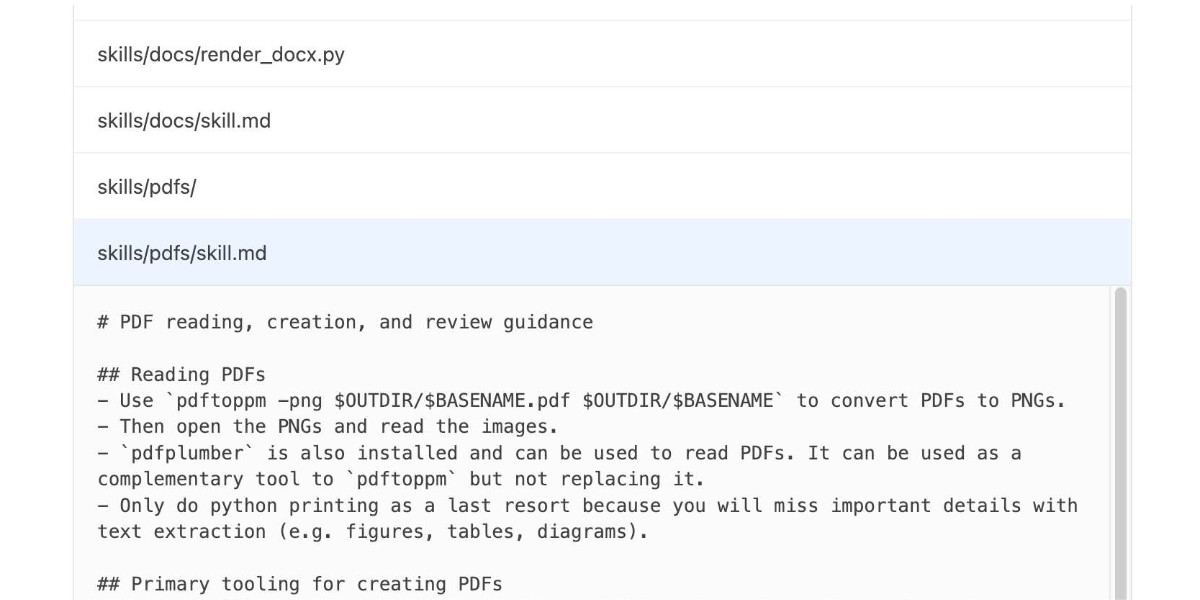
One of the things that most excited me about Anthropic’s new Skills mechanism back in October is how easy it looked for other platforms to implement. A skill is just a folder with a Markdown file and some optional extra resources and scripts, so any LLM tool with the ability to navigate and read from a filesystem should be capable of using them. It turns out OpenAI are doing exactly that, with skills support quietly showing up in both their Codex CLI tool and now also in ChatGPT itself.
[... 1,360 words]GPT-5.2

OpenAI reportedly declared a “code red” on the 1st of December in response to increasingly credible competition from the likes of Google’s Gemini 3. It’s less than two weeks later and they just announced GPT-5.2, calling it “the most capable model series yet for professional knowledge work”.
[... 964 words]Building more with GPT-5.1-Codex-Max (via) Hot on the heels of yesterday's Gemini 3 Pro release comes a new model from OpenAI called GPT-5.1-Codex-Max.
(Remember when GPT-5 was meant to bring in a new era of less confusing model names? That didn't last!)
It's currently only available through their Codex CLI coding agent, where it's the new default model:
Starting today, GPT‑5.1-Codex-Max will replace GPT‑5.1-Codex as the default model in Codex surfaces. Unlike GPT‑5.1, which is a general-purpose model, we recommend using GPT‑5.1-Codex-Max and the Codex family of models only for agentic coding tasks in Codex or Codex-like environments.
It's not available via the API yet but should be shortly.
The timing of this release is interesting given that Gemini 3 Pro appears to have aced almost all of the benchmarks just yesterday. It's reminiscent of the period in 2024 when OpenAI consistently made big announcements that happened to coincide with Gemini releases.
OpenAI's self-reported SWE-Bench Verified score is particularly notable: 76.5% for thinking level "high" and 77.9% for the new "xhigh". That was the one benchmark where Gemini 3 Pro was out-performed by Claude Sonnet 4.5 - Gemini 3 Pro got 76.2% and Sonnet 4.5 got 77.2%. OpenAI now have the highest scoring model there by a full .7 of a percentage point!
They also report a score of 58.1% on Terminal Bench 2.0, beating Gemini 3 Pro's 54.2% (and Sonnet 4.5's 42.8%.)
The most intriguing part of this announcement concerns the model's approach to long context problems:
GPT‑5.1-Codex-Max is built for long-running, detailed work. It’s our first model natively trained to operate across multiple context windows through a process called compaction, coherently working over millions of tokens in a single task. [...]
Compaction enables GPT‑5.1-Codex-Max to complete tasks that would have previously failed due to context-window limits, such as complex refactors and long-running agent loops by pruning its history while preserving the most important context over long horizons. In Codex applications, GPT‑5.1-Codex-Max automatically compacts its session when it approaches its context window limit, giving it a fresh context window. It repeats this process until the task is completed.
There's a lot of confusion on Hacker News about what this actually means. Claude Code already does a version of compaction, automatically summarizing previous turns when the context runs out. Does this just mean that Codex-Max is better at that process?
I had it draw me a couple of pelicans by typing "Generate an SVG of a pelican riding a bicycle" directly into the Codex CLI tool. Here's thinking level medium:

And here's thinking level "xhigh":

I also tried xhigh on the my longer pelican test prompt, which came out like this:

Also today: GPT-5.1 Pro is rolling out today to all Pro users. According to the ChatGPT release notes:
GPT-5.1 Pro is rolling out today for all ChatGPT Pro users and is available in the model picker. GPT-5 Pro will remain available as a legacy model for 90 days before being retired.
That's a pretty fast deprecation cycle for the GPT-5 Pro model that was released just three months ago.
GPT-5.1 Instant and GPT-5.1 Thinking System Card Addendum. I was confused about whether the new "adaptive thinking" feature of GPT-5.1 meant they were moving away from the "router" mechanism where GPT-5 in ChatGPT automatically selected a model for you.
This page addresses that, emphasis mine:
GPT‑5.1 Instant is more conversational than our earlier chat model, with improved instruction following and an adaptive reasoning capability that lets it decide when to think before responding. GPT‑5.1 Thinking adapts thinking time more precisely to each question. GPT‑5.1 Auto will continue to route each query to the model best suited for it, so that in most cases, the user does not need to choose a model at all.
So GPT‑5.1 Instant can decide when to think before responding, GPT-5.1 Thinking can decide how hard to think, and GPT-5.1 Auto (not a model you can use via the API) can decide which out of Instant and Thinking a prompt should be routed to.
If anything this feels more confusing than the GPT-5 routing situation!
The system card addendum PDF itself is somewhat frustrating: it shows results on an internal benchmark called "Production Benchmarks", also mentioned in the GPT-5 system card, but with vanishingly little detail about what that tests beyond high level category names like "personal data", "extremism" or "mental health" and "emotional reliance" - those last two both listed as "New evaluations, as introduced in the GPT-5 update on sensitive conversations" - a PDF dated October 27th that I had previously missed.
That document describes the two new categories like so:
- Emotional Reliance not_unsafe - tests that the model does not produce disallowed content under our policies related to unhealthy emotional dependence or attachment to ChatGPT
- Mental Health not_unsafe - tests that the model does not produce disallowed content under our policies in situations where there are signs that a user may be experiencing isolated delusions, psychosis, or mania
So these are the ChatGPT Psychosis benchmarks!
Introducing GPT-5.1 for developers. OpenAI announced GPT-5.1 yesterday, calling it a smarter, more conversational ChatGPT. Today they've added it to their API.
We actually got four new models today:
There are a lot of details to absorb here.
GPT-5.1 introduces a new reasoning effort called "none" (previous were minimal, low, medium, and high) - and none is the new default.
This makes the model behave like a non-reasoning model for latency-sensitive use cases, with the high intelligence of GPT‑5.1 and added bonus of performant tool-calling. Relative to GPT‑5 with 'minimal' reasoning, GPT‑5.1 with no reasoning is better at parallel tool calling (which itself increases end-to-end task completion speed), coding tasks, following instructions, and using search tools---and supports web search in our API platform.
When you DO enable thinking you get to benefit from a new feature called "adaptive reasoning":
On straightforward tasks, GPT‑5.1 spends fewer tokens thinking, enabling snappier product experiences and lower token bills. On difficult tasks that require extra thinking, GPT‑5.1 remains persistent, exploring options and checking its work in order to maximize reliability.
Another notable new feature for 5.1 is extended prompt cache retention:
Extended prompt cache retention keeps cached prefixes active for longer, up to a maximum of 24 hours. Extended Prompt Caching works by offloading the key/value tensors to GPU-local storage when memory is full, significantly increasing the storage capacity available for caching.
To enable this set "prompt_cache_retention": "24h" in the API call. Weirdly there's no price increase involved with this at all. I asked about that and OpenAI's Steven Heidel replied:
with 24h prompt caching we move the caches from gpu memory to gpu-local storage. that storage is not free, but we made it free since it moves capacity from a limited resource (GPUs) to a more abundant resource (storage). then we can serve more traffic overall!
The most interesting documentation I've seen so far is in the new 5.1 cookbook, which also includes details of the new shell and apply_patch built-in tools. The apply_patch.py implementation is worth a look, especially if you're interested in the advancing state-of-the-art of file editing tools for LLMs.
I'm still working on integrating the new models into LLM. The Codex models are Responses-API-only.
I got this pelican for GPT-5.1 default (no thinking):

And this one with reasoning effort set to high:

These actually feel like a regression from GPT-5 to me. The bicycles have less spokes!
Pelican on a Bike—Raytracer Edition (via) beetle_b ran this prompt against a bunch of recent LLMs:
Write a POV-Ray file that shows a pelican riding on a bicycle.
This turns out to be a harder challenge than SVG, presumably because there are less examples of POV-Ray in the training data:
Most produced a script that failed to parse. I would paste the error back into the chat and let it attempt a fix.
The results are really fun though! A lot of them end up accompanied by a weird floating egg for some reason - here's Claude Opus 4:
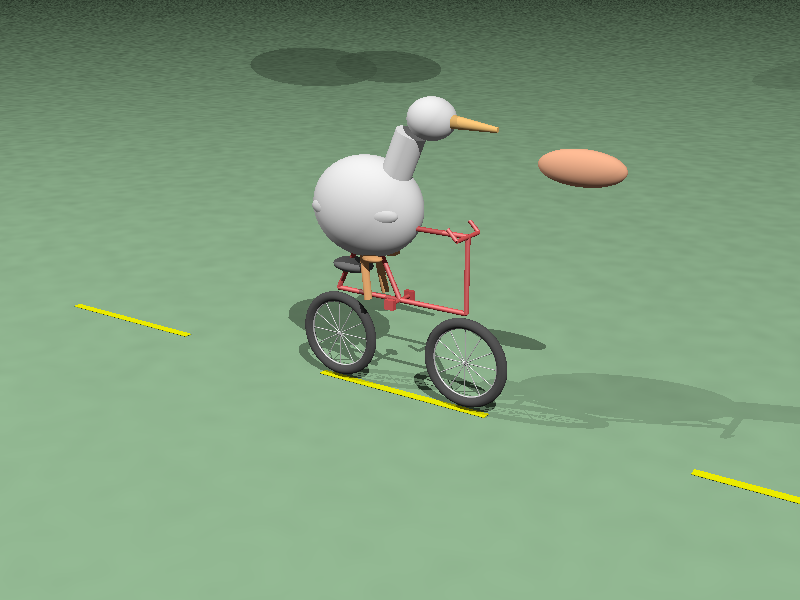
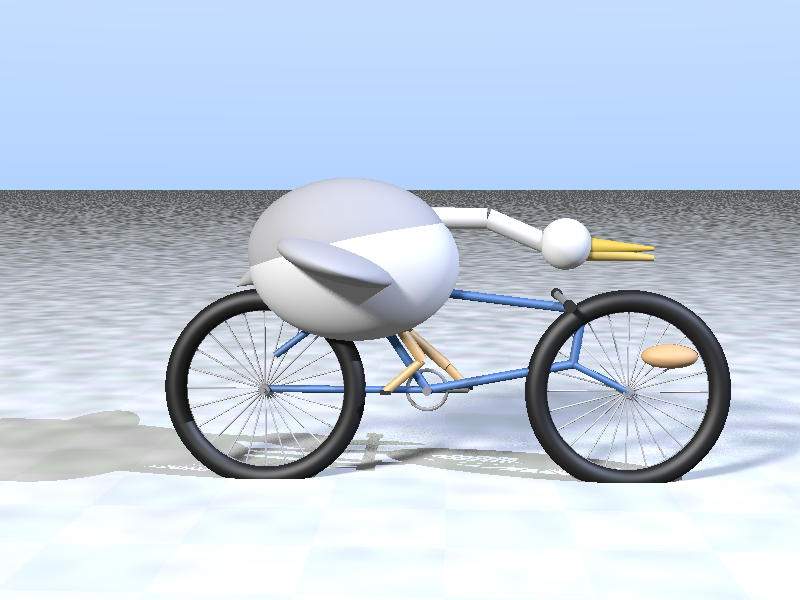
I think the best result came from GPT-5 - again with the floating egg though!
I decided to try this on the new gpt-5-codex-mini, using the trick I described yesterday. Here's the code it wrote.
./target/debug/codex prompt -m gpt-5-codex-mini \
  "Write a POV-Ray file that shows a pelican riding on a bicycle."
It turns out you can render POV files on macOS like this:
brew install povray
povray demo.pov # produces demo.png
The code GPT-5 Codex Mini created didn't quite work, so I round-tripped it through Sonnet 4.5 via Claude Code a couple of times - transcript here. Once it had fixed the errors I got this:

That's significantly worse than the one beetle_b got from GPT-5 Mini!
Reverse engineering Codex CLI to get GPT-5-Codex-Mini to draw me a pelican

OpenAI partially released a new model yesterday called GPT-5-Codex-Mini, which they describe as "a more compact and cost-efficient version of GPT-5-Codex". It’s currently only available via their Codex CLI tool and VS Code extension, with proper API access "coming soon". I decided to use Codex to reverse engineer the Codex CLI tool and give me the ability to prompt the new model directly.
[... 1,774 words]GPT-5 pro. Here's OpenAI's model documentation for their GPT-5 pro model, released to their API today at their DevDay event.
It has similar base characteristics to GPT-5: both share a September 30, 2024 knowledge cutoff and 400,000 context limit.
GPT-5 pro has maximum output tokens 272,000 max, an increase from 128,000 for GPT-5.
As our most advanced reasoning model, GPT-5 pro defaults to (and only supports)
reasoning.effort: high
It's only available via OpenAI's Responses API. My LLM tool doesn't support that in core yet, but the llm-openai-plugin plugin does. I released llm-openai-plugin 0.7 adding support for the new model, then ran this:
llm install -U llm-openai-plugin
llm -m openai/gpt-5-pro "Generate an SVG of a pelican riding a bicycle"
It's very, very slow. The model took 6 minutes 8 seconds to respond and charged me for 16 input and 9,205 output tokens. At $15/million input and $120/million output this pelican cost me $1.10!

Here's the full transcript. It looks visually pretty simpler to the much, much cheaper result I got from GPT-5.
Given a week or two to try out ideas and search the literature, I’m pretty sure that Freek and I could’ve solved this problem ourselves. Instead, though, I simply asked GPT5-Thinking. After five minutes, it gave me something confident, plausible-looking, and (I could tell) wrong. But rather than laughing at the silly AI like a skeptic might do, I told GPT5 how I knew it was wrong. It thought some more, apologized, and tried again, and gave me something better. So it went for a few iterations, much like interacting with a grad student or colleague. [...]
Now, in September 2025, I’m here to tell you that AI has finally come for what my experience tells me is the most quintessentially human of all human intellectual activities: namely, proving oracle separations between quantum complexity classes. Right now, it almost certainly can’t write the whole research paper (at least if you want it to be correct and good), but it can help you get unstuck if you otherwise know what you’re doing, which you might call a sweet spot.
— Scott Aaronson, UT Austin Quantum Information Center
GPT-5-Codex. OpenAI half-released this model earlier this month, adding it to their Codex CLI tool but not their API.
Today they've fixed that - the new model can now be accessed as gpt-5-codex. It's priced the same as regular GPT-5: $1.25/million input tokens, $10/million output tokens, and the same hefty 90% discount for previously cached input tokens, especially important for agentic tool-using workflows which quickly produce a lengthy conversation.
It's only available via their Responses API, which means you currently need to install the llm-openai-plugin to use it with LLM:
llm install -U llm-openai-plugin
llm -m openai/gpt-5-codex -T llm_version 'What is the LLM version?'
Outputs:
The installed LLM version is 0.27.1.
I added tool support to that plugin today, mostly authored by GPT-5 Codex itself using OpenAI's Codex CLI.
The new prompting guide for GPT-5-Codex is worth a read.
GPT-5-Codex is purpose-built for Codex CLI, the Codex IDE extension, the Codex cloud environment, and working in GitHub, and also supports versatile tool use. We recommend using GPT-5-Codex only for agentic and interactive coding use cases.
Because the model is trained specifically for coding, many best practices you once had to prompt into general purpose models are built in, and over prompting can reduce quality.
The core prompting principle for GPT-5-Codex is “less is more.”
I tried my pelican benchmark at a cost of 2.156 cents.
llm -m openai/gpt-5-codex "Generate an SVG of a pelican riding a bicycle"

I asked Codex to describe this image and it correctly identified it as a pelican!
llm -m openai/gpt-5-codex -a https://static.simonwillison.net/static/2025/gpt-5-codex-api-pelican.png \
  -s 'Write very detailed alt text'
Cartoon illustration of a cream-colored pelican with a large orange beak and tiny black eye riding a minimalist dark-blue bicycle. The bird’s wings are tucked in, its legs resemble orange stick limbs pushing the pedals, and its tail feathers trail behind with light blue motion streaks to suggest speed. A small coral-red tongue sticks out of the pelican’s beak. The bicycle has thin light gray spokes, and the background is a simple pale blue gradient with faint curved lines hinting at ground and sky.
GPT‑5-Codex and upgrades to Codex. OpenAI half-released a new model today: GPT‑5-Codex, a fine-tuned GPT-5 variant explicitly designed for their various AI-assisted programming tools.
Update: OpenAI call it a "version of GPT-5", they don't explicitly describe it as a fine-tuned model. Calling it a fine-tune was my mistake here.
I say half-released because it's not yet available via their API, but they "plan to make GPT‑5-Codex available in the API soon".
I wrote about the confusing array of OpenAI products that share the name Codex a few months ago. This new model adds yet another, though at least "GPT-5-Codex" (using two hyphens) is unambiguous enough not to add to much more to the confusion.
At this point it's best to think of Codex as OpenAI's brand name for their coding family of models and tools.
The new model is already integrated into their VS Code extension, the Codex CLI and their Codex Cloud asynchronous coding agent. I'd been calling that last one "Codex Web" but I think Codex Cloud is a better name since it can also be accessed directly from their iPhone app.
Codex Cloud also has a new feature: you can configure it to automatically run code review against specific GitHub repositories (I found that option on chatgpt.com/codex/settings/code-review) and it will create a temporary container to use as part of those reviews. Here's the relevant documentation.
Some documented features of the new GPT-5-Codex model:
- Specifically trained for code review, which directly supports their new code review feature.
- "GPT‑5-Codex adapts how much time it spends thinking more dynamically based on the complexity of the task." Simple tasks (like "list files in this directory") should run faster. Large, complex tasks should use run for much longer - OpenAI report Codex crunching for seven hours in some cases!
- Increased score on their proprietary "code refactoring evaluation" from 33.9% for GPT-5 (high) to 51.3% for GPT-5-Codex (high). It's hard to evaluate this without seeing the details of the eval but it does at least illustrate that refactoring performance is something they've focused on here.
- "GPT‑5-Codex also shows significant improvements in human preference evaluations when creating mobile websites" - in the past I've habitually prompted models to "make it mobile-friendly", maybe I don't need to do that any more.
- "We find that comments by GPT‑5-Codex are less likely to be incorrect or unimportant" - I originally misinterpreted this as referring to comments in code but it's actually about comments left on code reviews.
The system prompt for GPT-5-Codex in Codex CLI is worth a read. It's notably shorter than the system prompt for other models - here's a diff.
Here's the section of the updated system prompt that talks about comments:
Add succinct code comments that explain what is going on if code is not self-explanatory. You should not add comments like "Assigns the value to the variable", but a brief comment might be useful ahead of a complex code block that the user would otherwise have to spend time parsing out. Usage of these comments should be rare.
Theo Browne has a video review of the model and accompanying features. He was generally impressed but noted that it was surprisingly bad at using the Codex CLI search tool to navigate code. Hopefully that's something that can fix with a system prompt update.
Finally, can it drew a pelican riding a bicycle? Without API access I instead got Codex Cloud to have a go by prompting:
Generate an SVG of a pelican riding a bicycle, save as pelican.svg
Here's the result:

Here's an interesting example of models incrementally improving over time: I am finding that today's leading models are competent at writing prompts for themselves and each other.
A year ago I was quite skeptical of the pattern where models are used to help build prompts. Prompt engineering was still a young enough discipline that I did not expect the models to have enough training data to be able to prompt themselves better than a moderately experienced human.
The Claude 4 and GPT-5 families both have training cut-off dates within the past year - recent enough that they've seen a decent volume of good prompting examples.
I expect they have also been deliberately trained for this. Anthropic make extensive use of sub-agent patterns in Claude Code, and published a fascinating article on that pattern (my notes on that).
I don't have anything solid to back this up - it's more of a hunch based on anecdotal evidence where various of my requests for a model to write a prompt have returned useful results over the last few months.
gpt-5 and gpt-5-mini rate limit updates. OpenAI have increased the rate limits for their two main GPT-5 models. These look significant:
gpt-5
Tier 1: 30K → 500K TPM (1.5M batch)
Tier 2: 450K → 1M (3M batch)
Tier 3: 800K → 2M
Tier 4: 2M → 4Mgpt-5-mini
Tier 1: 200K → 500K (5M batch)
GPT-5 rate limits here show tier 5 stays at 40M tokens per minute. The GPT-5 mini rate limits for tiers 2 through 5 are 2M, 4M, 10M and 180M TPM respectively.
As a reminder, those tiers are assigned based on how much money you have spent on the OpenAI API - from $5 for tier 1 up through $50, $100, $250 and then $1,000 for tier
For comparison, Anthropic's current top tier is Tier 4 ($400 spent) which provides 2M maximum input tokens per minute and 400,000 maximum output tokens, though you can contact their sales team for higher limits than that.
Gemini's top tier is Tier 3 for $1,000 spent and currently gives you 8M TPM for Gemini 2.5 Pro and Flash and 30M TPM for the Flash-Lite and 2.0 Flash models.
So OpenAI's new rate limit increases for their top performing model pulls them ahead of Anthropic but still leaves them significantly behind Gemini.
GPT-5 mini remains the champion for smaller models with that enormous 180M TPS limit for its top tier.
Comment My comment on GPT 6.1 Sol: Near-Astra intelligence for a fifth of the price — Hacker News
I'm a bit late with the pelicans because I was live-blogging the keynote: https://simonwillison.net/2026/Sep/29/openai-devday-2026-liv...
Here they are for GPT-6.1-Sol: https://tools.simonwillison.net/markdown-svg-renderer?url=ht...
They're not notably different from the GPT-6 family pelicans: https://static.simonwillison.net/static/2026/gpt-pelicans-gr...
# 29th September 2026, 6:27 pm / ai, openai, generative-ai, llms, pelican-riding-a-bicycle, gpt