485 posts tagged “sqlite”
SQLite is the world's most widely deployed database engine.
2020
Fun with binary data and SQLite
This week I’ve been mainly experimenting with binary data storage in SQLite. sqlite-utils can now insert data from binary files, and datasette-media can serve content over HTTP that originated as binary BLOBs in a database file.
[... 957 words]sqlite-utils 2.12 (via) I’ve been experimenting with ways of improving BLOB support in Datasette and sqlite-utils. This new version of sqlite-utils includes a “sqlite-utils insert-files” command, which can recursively crawl directories for files and add their contents to SQLite with configurable columns containing their metadata.
I was inspired by Paul Ford who has been creating multi-GB SQLite databases of images and PDFs. It turns out that when disk space is cheap this is a pretty effective way of working with interesting corpuses of documents and images.
Weeknotes: cookiecutter templates, better plugin documentation, sqlite-generate
I spent this week spreading myself between a bunch of smaller projects, and finally getting familiar with cookiecutter. I wrote about my datasette-plugin cookiecutter template earlier in the week; here’s what else I’ve been working on.
[... 703 words]sqlite-generate (via) I wrote this tool today to generate arbitrarily large SQLite databases, for testing purposes. You tell it how many tables, columns and rows you want and it will use the Faker Python library to generate random data and populate the tables with it.
Using SQL to Look Through All of Your iMessage Text Messages (via) Dan Kelch shows how to access the iMessage SQLite database at ~/Library/Messages/chat.db—it’s protected under macOS Catalina so you have to enable Full Disk Access in the privacy settings first. I usually use the macOS terminal app but I installed iTerm for this because I’d rather enable full disk access to a separate terminal program than let anything I’m running in my regular terminal take advantage of it. It worked! Now I can run “datasette ~/Library/Messages/chat.db” to browse my messages.
Using SQL to find my best photo of a pelican according to Apple Photos
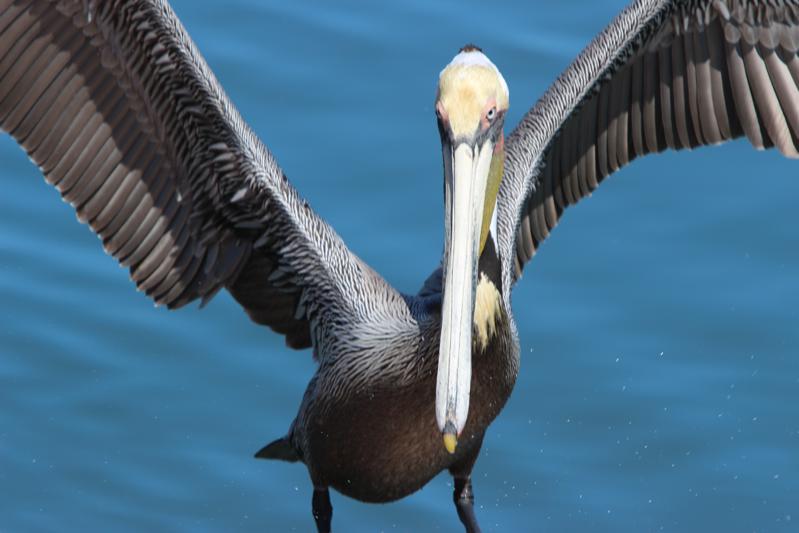
According to the Apple Photos internal SQLite database, this is the most aesthetically pleasing photograph I have ever taken of a pelican:
[... 1,937 words]Weeknotes: Datasette 0.41, photos breakthroughs
Shorter weeknotes this week, because my main project for the week warrants a detailed write-up on its own (coming soon... update 21st May here it is).
[... 867 words]Weeknotes: Datasette 0.39 and many other projects
This week’s theme: Well, I’m not going anywhere. So a ton of progress to report on various projects.
[... 806 words]hacker-news-to-sqlite (via) The latest in my Dogsheep series of tools: hacker-news-to-sqlite uses the Hacker News API to fetch your comments and submissions from Hacker News and save them to a SQLite database.