41 posts tagged “ai-in-china” and “pelican-riding-a-bicycle”
2026
Introducing Kimi K3.1 Pro (via) Kimi K3.1 Pro landed on the Kimi API today - it's not yet open weights, but Moonshot promise "Full model weights will be released by Nov 4, 2026".
They're also offering a "Highspeed" version that's 2-3x faster, at twice the price (except for input token cache hits, which are priced the same).
The US dollar pricing is $2.00/million tokens for input and $10/million for output - the same as GPT-6.1 Sol and half the price of Claude Opus 5.5.
Moonshot's own benchmarks show Kimi as approximately level with Opus 5.5 and GPT-6 Astra - beating them on a few benchmarks, coming close on others.
Artificial Analysis scored Kimi at 55 - ahead of Claude Fable 5.1, GPT-6 Astra, and Gemini 4 Argon (all at 53) and behind only Claude Opus 5.5 (58).
This is the first time a (soon-to-be) open weight model has scored this highly against the frontier.
I tried it out via the Moonshot API using the llm openai endpoint command I added to LLM 0.32 back in August:
llm openai endpoint \
  https://api.moonshot.ai/v1 \
  --key kimi \
  -m kimi-k3.1-pro \
  "Generate an SVG of a pelican riding a bicycle" \
  --responses \
  -o reasoning_effort low \
  > kimi-k3.1-pro-pelican-low.stdout.txt \
  2> kimi-k3.1-pro-pelican-low.stderr.txt
llm openai endpoint can run prompts against any OpenAI-compatible endpoint but doesn't log the results, hence the extra options to save stdout and stderr (the reasoning trace).
Here are the pelicans I got for Kimi K3.1 Pro on the three reasoning levels it supports - low, medium, and max. This is max:

For comparison, I ran fresh pelicans against Kimi K3 on those three reasoning levels.
Introducing Hy4 Preview. New open weight text input (no vision) LLM from Chinese company Tencent today: 770B total parameters, 49B active parameters, 1M token context window, 1.56TB on Hugging Face.
This is a big size increase from their previous Hy3 in July, which was 295B, 21B active, 256,000 context, 598GB.
I recently started using model chat templates to better understand their capabilities. Here's Hy4's chat_template.jinja on Hugging Face, which includes this section:
{%- if not reasoning_effort is defined %}
    {%- set reasoning_effort = 'high' %}
{%- elif reasoning_effort not in ['high', 'no_think'] %}
    {%- if reasoning_effort is none %}
        {{- raise_exception('reasoning_effort error : None, should be no_think/high') }}
    {%- else %}
        {{- raise_exception('reasoning_effort error : ' + reasoning_effort + ', should be no_think/high') }}
    {%- endif %}
{%- endif %}
So it looks like there are just two reasoning effort levels: "high" (the default) and "no_think" (reason by disabled).
I tried my "Generate an SVG of a pelican riding a bicycle" prompt with the default high reasoning via OpenRouter and got this:

Quoting the reasoning trace:
[...] Let's maybe add a helmet? It could improve riding theme, but may obscure head. Maybe a small cycling cap or helmet? The user didn't ask; can add red helmet? Might be cute. But pelican with big beak; a helmet might obscure. Better maybe no.
Maybe add sunglasses? no.
Maybe add water? no.
It's interesting how the reasoning trace uses slightly truncated English, presumably because perfect grammar isn't useful or token efficient for hidden reasoning text.
Qwen3.8-Flash-Next (via) Another open weights model from Qwen. This one is "a multimodal MoE model that also serves as an early preview of the architecture used in Qwen4".
It's pretty big: 125B parameters but only 6B active which means it gets a significant performance boost.
I've been trying it out on a DGX Spark using these Unsloth quantized models. I'm still exploring the model - so far I've tried the 72.5GB UD-IQ1_S one (producing these pelicans) and the 78.9GB UD-Q2_K_XL (producing these).
My favorite so far was this xhigh reasoning effort one from UD-Q2_K_XL:

Qwen 3.8 27B is excellent, but it defaults to wildly overthinking things

Friday’s big release was Qwen 3.8 27B, an Apache 2 licensed 27B parameter vision-capable LLM from Alibaba’s Qwen research lab. I’ve been looking forward to this one: 27B is an excellent size for running a model on a reasonably specced laptop, and its predecessor Qwen 3.6 27B was impressive.
[... 2,543 words]DeepSeek V4 Pro 0813 (on OpenRouter). The latest DeepSeek Pro model is now available, via API only. I had to link to OpenRouter because DeepSeek don't have any obvious announcement page for their new model.
I haven't been able to confirm if they plan to release the open weights, but given the weights are available for both April's deepseek-ai/DeepSeek-V4-Pro and July's deepseek-ai/DeepSeek-V4-Flash-0731 it seems likely. Update: the weights are now available on Hugging Face, 1.7T parameters, 893 GB.
Interestingly I got very different looking pelicans for the three different reasoning levels of low, medium, and high. I've not noticed this kind of difference from any other model:
Low:

Medium:

High:

In terms of benchmarks... as far as I can tell those were released to the Official DeepSeek WeChat Group, then copied and pasted into a post on Reddit which was deleted by the moderators for being "low-effort", then copied into this ASCII-art table on Hacker News.
deepseek-ai/DeepSeek-V4-Flash-0731 (via) The latest release in DeepSeek's V4 family, "with substantially enhanced agentic capabilities". It's 304 billion parameters - 167GB on Hugging Face - but it appears to punch well above its weight.
Artificial Analysis rank it ahead of MiniMax M3 - a 428B model. It's $0.14/million input and $0.27/million output pricing means this may currently be the best value-per-intelligence model out there. It's looking very good on the Intelligence Index vs. Cost per Intelligence Index Task chart:
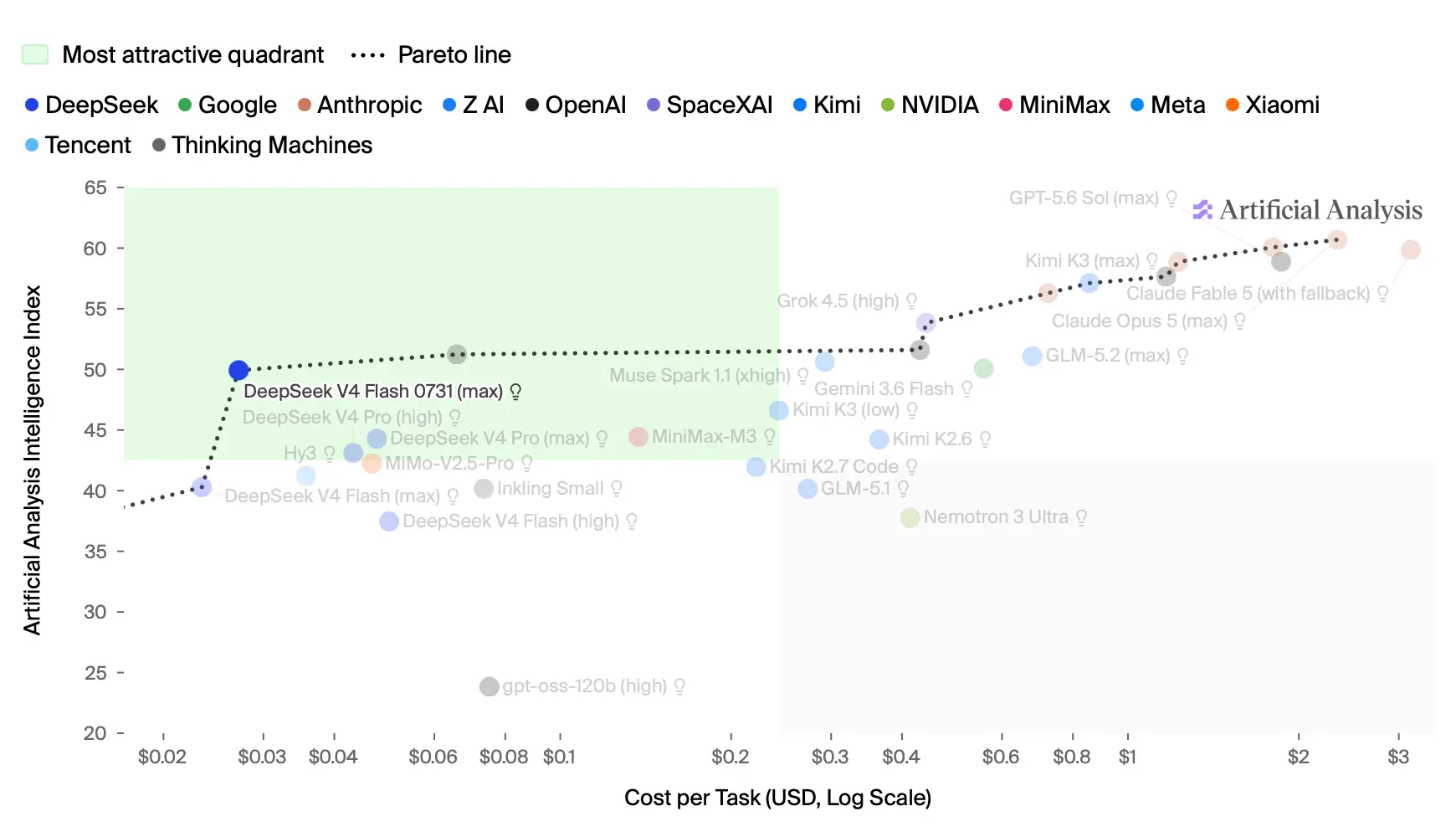
I got a disappointing pelican from it using the default reasoning level via OpenRouter:

But when I bumped reasoning level up to high I got something much better:
llm -m openrouter/deepseek/deepseek-v4-flash-0731 -t pelican -o reasoning_effort high

Who’s Afraid of Chinese Models? (via) Interesting proposal from Ben Thompson that both addresses the hypocrisy of labs outlawing distillation against their models despite training on unlicensed data, and could help US open models compete more effectively with their Chinese counterparts:
The U.S. should pass a law that (1) makes explicit that collecting data for training models is fair use, and (2) bars terms of service that forbid distillation, for U.S. companies at a minimum. Stopping distillation — which is literally just querying the API — is nearly impossible; the U.S. should go the other way and lean into a new copyright policy that both indemnifies the labs and also guarantees that what they learned fuels further innovation for everyone else.
Ben also theorizes that Alibaba's decision to release Qwen 3.8 Max as open weights - a reversal from their decision not to release Qwen 3.7 Max in May - may have been influenced by a recent speech by Xi Jinping, who said:
We should seize this rare, historic opportunity to encourage open source, openness, collaboration and sharing.
And on the subject of Qwen 3.8 Max - a new 2.4T parameter model (nearly as large as the 2.8T Kimi K3) - here's a pelican it drew:

I particularly enjoyed seeing these notes in the (extensive) reasoning trace: "Could add helmet? No." and "Maybe add small bell? no." and "Need maybe add small fish in basket? Not necessary."
Kimi K3, and what we can still learn from the pelican benchmark

Chinese AI lab Moonshot AI announced Kimi K3 this morning, describing it as their “most capable model to date, with 2.8 trillion parameters”. It’s currently available via their website and API, but an open weight release is promised “by July 27, 2026”.
[... 1,113 words]tencent/Hy3. New Apache 2.0 licensed model from Tencent in China:
Hy3 is a 295B-parameter Mixture-of-Experts (MoE) model with 21B active parameters and 3.8B MTP layer parameters, developed by the Tencent Hy Team. Following the Hy3 Preview launch in late April, we gathered feedback from 50+ products and scaled up post-training with higher quality data. Today, we introduce Hy3, which outperforms similar-size models and rivals flagship open-source models with 2-5x parameters. It also shows significant gains in utility across various products and productivity tasks.
The full-sized model is 598GB on Hugging Face, and the FP8 quantized one is 300GB. The context length is 256K.
It's available for free on OpenRouter until July 21st. I had it "Generate an SVG of a pelican riding a bicycle" there and got this:

Update: I'd forgotten about this but Max Woolf wrote about an earlier preview of this model back on May 26th: The mysterious Hy3 LLM is topping OpenRouter Model Rankings by a large margin. When I tried that one I got back this pelican which wasn't as good as today's but did have a "Change Pelican Color" button, a first from any model.
GLM-5.2 is probably the most powerful text-only open weights LLM

Chinese AI lab Z.ai released GLM-5.2 to their coding plan subscribers on June 13th, and then yesterday (June 16th) released the full open weights under an MIT license. Similar in size to their previous GLM-5 and GLM-5.1 releases this is a 753B parameter, 1.51TB monster—with 40 active parameters (Mixture of Experts). GLM-5.2 is a text input only model—Z.ai have a separate vision family most recently represented by GLM-5V-Turbo, but that one isn’t open weights. GLM-5.2 has a 1 million token context window, up from GLM-5.1’s 200,000.
[... 599 words]DeepSeek V4—almost on the frontier, a fraction of the price

Chinese AI lab DeepSeek’s last model release was V3.2 (and V3.2 Speciale) last December. They just dropped the first of their hotly anticipated V4 series in the shape of two preview models, DeepSeek-V4-Pro and DeepSeek-V4-Flash.
[... 703 words]Qwen3.6-27B: Flagship-Level Coding in a 27B Dense Model (via) Big claims from Qwen about their latest open weight model:
Qwen3.6-27B delivers flagship-level agentic coding performance, surpassing the previous-generation open-source flagship Qwen3.5-397B-A17B (397B total / 17B active MoE) across all major coding benchmarks.
On Hugging Face Qwen3.5-397B-A17B is 807GB, this new Qwen3.6-27B is 55.6GB.
I tried it out with the 16.8GB Unsloth Qwen3.6-27B-GGUF:Q4_K_M quantized version and llama-server using this recipe by benob on Hacker News, after first installing llama-server using brew install llama.cpp:
llama-server \
    -hf unsloth/Qwen3.6-27B-GGUF:Q4_K_M \
    --no-mmproj \
    --fit on \
    -np 1 \
    -c 65536 \
    --cache-ram 4096 -ctxcp 2 \
    --jinja \
    --temp 0.6 \
    --top-p 0.95 \
    --top-k 20 \
    --min-p 0.0 \
    --presence-penalty 0.0 \
    --repeat-penalty 1.0 \
    --reasoning on \
    --chat-template-kwargs '{"preserve_thinking": true}'
On first run that saved the ~17GB model to ~/.cache/huggingface/hub/models--unsloth--Qwen3.6-27B-GGUF.
Here's the transcript for "Generate an SVG of a pelican riding a bicycle". This is an outstanding result for a 16.8GB local model:

Performance numbers reported by llama-server:
- Reading: 20 tokens, 0.4s, 54.32 tokens/s
- Generation: 4,444 tokens, 2min 53s, 25.57 tokens/s
For good measure, here's Generate an SVG of a NORTH VIRGINIA OPOSSUM ON AN E-SCOOTER (run previously with GLM-5.1):
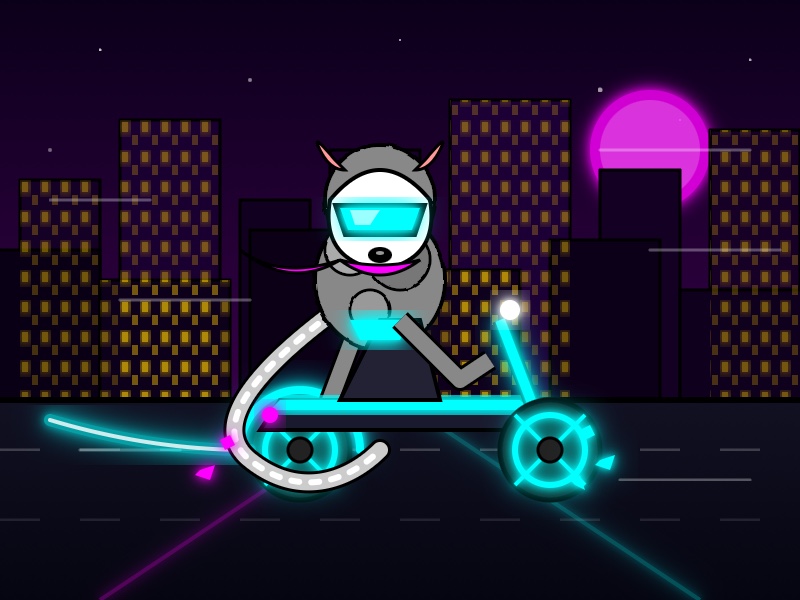
That one took 6,575 tokens, 4min 25s, 24.74 t/s.
llm openrouter refreshcommand for refreshing the list of available models without waiting for the cache to expire.
I added this feature so I could try Kimi 2.6 on OpenRouter as soon as it became available there.
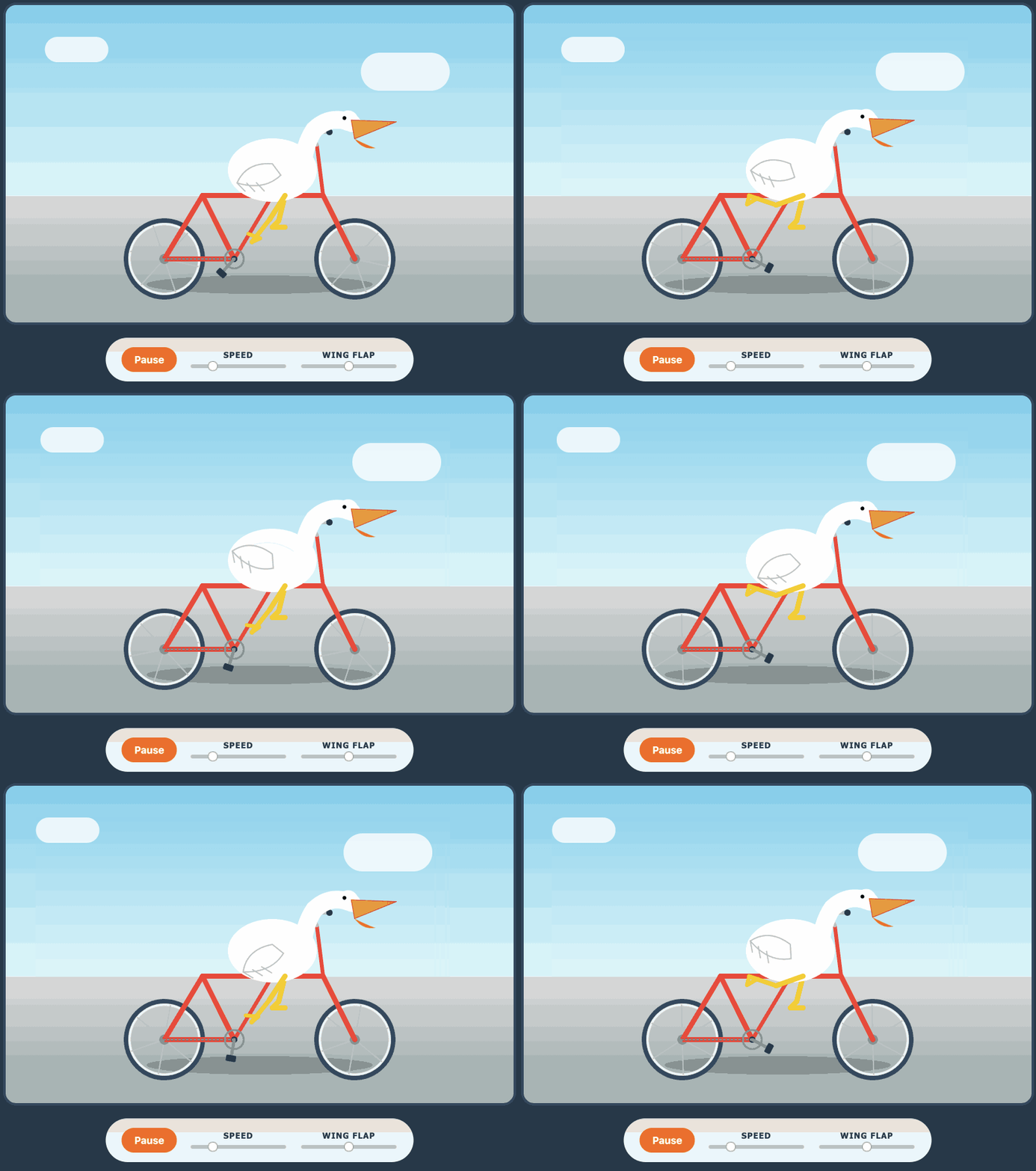
Here's its pelican - this time as an HTML page because Kimi chose to include an HTML and JavaScript UI to control the animation. Transcript here.
GLM-5.1: Towards Long-Horizon Tasks. Chinese AI lab Z.ai's latest model is a giant 754B parameter 1.51TB (on Hugging Face) MIT-licensed monster - the same size as their previous GLM-5 release, and sharing the same paper.
It's available via OpenRouter so I asked it to draw me a pelican:
llm install llm-openrouter
llm -m openrouter/z-ai/glm-5.1 'Generate an SVG of a pelican on a bicycle'
And something new happened... unprompted, the model decided to give me an HTML page that included both the SVG and a separate set of CSS animations!
The SVG was excellent, and might be my new favorite from an open weights model:

But the animation broke it:

That's the pelican, floating up in the top left corner.
I usually don't do follow-up prompts for the pelican test, but in this case I made an exception:
llm -c 'the animation is a bit broken, the pelican ends up positioned off the screen at the top right'
GLM 5.1 replied:
The issue is that CSS
transformanimations on SVG elements override the SVGtransformattribute used for positioning, causing the pelican to lose its placement and fly off to the top-right. The fix is to separate positioning (SVG attribute) from animation (inner group) and use<animateTransform>for SVG rotations since it handles coordinate systems correctly.
And spat out fresh HTML which fixed the problem!

I particularly like the animation of the beak, which is described in the SVG comments like so:
<!-- Pouch (lower beak) with wobble -->
<g>
    <path d="M42,-58 Q43,-50 48,-42 Q55,-35 62,-38 Q70,-42 75,-60 L42,-58 Z" fill="url(#pouchGrad)" stroke="#b06008" stroke-width="1" opacity="0.9"/>
    <path d="M48,-50 Q55,-46 60,-52" fill="none" stroke="#c06a08" stroke-width="0.8" opacity="0.6"/>
    <animateTransform attributeName="transform" type="scale"
    values="1,1; 1.03,0.97; 1,1" dur="0.75s" repeatCount="indefinite"
    additive="sum"/>
</g>Update: On Bluesky @charles.capps.me suggested a "NORTH VIRGINIA OPOSSUM ON AN E-SCOOTER" and...

The HTML+SVG comments on that one include /* Earring sparkle */, <!-- Opossum fur gradient -->, <!-- Distant treeline silhouette - Virginia pines -->, <!-- Front paw on handlebar --> - here's the transcript and the HTML result.
Qwen3.5: Towards Native Multimodal Agents. Alibaba's Qwen just released the first two models in the Qwen 3.5 series - one open weights, one proprietary. Both are multi-modal for vision input.
The open weight one is a Mixture of Experts model called Qwen3.5-397B-A17B. Interesting to see Qwen call out serving efficiency as a benefit of that architecture:
Built on an innovative hybrid architecture that fuses linear attention (via Gated Delta Networks) with a sparse mixture-of-experts, the model attains remarkable inference efficiency: although it comprises 397 billion total parameters, just 17 billion are activated per forward pass, optimizing both speed and cost without sacrificing capability.
It's 807GB on Hugging Face, and Unsloth have a collection of smaller GGUFs ranging in size from 94.2GB 1-bit to 462GB Q8_K_XL.
I got this pelican from the OpenRouter hosted model (transcript):

The proprietary hosted model is called Qwen3.5 Plus 2026-02-15, and is a little confusing. Qwen researcher Junyang Lin says:
Qwen3-Plus is a hosted API version of 397B. As the model natively supports 256K tokens, Qwen3.5-Plus supports 1M token context length. Additionally it supports search and code interpreter, which you can use on Qwen Chat with Auto mode.
Here's its pelican, which is similar in quality to the open weights model:

GLM-5: From Vibe Coding to Agentic Engineering (via) This is a huge new MIT-licensed model: 744B parameters and 1.51TB on Hugging Face twice the size of GLM-4.7 which was 368B and 717GB (4.5 and 4.6 were around that size too).
It's interesting to see Z.ai take a position on what we should call professional software engineers building with LLMs - I've seen Agentic Engineering show up in a few other places recently. most notable from Andrej Karpathy and Addy Osmani.
I ran my "Generate an SVG of a pelican riding a bicycle" prompt through GLM-5 via OpenRouter and got back a very good pelican on a disappointing bicycle frame:

Kimi K2.5: Visual Agentic Intelligence (via) Kimi K2 landed in July as a 1 trillion parameter open weight LLM. It was joined by Kimi K2 Thinking in November which added reasoning capabilities. Now they've made it multi-modal: the K2 models were text-only, but the new 2.5 can handle image inputs as well:
Kimi K2.5 builds on Kimi K2 with continued pretraining over approximately 15T mixed visual and text tokens. Built as a native multimodal model, K2.5 delivers state-of-the-art coding and vision capabilities and a self-directed agent swarm paradigm.
The "self-directed agent swarm paradigm" claim there means improved long-sequence tool calling and training on how to break down tasks for multiple agents to work on at once:
For complex tasks, Kimi K2.5 can self-direct an agent swarm with up to 100 sub-agents, executing parallel workflows across up to 1,500 tool calls. Compared with a single-agent setup, this reduces execution time by up to 4.5x. The agent swarm is automatically created and orchestrated by Kimi K2.5 without any predefined subagents or workflow.
I used the OpenRouter Chat UI to have it "Generate an SVG of a pelican riding a bicycle", and it did quite well:

As a more interesting test, I decided to exercise the claims around multi-agent planning with this prompt:
I want to build a Datasette plugin that offers a UI to upload files to an S3 bucket and stores information about them in a SQLite table. Break this down into ten tasks suitable for execution by parallel coding agents.
Here's the full response. It produced ten realistic tasks and reasoned through the dependencies between them. For comparison here's the same prompt against Claude Opus 4.5 and against GPT-5.2 Thinking.
The Hugging Face repository is 595GB. The model uses Kimi's janky "modified MIT" license, which adds the following clause:
Our only modification part is that, if the Software (or any derivative works thereof) is used for any of your commercial products or services that have more than 100 million monthly active users, or more than 20 million US dollars (or equivalent in other currencies) in monthly revenue, you shall prominently display "Kimi K2.5" on the user interface of such product or service.
Given the model's size, I expect one way to run it locally would be with MLX and a pair of $10,000 512GB RAM M3 Ultra Mac Studios. That setup has been demonstrated to work with previous trillion parameter K2 models.
2025
2025: The year in LLMs
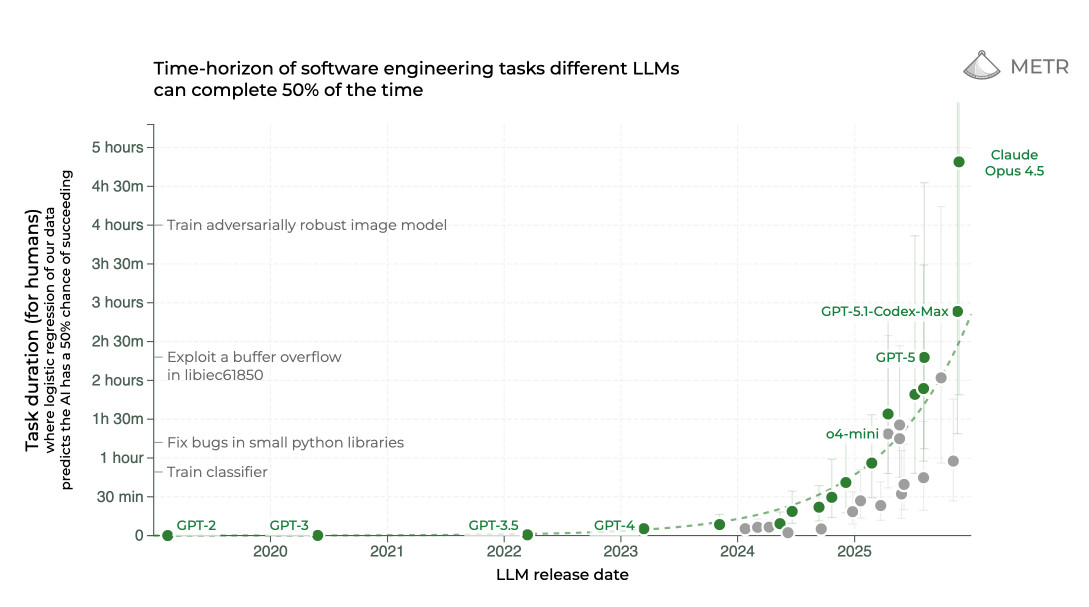
This is the third in my annual series reviewing everything that happened in the LLM space over the past 12 months. For previous years see Stuff we figured out about AI in 2023 and Things we learned about LLMs in 2024.
[... 8,273 words]DeepSeek-V3.2 (via) Two new open weight (MIT licensed) models from DeepSeek today: DeepSeek-V3.2 and DeepSeek-V3.2-Speciale, both 690GB, 685B parameters. Here's the PDF tech report.
DeepSeek-V3.2 is DeepSeek's new flagship model, now running on chat.deepseek.com.
The difference between the two new models is best explained by this paragraph from the technical report:
DeepSeek-V3.2 integrates reasoning, agent, and human alignment data distilled from specialists, undergoing thousands of steps of continued RL training to reach the final checkpoints. To investigate the potential of extended thinking, we also developed an experimental variant, DeepSeek-V3.2-Speciale. This model was trained exclusively on reasoning data with a reduced length penalty during RL. Additionally, we incorporated the dataset and reward method from DeepSeekMath-V2 (Shao et al., 2025) to enhance capabilities in mathematical proofs.
I covered DeepSeek-Math-V2 last week. Like that model, DeepSeek-V3.2-Speciale also scores gold on the 2025 International Mathematical Olympiad so beloved of model training teams!
I tried both models on "Generate an SVG of a pelican riding a bicycle" using the chat feature of OpenRouter. DeepSeek V3.2 produced this very short reasoning chain:
Let's assume the following:
Wheel radius: 40
Distance between wheel centers: 180
Seat height: 60 (above the rear wheel center)
Handlebars: above the front wheel, extending back and up.We'll set the origin at the center of the rear wheel.
We'll create the SVG with a viewBox that fits the entire drawing.
Let's start by setting up the SVG.
Followed by this illustration:

Here's what I got from the Speciale model, which thought deeply about the geometry of bicycles and pelicans for a very long time (at least 10 minutes) before spitting out this result:
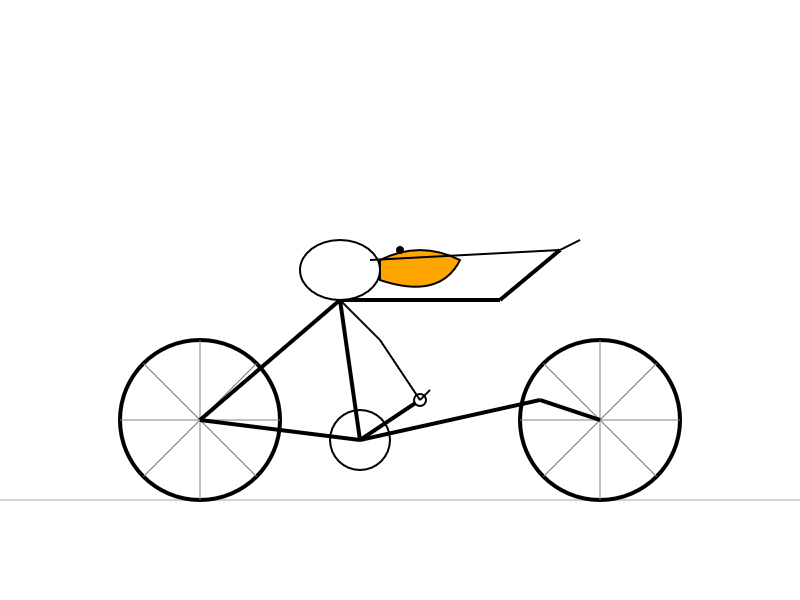
Kimi K2 Thinking. Chinese AI lab Moonshot's Kimi K2 established itself as one of the largest open weight models - 1 trillion parameters - back in July. They've now released the Thinking version, also a trillion parameters (MoE, 32B active) and also under their custom modified (so not quite open source) MIT license.
Starting with Kimi K2, we built it as a thinking agent that reasons step-by-step while dynamically invoking tools. It sets a new state-of-the-art on Humanity's Last Exam (HLE), BrowseComp, and other benchmarks by dramatically scaling multi-step reasoning depth and maintaining stable tool-use across 200–300 sequential calls. At the same time, K2 Thinking is a native INT4 quantization model with 256k context window, achieving lossless reductions in inference latency and GPU memory usage.
This one is only 594GB on Hugging Face - Kimi K2 was 1.03TB - which I think is due to the new INT4 quantization. This makes the model both cheaper and faster to host.
So far the only people hosting it are Moonshot themselves. I tried it out both via their own API and via the OpenRouter proxy to it, via the llm-moonshot plugin (by NickMystic) and my llm-openrouter plugin respectively.
The buzz around this model so far is very positive. Could this be the first open weight model that's competitive with the latest from OpenAI and Anthropic, especially for long-running agentic tool call sequences?
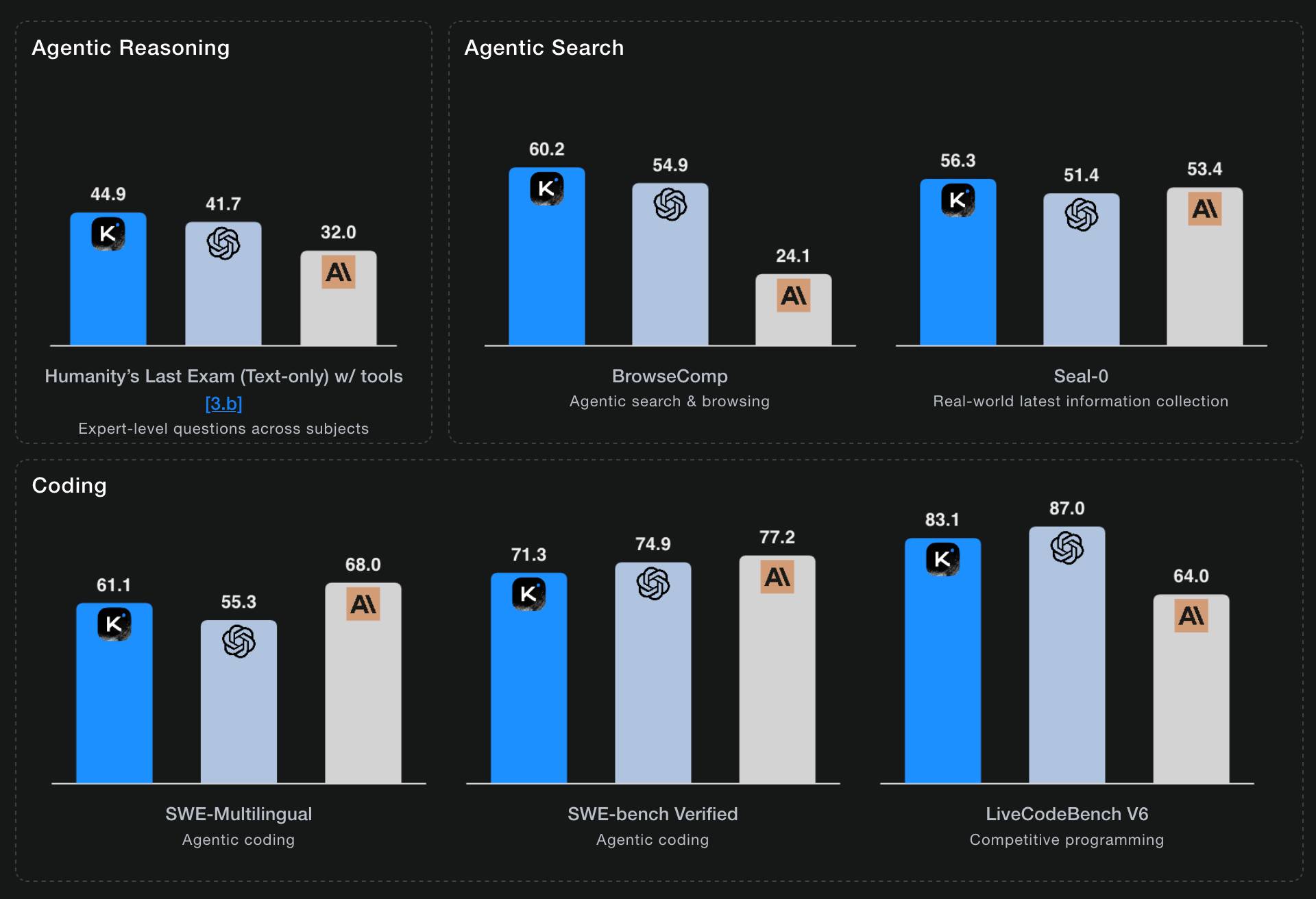
Moonshot AI's self-reported benchmark scores show K2 Thinking beating the top OpenAI and Anthropic models (GPT-5 and Sonnet 4.5 Thinking) at "Agentic Reasoning" and "Agentic Search" but not quite top for "Coding":
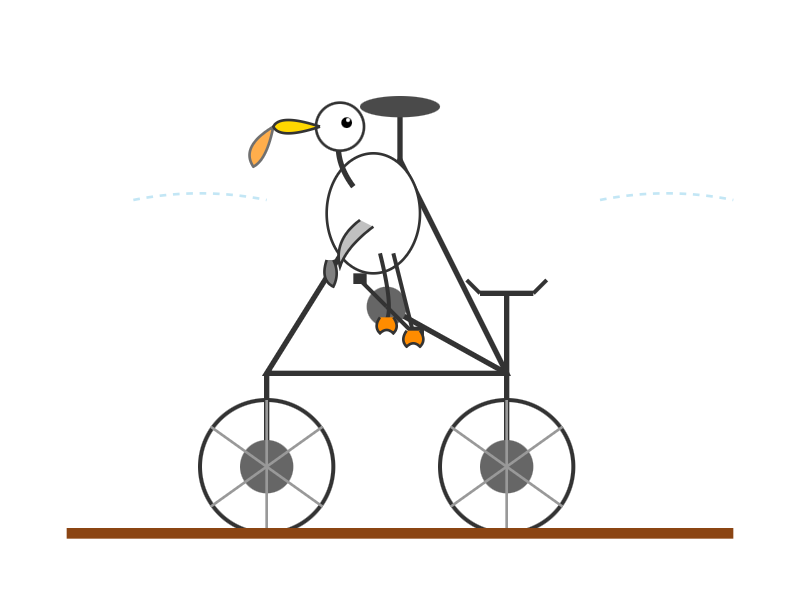
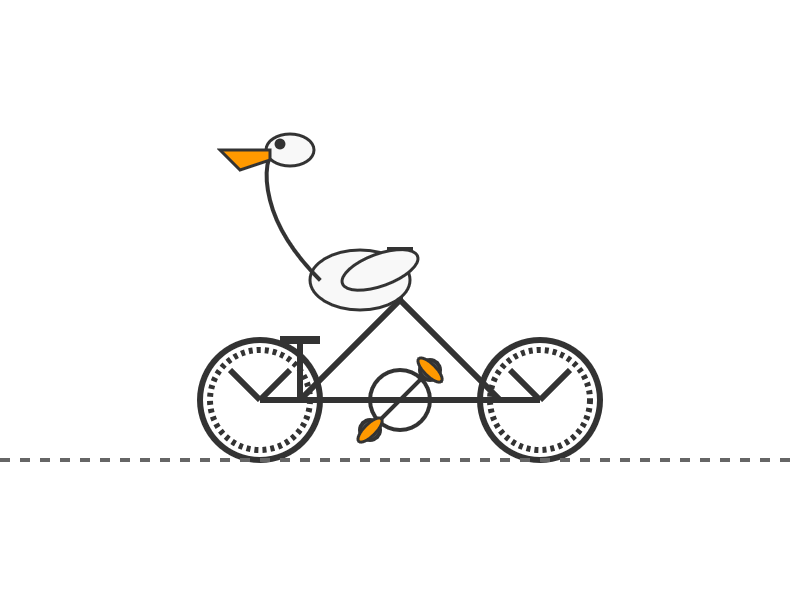
I ran a couple of pelican tests:
llm install llm-moonshot
llm keys set moonshot # paste key
llm -m moonshot/kimi-k2-thinking 'Generate an SVG of a pelican riding a bicycle'

llm install llm-openrouter
llm keys set openrouter # paste key
llm -m openrouter/moonshotai/kimi-k2-thinking \
  'Generate an SVG of a pelican riding a bicycle'
Artificial Analysis said:
Kimi K2 Thinking achieves 93% in 𝜏²-Bench Telecom, an agentic tool use benchmark where the model acts as a customer service agent. This is the highest score we have independently measured. Tool use in long horizon agentic contexts was a strength of Kimi K2 Instruct and it appears this new Thinking variant makes substantial gains
CNBC quoted a source who provided the training price for the model:
The Kimi K2 Thinking model cost $4.6 million to train, according to a source familiar with the matter. [...] CNBC was unable to independently verify the DeepSeek or Kimi figures.
MLX developer Awni Hannun got it working on two 512GB M3 Ultra Mac Studios:
The new 1 Trillion parameter Kimi K2 Thinking model runs well on 2 M3 Ultras in its native format - no loss in quality!
The model was quantization aware trained (qat) at int4.
Here it generated ~3500 tokens at 15 toks/sec using pipeline-parallelism in mlx-lm
Here's the 658GB mlx-community model.
MiniMax M2 & Agent: Ingenious in Simplicity. MiniMax M2 was released on Monday 27th October by MiniMax, a Chinese AI lab founded in December 2021.
It's a very promising model. Their self-reported benchmark scores show it as comparable to Claude Sonnet 4, and Artificial Analysis are ranking it as the best currently available open weight model according to their intelligence score:
MiniMax’s M2 achieves a new all-time-high Intelligence Index score for an open weights model and offers impressive efficiency with only 10B active parameters (200B total). [...]
The model’s strengths include tool use and instruction following (as shown by Tau2 Bench and IFBench). As such, while M2 likely excels at agentic use cases it may underperform other open weights leaders such as DeepSeek V3.2 and Qwen3 235B at some generalist tasks. This is in line with a number of recent open weights model releases from Chinese AI labs which focus on agentic capabilities, likely pointing to a heavy post-training emphasis on RL.
The size is particularly significant: the model weights are 230GB on Hugging Face, significantly smaller than other high performing open weight models. That's small enough to run on a 256GB Mac Studio, and the MLX community have that working already.
MiniMax offer their own API, and recommend using their Anthropic-compatible endpoint and the official Anthropic SDKs to access it. MiniMax Head of Engineering Skyler Miao provided some background on that:
M2 is a agentic thinking model, it do interleaved thinking like sonnet 4.5, which means every response will contain its thought content. Its very important for M2 to keep the chain of thought. So we must make sure the history thought passed back to the model. Anthropic API support it for sure, as sonnet needs it as well. OpenAI only support it in their new Response API, no support for in ChatCompletion.
MiniMax are offering the new model via their API for free until November 7th, after which the cost will be $0.30/million input tokens and $1.20/million output tokens - similar in price to Gemini 2.5 Flash and GPT-5 Mini, see price comparison here on my llm-prices.com site.
I released a new plugin for LLM called llm-minimax providing support for M2 via the MiniMax API:
llm install llm-minimax
llm keys set minimax
# Paste key here
llm -m m2 -o max_tokens 10000 "Generate an SVG of a pelican riding a bicycle"
Here's the result:

51 input, 4,017 output. At $0.30/m input and $1.20/m output that pelican would cost 0.4836 cents - less than half a cent.
This is the first plugin I've written for an Anthropic-API-compatible model. I released llm-anthropic 0.21 first adding the ability to customize the base_url parameter when using that model class. This meant the new plugin was less than 30 lines of Python.
Two new models from Chinese AI labs in the past few days. I tried them both out using llm-openrouter:
DeepSeek-V3.2-Exp from DeepSeek. Announcement, Tech Report, Hugging Face (690GB, MIT license).
As an intermediate step toward our next-generation architecture, V3.2-Exp builds upon V3.1-Terminus by introducing DeepSeek Sparse Attention—a sparse attention mechanism designed to explore and validate optimizations for training and inference efficiency in long-context scenarios.
This one felt very slow when I accessed it via OpenRouter - I probably got routed to one of the slower providers. Here's the pelican:
GLM-4.6 from Z.ai. Announcement, Hugging Face (714GB, MIT license).
The context window has been expanded from 128K to 200K tokens [...] higher scores on code benchmarks [...] GLM-4.6 exhibits stronger performance in tool using and search-based agents.
Here's the pelican for that:

Qwen3-Next-80B-A3B. Qwen announced two new models via their Twitter account (and here's their blog): Qwen3-Next-80B-A3B-Instruct and Qwen3-Next-80B-A3B-Thinking.
They make some big claims on performance:
- Qwen3-Next-80B-A3B-Instruct approaches our 235B flagship.
- Qwen3-Next-80B-A3B-Thinking outperforms Gemini-2.5-Flash-Thinking.
The name "80B-A3B" indicates 80 billion parameters of which only 3 billion are active at a time. You still need to have enough GPU-accessible RAM to hold all 80 billion in memory at once but only 3 billion will be used for each round of inference, which provides a significant speedup in responding to prompts.
More details from their tweet:
- 80B params, but only 3B activated per token → 10x cheaper training, 10x faster inference than Qwen3-32B.(esp. @ 32K+ context!)
- Hybrid Architecture: Gated DeltaNet + Gated Attention → best of speed & recall
- Ultra-sparse MoE: 512 experts, 10 routed + 1 shared
- Multi-Token Prediction → turbo-charged speculative decoding
- Beats Qwen3-32B in perf, rivals Qwen3-235B in reasoning & long-context
The models on Hugging Face are around 150GB each so I decided to try them out via OpenRouter rather than on my own laptop (Thinking, Instruct).
I'm used my llm-openrouter plugin. I installed it like this:
llm install llm-openrouter
llm keys set openrouter
# paste key here
Then found the model IDs with this command:
llm models -q next
Which output:
OpenRouter: openrouter/qwen/qwen3-next-80b-a3b-thinking
OpenRouter: openrouter/qwen/qwen3-next-80b-a3b-instruct
I have an LLM prompt template saved called pelican-svg which I created like this:
llm "Generate an SVG of a pelican riding a bicycle" --save pelican-svg
This means I can run my pelican benchmark like this:
llm -t pelican-svg -m openrouter/qwen/qwen3-next-80b-a3b-thinking
Or like this:
llm -t pelican-svg -m openrouter/qwen/qwen3-next-80b-a3b-instruct
Here's the thinking model output (exported with llm logs -c | pbcopy after I ran the prompt):
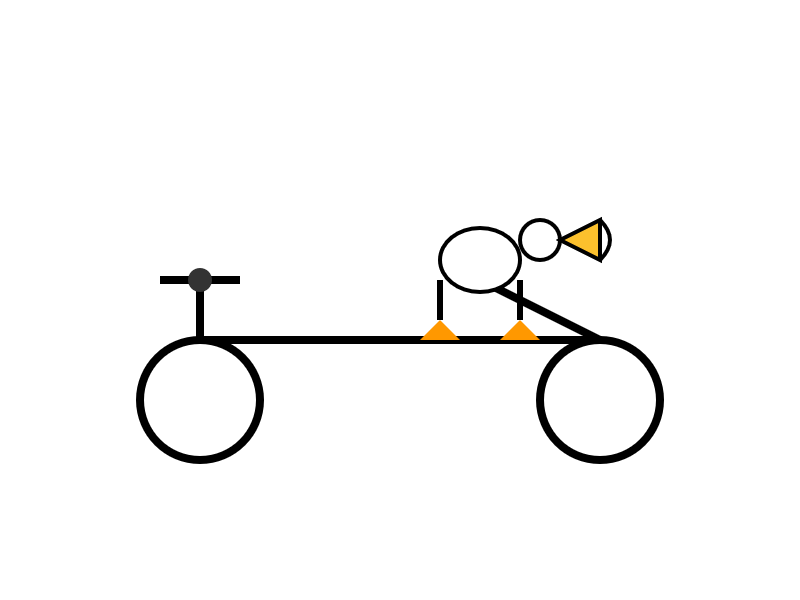
I enjoyed the "Whimsical style with smooth curves and friendly proportions (no anatomical accuracy needed for bicycle riding!)" note in the transcript.
The instruct (non-reasoning) model gave me this:

"🐧🦩 Who needs legs!?" indeed! I like that penguin-flamingo emoji sequence it's decided on for pelicans.
Kimi-K2-Instruct-0905. New not-quite-MIT licensed model from Chinese Moonshot AI, a follow-up to the highly regarded Kimi-K2 model they released in July.
This one is an incremental improvement - I've seen it referred to online as "Kimi K-2.1". It scores a little higher on a bunch of popular coding benchmarks, reflecting Moonshot's claim that it "demonstrates significant improvements in performance on public benchmarks and real-world coding agent tasks".
More importantly the context window size has been increased from 128,000 to 256,000 tokens.
Like its predecessor this is a big model - 1 trillion parameters in a mixture-of-experts configuration with 384 experts, 32B activated parameters and 8 selected experts per token.
I used Groq's playground tool to try "Generate an SVG of a pelican riding a bicycle" and got this result, at a very healthy 445 tokens/second taking just under 2 seconds total:
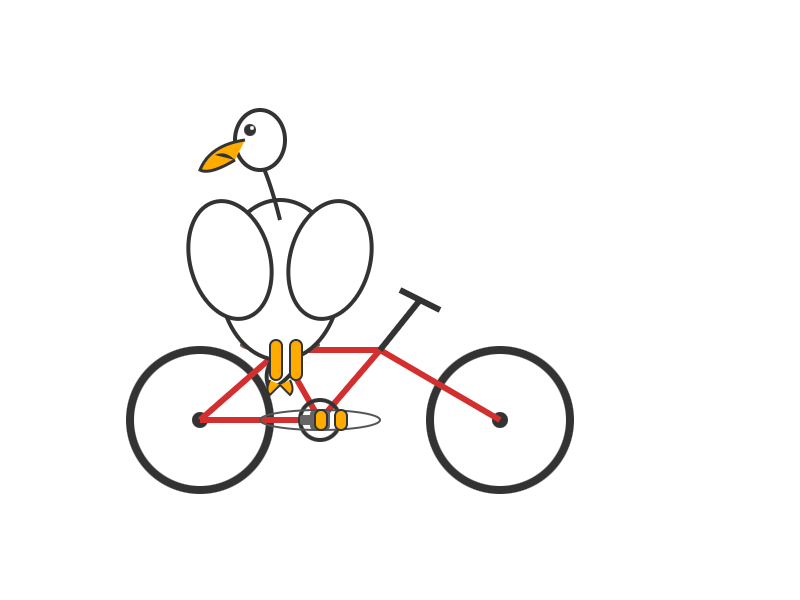
DeepSeek 3.1. The latest model from DeepSeek, a 685B monster (like DeepSeek v3 before it) but this time it's a hybrid reasoning model.
DeepSeek claim:
DeepSeek-V3.1-Think achieves comparable answer quality to DeepSeek-R1-0528, while responding more quickly.
Drew Breunig points out that their benchmarks show "the same scores with 25-50% fewer tokens" - at least across AIME 2025 and GPQA Diamond and LiveCodeBench.
The DeepSeek release includes prompt examples for a coding agent, a python agent and a search agent - yet more evidence that the leading AI labs have settled on those as the three most important agentic patterns for their models to support.
Here's the pelican riding a bicycle it drew me (transcript), which I ran from my phone using OpenRouter chat.

Qwen3-4B-Thinking: “This is art—pelicans don’t ride bikes!”
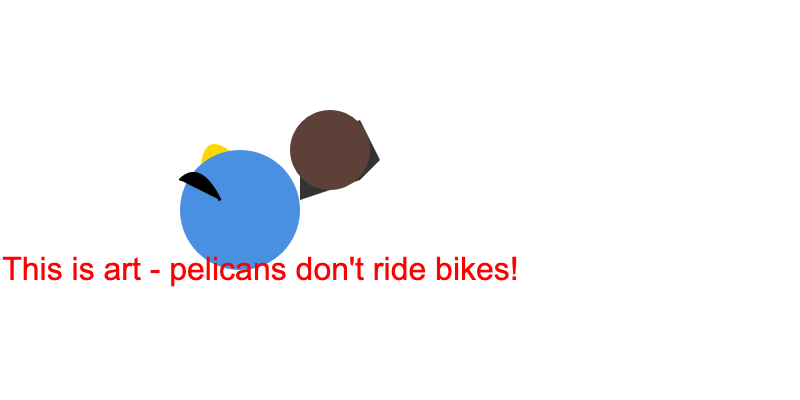
I’ve fallen a few days behind keeping up with Qwen. They released two new 4B models last week: Qwen3-4B-Instruct-2507 and its thinking equivalent Qwen3-4B-Thinking-2507.
[... 991 words]XBai o4 (via) Yet another open source (Apache 2.0) LLM from a Chinese AI lab. This model card claims:
XBai o4 excels in complex reasoning capabilities and has now completely surpassed OpenAI-o3-mini in Medium mode.
This a 32.8 billion parameter model released by MetaStone AI, a new-to-me lab who released their first model in March - MetaStone-L1-7B, then followed that with MetaStone-S1 1.5B, 7B and 32B in July and now XBai o4 in August.
The MetaStone-S1 models were accompanied with a paper, Test-Time Scaling with Reflective Generative Model.
There is very little information available on the English-language web about MetaStone AI. Their paper shows a relationship with USTC, University of Science and Technology of China in Hefei. One of their researchers confirmed on Twitter that their CEO is from KWAI which lead me to this Chinese language article from July last year about Li Yan, formerly of KWAI and now the founder of Wen Xiaobai and evidently now the CEO of MetaStone. www.wenxiaobai.com is listed as the "official website" linked to from the XBai-o4 README on GitHub.
Ivan Fioravanti got it working under MLX in 4bit, 5bit, 6bit, 8bit and 4bit-DWQ sizes. I tried his 6bit one (a 24.81GB download) in LM Studio and had it "Generate an SVG of a pelican riding a bicycle". It thought for 39.49 seconds (thinking trace here) and gave me this:

I also had it "Write an HTML and JavaScript page implementing space invaders", which you can try out here. It's not great - the invaders don't fire bullets (it listed that as a "potential improvement") and I don't think it's winnable due to timing issues, but it's an interesting addition to my collection.
LM Studio reported a constant memory usage of 25.54GB and according to Activity Monitor used 87.5% of my GPU and around 39% of a CPU core.
It did a lot of work in the thinking trace - which took 10m35s! - including writing the first draft of much of the code that ended up in the finished result. Here's an extract:
Let me think of variables:
let enemyDirection = 1; // 1 for right, -1 for leftIn the game loop:
enemies.forEach(enemy => {>
    enemy.x += enemyDirection * enemy.dx;>
});
Then check if any enemy is out of bounds. If so, reverse direction and move all enemies down.But how to check if any enemy is at the edge?
Maybe find the max x of all enemies and see if it exceeds
canvas.width - enemy.width.Alternatively, track the leftmost and rightmost positions of enemies. Maybe a bit complex.
For simplicity, perhaps check if any enemy's
x + width > canvas.width or x < 0.
Here's the full transcript.
My initial impressions are that I'm not as impressed with this model for running on my own laptop as I was with Qwen3-Coder-30B-A3B-Instruct or GLM-4.5 Air.
But... how extraordinary is it that another Chinese AI lab has been able to produce a competitive model, this time with far less fanfare than we've seen from Qwen and Moonshot AI and Z.ai.
Trying out Qwen3 Coder Flash using LM Studio and Open WebUI and LLM
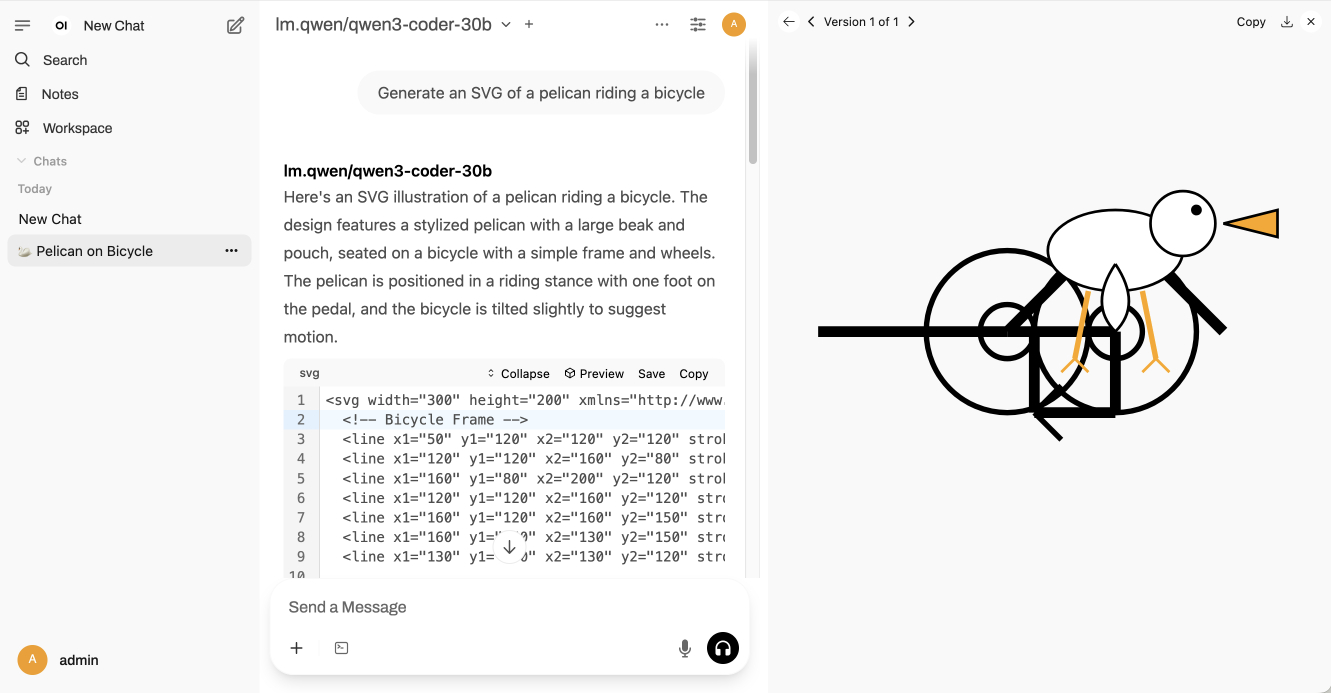
Qwen just released their sixth model(!) of this July called Qwen3-Coder-30B-A3B-Instruct—listed as Qwen3-Coder-Flash in their chat.qwen.ai interface.
[... 1,390 words]Qwen3-30B-A3B-Thinking-2507 (via) Yesterday was Qwen3-30B-A3B-Instruct-2507. Qwen are clearly committed to their new split between reasoning and non-reasoning models (a reversal from Qwen 3 in April), because today they released the new reasoning partner to yesterday's model: Qwen3-30B-A3B-Thinking-2507.
I'm surprised at how poorly this reasoning mode performs at "Generate an SVG of a pelican riding a bicycle" compared to its non-reasoning partner. The reasoning trace appears to carefully consider each component and how it should be positioned... and then the final result looks like this:
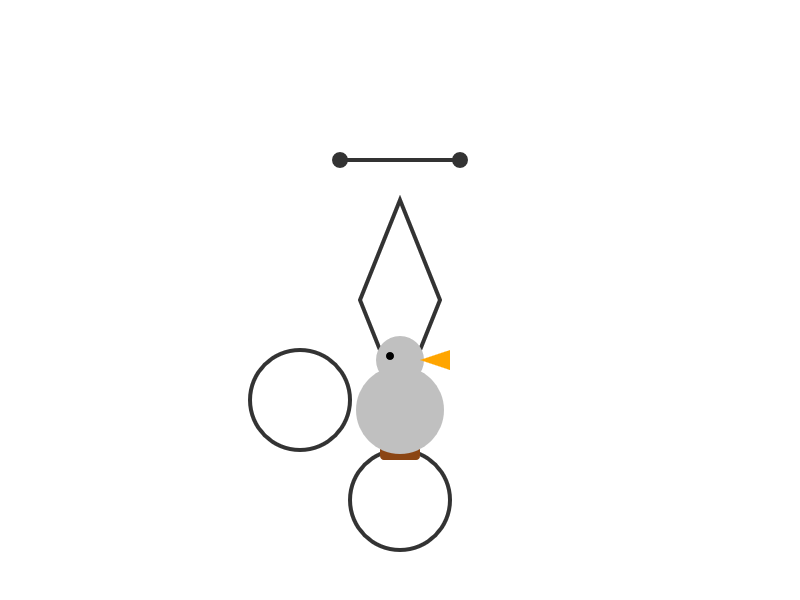
I ran this using chat.qwen.ai/?model=Qwen3-30B-A3B-2507 with the "reasoning" option selected.
I also tried the "Write an HTML and JavaScript page implementing space invaders" prompt I ran against the non-reasoning model. It did a better job in that the game works:
It's not as playable as the on I got from GLM-4.5 Air though - the invaders fire their bullets infrequently enough that the game isn't very challenging.
This model is part of a flurry of releases from Qwen over the past two 9 days. Here's my coverage of each of those:
- Qwen3-235B-A22B-Instruct-2507 - 21st July
- Qwen3-Coder-480B-A35B-Instruct - 22nd July
- Qwen3-235B-A22B-Thinking-2507 - 25th July
- Qwen3-30B-A3B-Instruct-2507 - 29th July
- Qwen3-30B-A3B-Thinking-2507 - today
My 2.5 year old laptop can write Space Invaders in JavaScript now, using GLM-4.5 Air and MLX
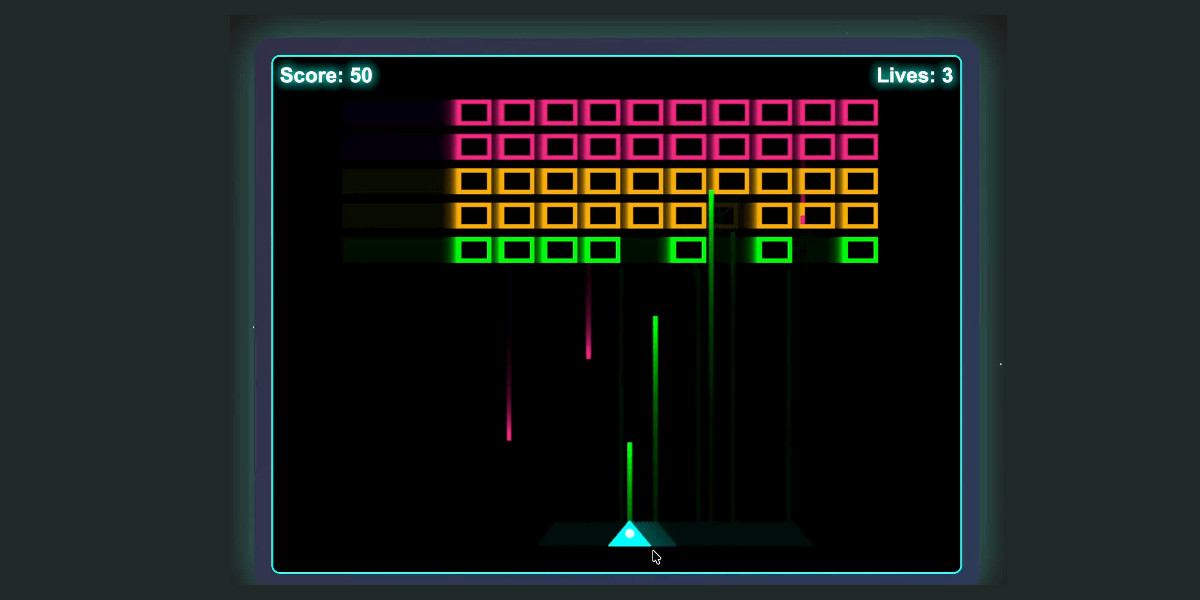
I wrote about the new GLM-4.5 model family yesterday—new open weight (MIT licensed) models from Z.ai in China which their benchmarks claim score highly in coding even against models such as Claude Sonnet 4.
[... 685 words]