7 posts tagged “dgx-spark”
2026
Colin Frasier posted on Bluesky about an experiment he ran over two years ago using GPT-4o to see how well it could "compute the sum but return the answer in words" across increasingly large numbers. Here's the chart he shared of those results:
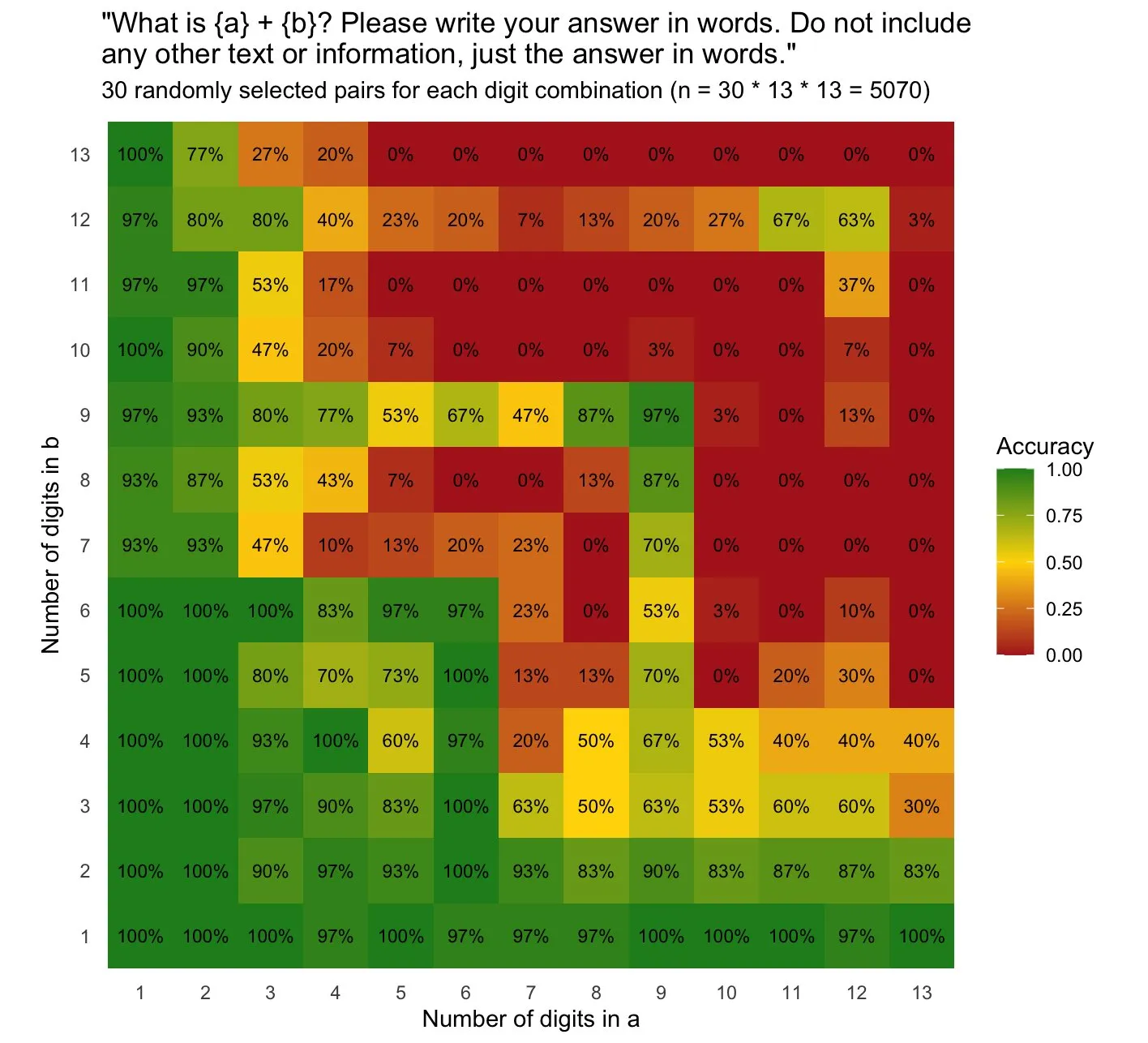
I'm confident GPT-4o didn't cheat and use a calculator, especially since it got so many of the calculations wrong, but I was inspired to run the experiment again on local hardware (a DGX Spark) to explore the effect in a fully controlled environment.
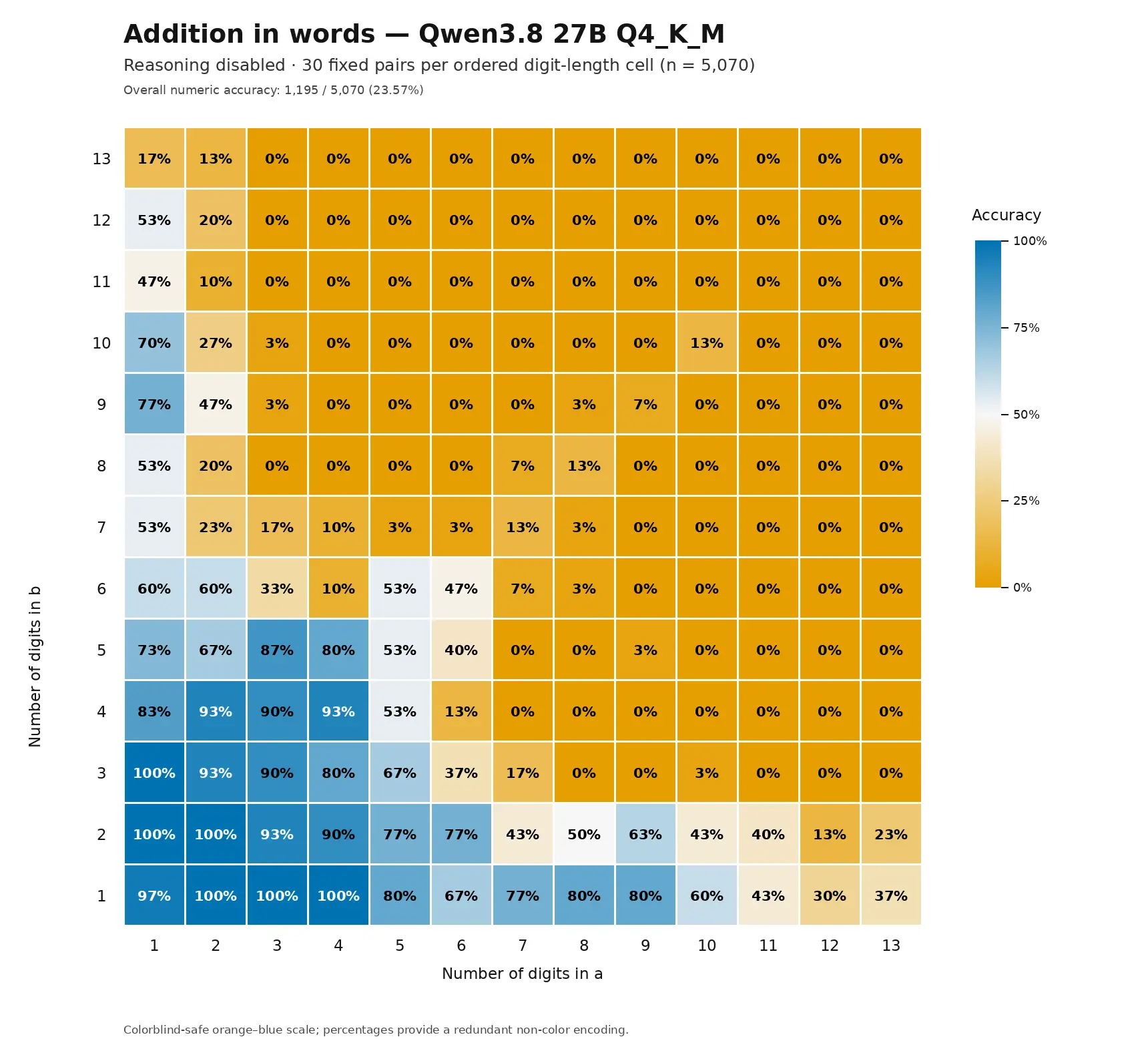
I pasted his image into a Codex Remote session (GPT-6 Astra) and had it run the same experiment using Qwen3.8-27B-Q4_K_M.gguf. Here's the result for a run of 30 attempts per combination with reasoning disabled:
Then I ran it again with reasoning enabled. This took a lot longer per pair, so instead of running 30 samples per square I ran just one - which results in a much less visually appealing heatmap since each square is either 100% or 0%:
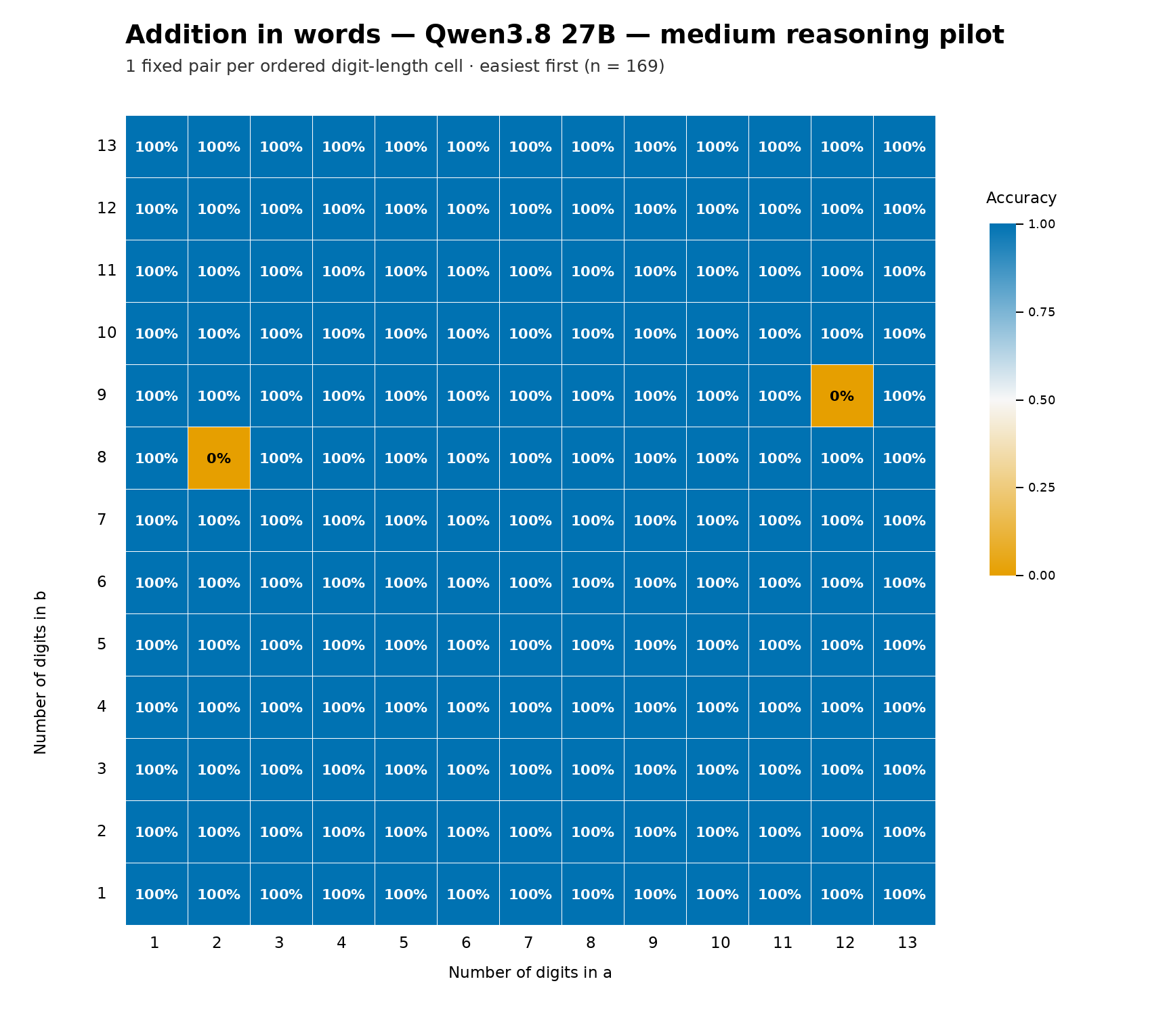
It got the right answer in 167 out of 169 attempts, and since these were one-shot I'm confident a second run would produce different results here.
Here's a version of the report that includes the reasoning traces from some of those larger calculations, which include text like this:
Wait, let me redo this more carefully.

4,299,366,105,622
6,088,794,067,970

Let me align them:
4 2 9 9 3 6 6 1 0 5 6 2 2
6 0 8 8 7 9 4 0 6 7 9 7 0

Adding from right to left:
Position 1 (units): 2 + 0 = 2
Position 2 (tens): 2 + 7 = 9
Position 3 (hundreds): 6 + 9 = 15, write 5, carry 1
Qwen3.8-Flash-Next (via) Another open weights model from Qwen. This one is "a multimodal MoE model that also serves as an early preview of the architecture used in Qwen4".
It's pretty big: 125B parameters but only 6B active which means it gets a significant performance boost.
I've been trying it out on a DGX Spark using these Unsloth quantized models. I'm still exploring the model - so far I've tried the 72.5GB UD-IQ1_S one (producing these pelicans) and the 78.9GB UD-Q2_K_XL (producing these).
My favorite so far was this xhigh reasoning effort one from UD-Q2_K_XL:

Qwen 3.8 27B is excellent, but it defaults to wildly overthinking things

Friday’s big release was Qwen 3.8 27B, an Apache 2 licensed 27B parameter vision-capable LLM from Alibaba’s Qwen research lab. I’ve been looking forward to this one: 27B is an excellent size for running a model on a reasonably specced laptop, and its predecessor Qwen 3.6 27B was impressive.
[... 2,543 words]2025
Using Codex CLI with gpt-oss:120b on an NVIDIA DGX Spark via Tailscale. Inspired by a YouTube comment I wrote up how I run OpenAI's Codex CLI coding agent against the gpt-oss:120b model running in Ollama on my NVIDIA DGX Spark via a Tailscale network.
It takes a little bit of work to configure but the result is I can now use Codex CLI on my laptop anywhere in the world against a self-hosted model.
I used it to build this space invaders clone.
Getting DeepSeek-OCR working on an NVIDIA Spark via brute force using Claude Code
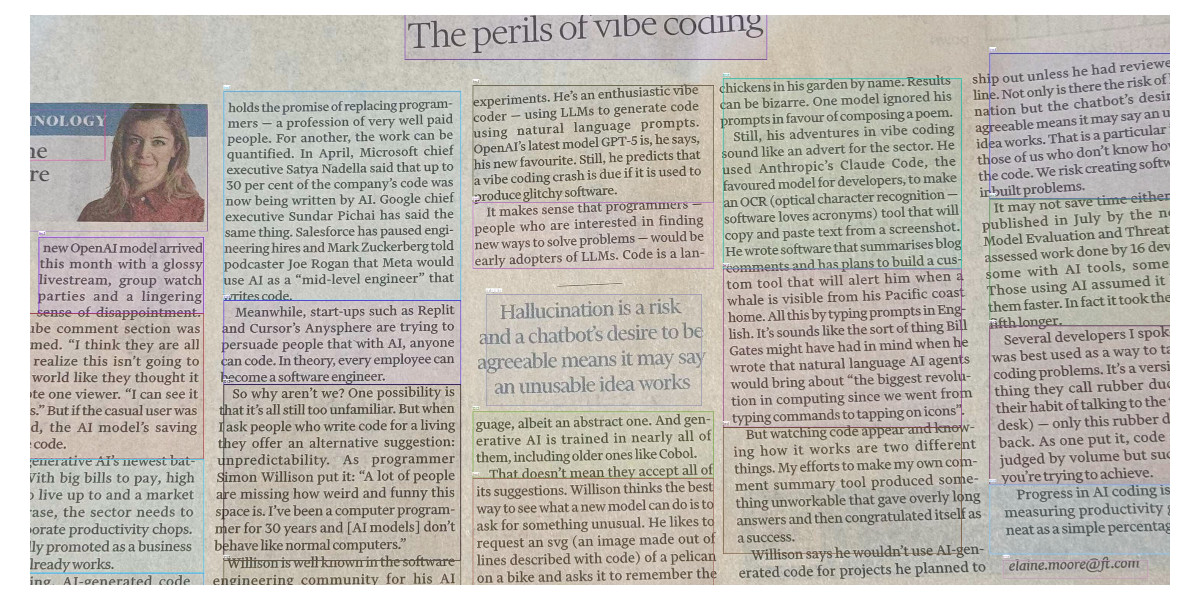
DeepSeek released a new model yesterday: DeepSeek-OCR, a 6.6GB model fine-tuned specifically for OCR. They released it as model weights that run using PyTorch and CUDA. I got it running on the NVIDIA Spark by having Claude Code effectively brute force the challenge of getting it working on that particular hardware.
[... 1,971 words]NVIDIA DGX Spark + Apple Mac Studio = 4x Faster LLM Inference with EXO 1.0 (via) EXO Labs wired a 256GB M3 Ultra Mac Studio up to an NVIDIA DGX Spark and got a 2.8x performance boost serving Llama-3.1 8B (FP16) with an 8,192 token prompt.
Their detailed explanation taught me a lot about LLM performance.
There are two key steps in executing a prompt. The first is the prefill phase that reads the incoming prompt and builds a KV cache for each of the transformer layers in the model. This is compute-bound as it needs to process every token in the input and perform large matrix multiplications across all of the layers to initialize the model's internal state.
Performance in the prefill stage influences TTFT - time‑to‑first‑token.
The second step is the decode phase, which generates the output one token at a time. This part is limited by memory bandwidth - there's less arithmetic, but each token needs to consider the entire KV cache.
Decode performance influences TPS - tokens per second.
EXO noted that the Spark has 100 TFLOPS but only 273GB/s of memory bandwidth, making it a better fit for prefill. The M3 Ultra has 26 TFLOPS but 819GB/s of memory bandwidth, making it ideal for the decode phase.
They run prefill on the Spark, streaming the KV cache to the Mac over 10Gb Ethernet. They can start streaming earlier layers while the later layers are still being calculated. Then the Mac runs the decode phase, returning tokens faster than if the Spark had run the full process end-to-end.
NVIDIA DGX Spark: great hardware, early days for the ecosystem
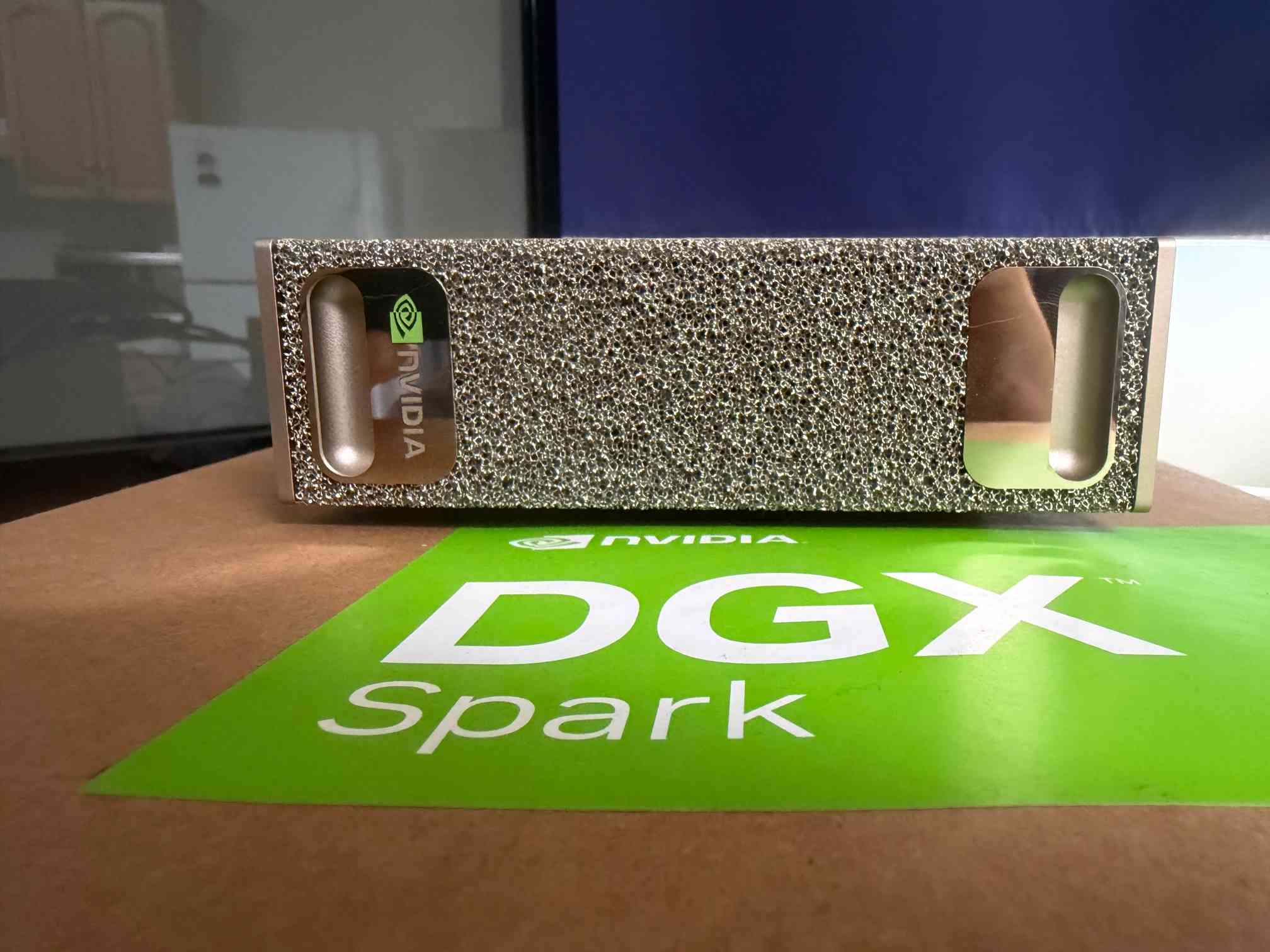
NVIDIA sent me a preview unit of their new DGX Spark desktop “AI supercomputer”. I’ve never had hardware to review before! You can consider this my first ever sponsored post if you like, but they did not pay me any cash and aside from an embargo date they did not request (nor would I grant) any editorial input into what I write about the device.
[... 1,846 words]