1,549 posts tagged “datasette”
Datasette is an open source tool for exploring and publishing data.
2019
datasette-template-sql (via) New Datasette plugin, celebrating the new ability in Datasette 0.32 to have asynchronous custom template functions in Jinja (which was previously blocked by the need to support Python 3.5). The plugin adds a sql() function which can be used to execute SQL queries that are embedded directly in custom templates.
Datasette 0.31. Released today: this version adds compatibility with Python 3.8 and breaks compatibility with Python 3.5. Since Glitch support Python 3.7.3 now I decided I could finally give up on 3.5. This means Datasette can use f-strings now, but more importantly it opens up the opportunity to start taking advantage of Starlette, which makes all kinds of interesting new ASGI-based plugins much easier to build.
Weeknotes: Python 3.7 on Glitch, datasette-render-markdown
Streaks is really working well for me. I’m at 12 days of commits to Datasette, 16 posting a daily Niche Museum, 19 of actually reviewing my email inbox and 14 of guitar practice. I rewarded myself for that last one by purchasing an actual classical (as opposed to acoustic) guitar.
[... 1,141 words]Setting up Datasette, step by step (via) Tobias describes how he runs Datasette on his own server/VPS, using nginx and systemd. I’m doing something similar for some projects and systemd really does feel like the solution to the “ensure a Python process keeps running” problem I’ve been fighting for over a decade. I really like how Tobias creates a dedicated Linux user for each of his deployed Python projects.
2018 Central Park Squirrel Census in Datasette (via) The Squirrel Census project released their data! 3,000 squirrel observations in Central Park, each with fur color and latitude and longitude and behavioral observations. I love this data so much. I’ve loaded it into a Datasette running on Glitch.
Weeknotes: PG&E outages, and Open Source works!
My big focus this week was the PG&E outages project. I’m really pleased with how this turned out: the San Francisco Chronicle used data from it for their excellent PG&E outage interactive (mixing in data on wind conditions) and it earned a bunch of interest on Twitter and some discussion on Hacker News.
[... 452 words]goodreads-to-sqlite (via) This is so cool! Tobias Kunze built a Python CLI tool to import your Goodreads data into a SQLite database, inspired by github-to-sqlite and my various other Dogsheep tools. It’s the first Dogsheep style tool I’ve seen that wasn’t built by me—and Tobias’ write-up includes some neat examples of queries you can run against your Goodreads data. I’ve now started using Goodreads and I’m importing my books into my own private Dogsheep Datasette instance.
Tracking PG&E outages by scraping to a git repo
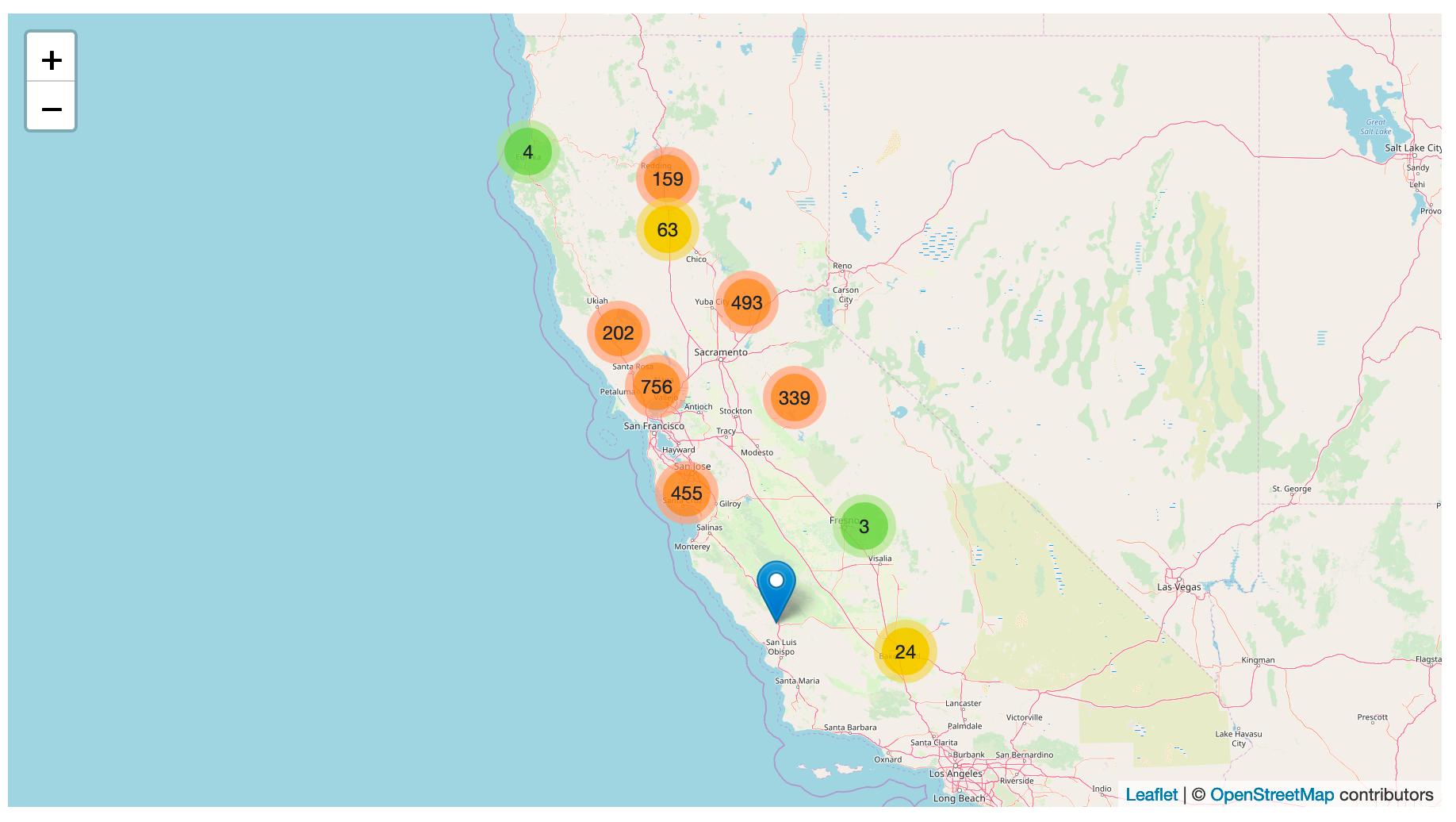
PG&E have cut off power to several million people in northern California, supposedly as a precaution against wildfires.
[... 868 words]SQL Murder Mystery in Datasette (via) “A crime has taken place and the detective needs your help. The detective gave you the crime scene report, but you somehow lost it. You vaguely remember that the crime was a murder that occurred sometime on Jan.15, 2018 and that it took place in SQL City. Start by retrieving the corresponding crime scene report from the police department’s database.”—Really fun game to help exercise your skills with SQL by the NU Knight Lab. I loaded their SQLite database into Datasette so you can play in your browser.
Weeknotes: Design thinking for journalists, genome-to-sqlite, datasette-atom
I haven’t had much time for code this week: we’ve had a full five day workshop at JSK with Tran Ha (a JSK alumni) learning how to apply Design Thinking to our fellowship projects and generally to challenges facing journalism.
[... 870 words]genome-to-sqlite. I just found out 23andMe let you export your genome as a zipped TSV file, so I wrote a little Python command-line tool to import it into a SQLite database.
Weeknotes: ONA19, twitter-to-sqlite, datasette-rure
I’ve decided to start writing weeknotes for the duration of my JSK fellowship. Here goes!
[... 919 words]