13 posts tagged “openai-devday”
The annual OpenAI DevDay event.
2026
OpenAI DevDay 2026 live blog
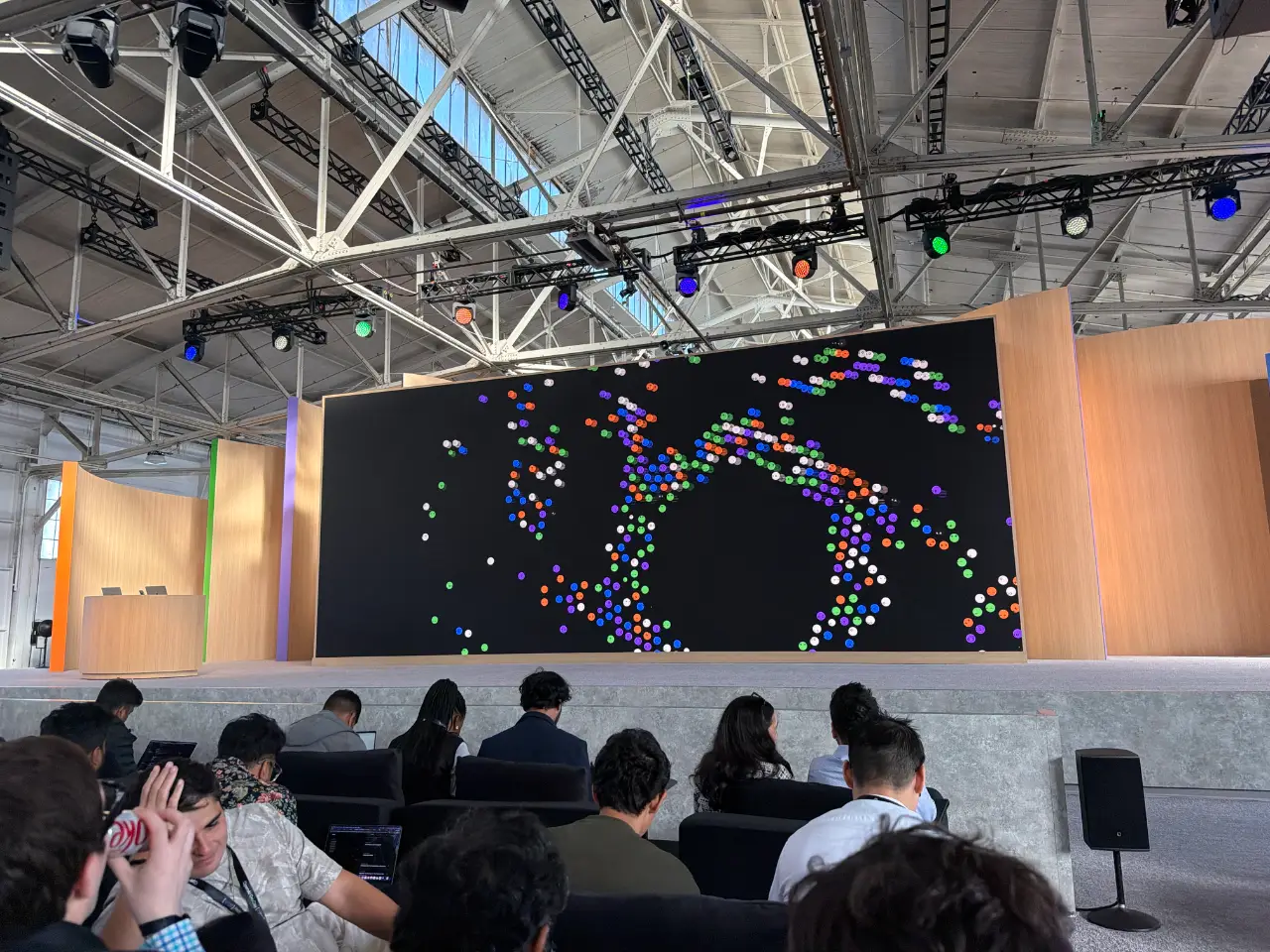
I’m at OpenAI DevDay today, in Fort Mason, San Francisco. Same as last year I’ll be live blogging the keynote and some other notes during the day.
[... 45 words]2025
I've settled on agents as meaning "LLMs calling tools in a loop to achieve a goal" but OpenAI continue to muddy the waters with much more vague definitions. Swyx spotted this one in the press pack OpenAI sent out for their DevDay announcements today:
How does OpenAl define an "agent"? An Al agent is a system that can do work independently on behalf of the user.
Adding this one to my collection.
gpt-image-1-mini.
OpenAI released a new image model today: gpt-image-1-mini, which they describe as "A smaller image generation model that’s 80% less expensive than the large model."
They released it very quietly - I didn't hear about this in the DevDay keynote but I later spotted it on the DevDay 2025 announcements page.
It wasn't instantly obvious to me how to use this via their API. I ended up vibe coding a Python CLI tool for it so I could try it out.
I dumped the plain text diff version of the commit to the OpenAI Python library titled feat(api): dev day 2025 launches into ChatGPT GPT-5 Thinking and worked with it to figure out how to use the new image model and build a script for it. Here's the transcript and the the openai_image.py script it wrote.
I had it add inline script dependencies, so you can run it with uv like this:
export OPENAI_API_KEY="$(llm keys get openai)"
uv run https://tools.simonwillison.net/python/openai_image.py "A pelican riding a bicycle"
It picked this illustration style without me specifying it:

(This is a very different test from my normal "Generate an SVG of a pelican riding a bicycle" since it's using a dedicated image generator, not having a text-based model try to generate SVG code.)
My tool accepts a prompt, and optionally a filename (if you don't provide one it saves to a filename like /tmp/image-621b29.png).
It also accepts options for model and dimensions and output quality - the --help output lists those, you can see that here.
OpenAI's pricing is a little confusing. The model page claims low quality images should cost around half a cent and medium quality around a cent and a half. It also lists an image token price of $8/million tokens. It turns out there's a default "high" quality setting - most of the images I've generated have reported between 4,000 and 6,000 output tokens, which costs between 3.2 and 4.8 cents.
One last demo, this time using --quality low:
 uv run https://tools.simonwillison.net/python/openai_image.py \
  'racoon eating cheese wearing a top hat, realistic photo' \
  /tmp/racoon-hat-photo.jpg \
  --size 1024x1024 \
  --output-format jpeg \
  --quality low
This saved the following:

And reported this to standard error:
{
  "background": "opaque",
  "created": 1759790912,
  "generation_time_in_s": 20.87331541599997,
  "output_format": "jpeg",
  "quality": "low",
  "size": "1024x1024",
  "usage": {
    "input_tokens": 17,
    "input_tokens_details": {
      "image_tokens": 0,
      "text_tokens": 17
    },
    "output_tokens": 272,
    "total_tokens": 289
  }
}
This took 21s, but I'm on an unreliable conference WiFi connection so I don't trust that measurement very much.
272 output tokens = 0.2 cents so this is much closer to the expected pricing from the model page.
GPT-5 pro. Here's OpenAI's model documentation for their GPT-5 pro model, released to their API today at their DevDay event.
It has similar base characteristics to GPT-5: both share a September 30, 2024 knowledge cutoff and 400,000 context limit.
GPT-5 pro has maximum output tokens 272,000 max, an increase from 128,000 for GPT-5.
As our most advanced reasoning model, GPT-5 pro defaults to (and only supports)
reasoning.effort: high
It's only available via OpenAI's Responses API. My LLM tool doesn't support that in core yet, but the llm-openai-plugin plugin does. I released llm-openai-plugin 0.7 adding support for the new model, then ran this:
llm install -U llm-openai-plugin
llm -m openai/gpt-5-pro "Generate an SVG of a pelican riding a bicycle"
It's very, very slow. The model took 6 minutes 8 seconds to respond and charged me for 16 input and 9,205 output tokens. At $15/million input and $120/million output this pelican cost me $1.10!

Here's the full transcript. It looks visually pretty simpler to the much, much cheaper result I got from GPT-5.
OpenAI DevDay 2025 live blog
I’m at OpenAI DevDay in Fort Mason, San Francisco today. As I did last year, I’m going to be live blogging the announcements from the kenote. Unlike last year, this year there’s a livestream.
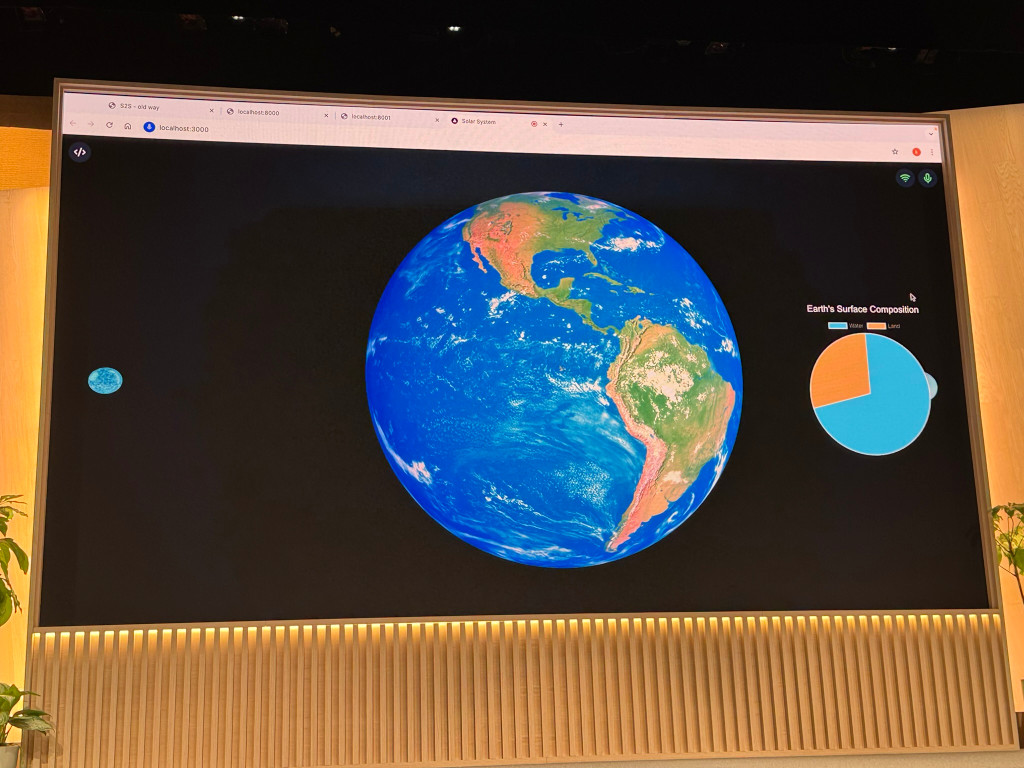
[... 57 words]openai-realtime-solar-system. This was my favourite demo from OpenAI DevDay back in October - a voice-driven exploration of the solar system, developed by Katia Gil Guzman, where you could say things out loud like "show me Mars" and it would zoom around showing you different planetary bodies.
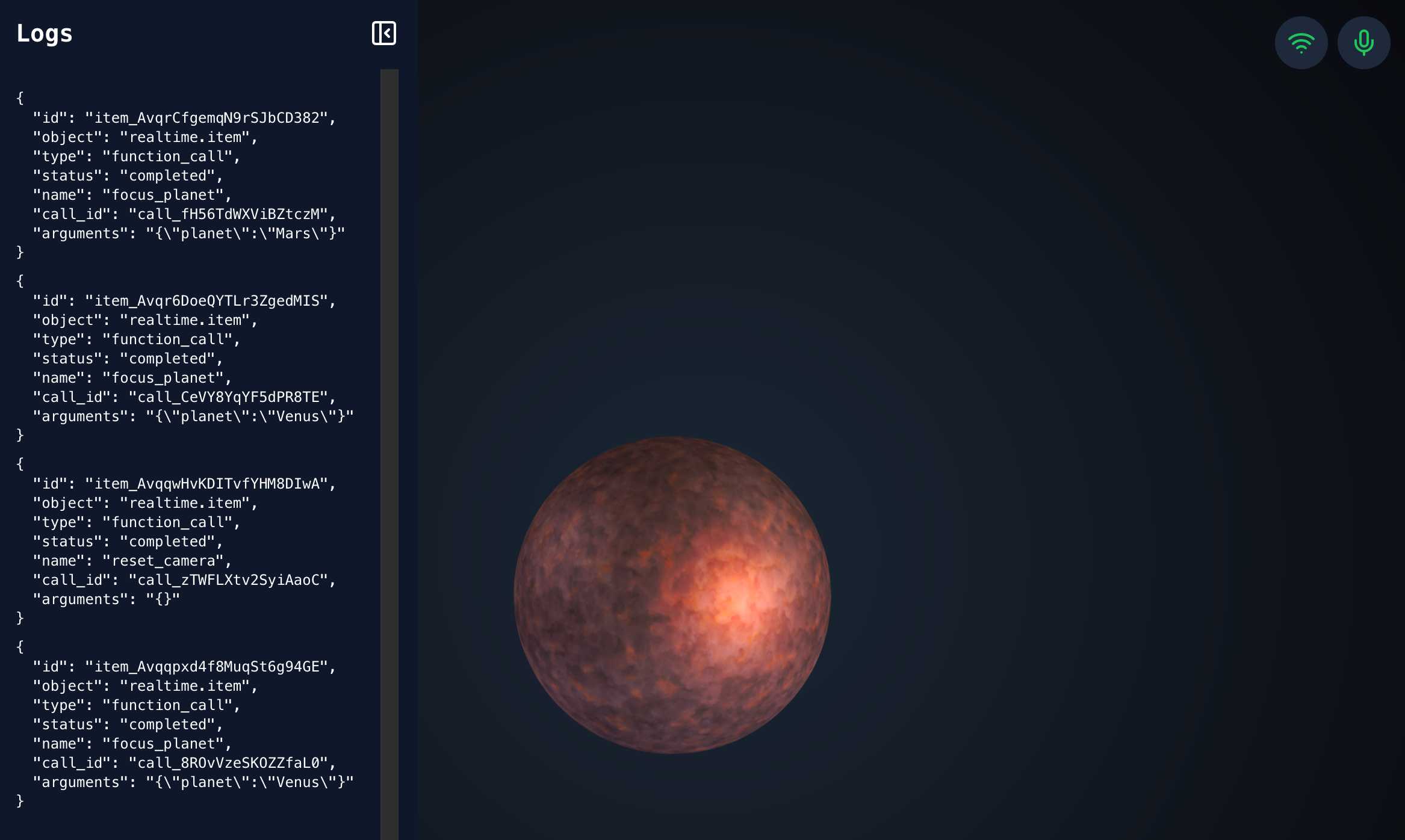
OpenAI finally released the code for it, now upgraded to use the new, easier to use WebRTC API they released in December.
I ran it like this, loading my OpenAI API key using llm keys get:
cd /tmp
git clone https://github.com/openai/openai-realtime-solar-system
cd openai-realtime-solar-system
npm install
OPENAI_API_KEY="$(llm keys get openai)" npm run dev
You need to click on both the Wifi icon and the microphone icon before you can instruct it with your voice. Try "Show me Mars".
2024
openai/openai-realtime-console. I got this OpenAI demo repository working today - it's an extremely easy way to get started playing around with the new Realtime voice API they announced at DevDay last week:
cd /tmp
git clone https://github.com/openai/openai-realtime-console
cd openai-realtime-console
npm i
npm start
That starts a localhost:3000 server running the demo React application. It asks for an API key, you paste one in and you can start talking to the web page.
The demo handles voice input, voice output and basic tool support - it has a tool that can show you the weather anywhere in the world, including panning a map to that location. I tried adding a show_map() tool so I could pan to a location just by saying "Show me a map of the capital of Morocco" - all it took was editing the src/pages/ConsolePage.tsx file and hitting save, then refreshing the page in my browser to pick up the new function.
Be warned, it can be quite expensive to play around with. I was testing the application intermittently for only about 15 minutes and racked up $3.87 in API charges.
OpenAI DevDay: Let’s build developer tools, not digital God
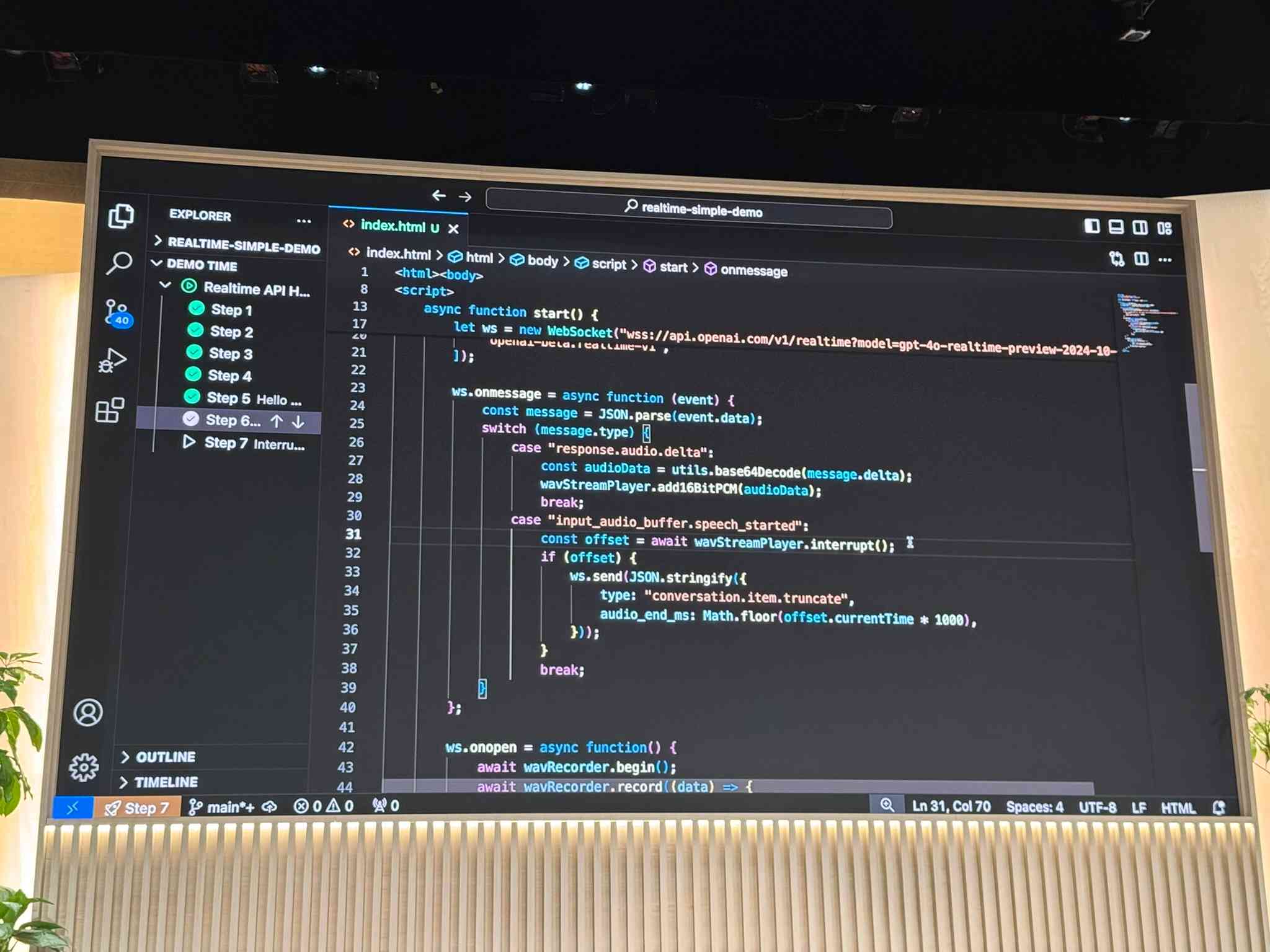
I had a fun time live blogging OpenAI DevDay yesterday—I’ve now shared notes about the live blogging system I threw other in a hurry on the day (with assistance from Claude and GPT-4o). Now that the smoke has settled a little, here are my impressions from the event.
[... 2,090 words]OpenAI DevDay 2024 live blog
I’m at OpenAI DevDay in San Francisco, and I’m trying something new: a live blog, where this entry will be updated with new notes during the event.
[... 68 words]Whisper large-v3-turbo model. It’s OpenAI DevDay today. Last year they released a whole stack of new features, including GPT-4 vision and GPTs and their text-to-speech API, so I’m intrigued to see what they release today (I’ll be at the San Francisco event).
Looks like they got an early start on the releases, with the first new Whisper model since November 2023.
Whisper Turbo is a new speech-to-text model that fits the continued trend of distilled models getting smaller and faster while maintaining the same quality as larger models.
large-v3-turbo is 809M parameters - slightly larger than the 769M medium but significantly smaller than the 1550M large. OpenAI claim its 8x faster than large and requires 6GB of VRAM compared to 10GB for the larger model.
The model file is a 1.6GB download. OpenAI continue to make Whisper (both code and model weights) available under the MIT license.
It’s already supported in both Hugging Face transformers - live demo here - and in mlx-whisper on Apple Silicon, via Awni Hannun:
import mlx_whisper
print(mlx_whisper.transcribe(
  "path/to/audio",
  path_or_hf_repo="mlx-community/whisper-turbo"
)["text"])
Awni reports:
Transcribes 12 minutes in 14 seconds on an M2 Ultra (~50X faster than real time).
2023
Weeknotes: DevDay, GitHub Universe, OpenAI chaos
Three weeks of conferences and Datasette Cloud work, four days of chaos for OpenAI.
[... 766 words]AGI is Being Achieved Incrementally (OpenAI DevDay w/ Simon Willison, Alex Volkov, Jim Fan, Raza Habib, Shreya Rajpal, Rahul Ligma, et al). I participated in an an hour long conversation today about the new things released at OpenAI DevDay, now available on the Latent Space podcast.
ospeak: a CLI tool for speaking text in the terminal via OpenAI
I attended OpenAI DevDay today, the first OpenAI developer conference. It was a lot. They released a bewildering array of new API tools, which I’m just beginning to wade my way through fully understanding.
[... 1,109 words]