Notes
Filters: Sorted by date
I'll be sending out my first curated monthly highlights newsletter tomorrow, only to $10/month and up sponsors. Sign up now if you want to pay me to send you less!
My weekly-ish newsletter remains free, in fact I just sent out the latest edition.
I wonder if one of the reasons I'm finding LLMs so much more useful for coding than a lot of people that I see in online discussions is that effectively all of the code I work on has automated tests.
I've been trying to stay true to the idea of a Perfect Commit - one that bundles the implementation, tests and documentation in a single unit - for over five years now. As a result almost every piece of (non vibe-coding) code I work on has pretty comprehensive test coverage.
This massively derisks my use of LLMs. If an LLM writes weird, convoluted code that solves my problem I can prove that it works with tests - and then have it refactor the code until it looks good to me, keeping the tests green the whole time.
LLMs help write the tests, too. I finally have a 24/7 pair programmer who can remember how to use unittest.mock!
Next time someone complains that they've found LLMs to be more of a hindrance than a help in their programming work, I'm going to try to remember to ask after the health of their test suite.
Here's a quick demo of the kind of casual things I use LLMs for on a daily basis.
I just found out that Perplexity offer their Deep Research feature via their API, through a model called Sonar Deep Research.
Their documentation includes an example response, which included this usage data in the JSON:
{"prompt_tokens": 19, "completion_tokens": 498, "total_tokens": 517, "citation_tokens": 10175, "num_search_queries": 48, "reasoning_tokens": 95305}
But how much would that actually cost?
Their pricing page lists the price for that model. I snapped this screenshot of the prices:
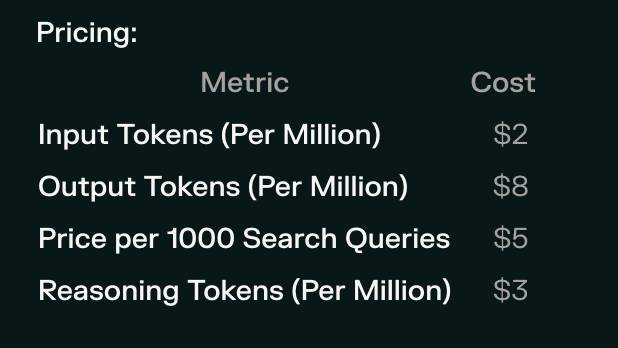
I could break out a calculator at this point, but I'm not quite curious enough to go through the extra effort.
So I pasted that screenshot into Claude along with the JSON and prompted:
{"prompt_tokens": 19, "completion_tokens": 498, "total_tokens": 517, "citation_tokens": 10175, "num_search_queries": 48, "reasoning_tokens": 95305}Calculate price, use javascript
I wanted to make sure Claude would use its JavaScript analysis tool, since LLMs can't do maths.
I watched Claude Sonnet 4 write 61 lines of JavaScript - keeping an eye on it to check it didn't do anything obviously wrong. The code spat out this output:
=== COST CALCULATIONS ===
Input tokens cost: 19 tokens × $2/million = $0.000038
Output tokens cost: 498 tokens × $8/million = $0.003984
Search queries cost: 48 queries × $5/1000 = $0.240000
Reasoning tokens cost: 95305 tokens × $3/million = $0.285915

=== COST SUMMARY ===
Input tokens: $0.000038
Output tokens: $0.003984
Search queries: $0.240000
Reasoning tokens: $0.285915
─────────────────────────
TOTAL COST: $0.529937
TOTAL COST: $0.5299 (rounded to 4 decimal places)
So that Deep Research API call would cost 53 cents! Curiosity satisfied in less than a minute.
GitHub issues is almost the best notebook in the world.
Free and unlimited, for both public and private notes.
Comprehensive Markdown support, including syntax highlighting for almost any language. Plus you can drag and drop images or videos directly onto a note.
It has fantastic inter-linking abilities. You can paste in URLs to other issues (in any other repository on GitHub) in a markdown list like this:
- https://github.com/simonw/llm/issues/1078
- https://github.com/simonw/llm/issues/1080
Your issue will pull in the title of the other issue, plus that other issue will get back a link to yours - taking issue visibility rules into account.
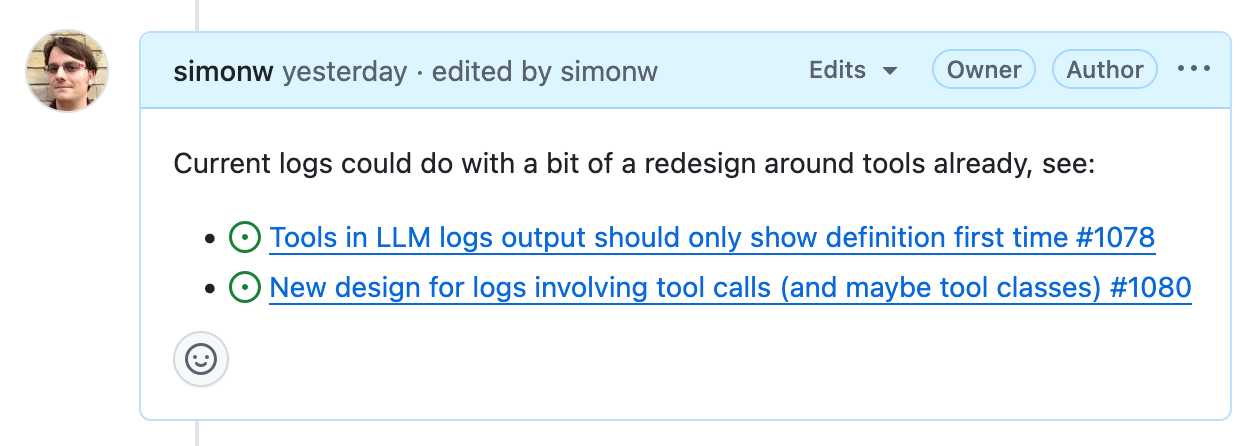
It has excellent search, both within a repo, across all of your repos or even across the whole of GitHub if you've completely forgotten where you put something.
It has a comprehensive API, both for exporting notes and creating and editing new ones. Add GitHub Actions, triggered by issue events, and you can automate it to do almost anything.
The one missing feature? Synchronized offline support. I still mostly default to Apple Notes on my phone purely because it works with or without the internet and syncs up with my laptop later on.
A few extra notes inspired by the discussion of this post on Hacker News:
- I'm not worried about privacy here. A lot of companies pay GitHub a lot of money to keep the source code and related assets safe. I do not think GitHub are going to sacrifice that trust to "train a model" or whatever.
- There is always the risk of bug that might expose my notes, across any note platform. That's why I keep things like passwords out of my notes!
- Not paying and not self-hosting is a very important feature. I don't want to risk losing my notes to a configuration or billing error!
- The thing where notes can include checklists using
- [ ] itemsyntax is really useful. You can even do- [ ] #refto reference another issue and the checkbox will be automatically checked when that other issue is closed. - I've experimented with a bunch of ways of backing up my notes locally, such as github-to-sqlite. I'm not running any of them on cron on a separate machine at the moment, but I really should!
- I'll go back to pen and paper as soon as my paper notes can be instantly automatically backed up to at least two different continents.
- GitHub issues also scales! microsoft/vscode has 195,376 issues. flutter/flutter has 106,572. I'm not going to run out of space.
- Having my notes in a format that's easy to pipe into an LLM is really fun. Here's a recent example where I summarized a 50+ comment, 1.5 year long issue thread into a new comment using llm-fragments-github.
I was curious how many issues and comments I've created on GitHub. With Claude's help I figured out you can get that using a GraphQL query:
{
  viewer {
    issueComments {
      totalCount
    }
    issues {
      totalCount
    }
  }
}
Running that with the GitHub GraphQL Explorer tool gave me this:
{
  "data": {
    "viewer": {
      "issueComments": {
        "totalCount": 39087
      },
      "issues": {
        "totalCount": 9413
      }
    }
  }
}
That's 48,500 combined issues and comments!
Subscribe to my sponsors-only monthly newsletter
I’ve never liked the idea of charging for my content. I get enormous value from putting all of my writing and research out there for free.
So I’m trying something a little different: pay me to send you less.
I’m starting a sponsors-only monthly newsletter featuring just my heavily curated and edited highlights. If you only have ten minutes, what are the most important things not to miss from the last month?
Don’t want to pay? That’s fine, you can continue to follow my firehose for free!
Anyone who sponsors me for $10/month (or $50/month or more) on GitHub sponsors will receive my new newsletter on approximately the last day of the month. I’ll be sending out the first edition next week.
This blog and my newsletter will continue at their same breakneck pace. Paying subscribers can get a lower volume of stuff.
I'm cautiously optimistic that this could work. I've never liked the idea of business models that incentivize me to publish less. This feels like it encourages me to do what I'm doing already while giving people a rational reason to support my work, at a relatively small incremental cost to myself.
I'm helping make some changes to a large, complex and very unfamiliar to me WordPress site. It's a perfect opportunity to try out Claude Code running against the new Claude 4 models.
It's going extremely well. So far Claude has helped get MySQL working on an older laptop (fixing some inscrutable Homebrew errors), disabled a CAPTCHA plugin that didn't work on localhost, toggled visible warnings on and off several times and figured out which CSS file to modify in the theme that the site is using. It even took a reasonable stab at making the site responsive on mobile!
I'm now calling Claude Code honey badger on account of its voracious appetite for crunching through code (and tokens) looking for the right thing to fix.
I got ChatGPT to make me some fan art:

I was going slightly spare at the fact that every talk at this Anthropic developer conference has used the word "agents" dozens of times, but nobody ever stopped to provide a useful definition.
I'm now in the "Prompting for Agents" workshop and Anthropic's Hannah Moran finally broke the trend by saying that at Anthropic:
Agents are models using tools in a loop
I can live with that! I'm glad someone finally said it out loud.
If your library doesn't have any documentation, it can't have any bugs.
Documentation specifies what your code is supposed to do. Your tests specify what it actually does.
Bugs exist when your test-enforced implementation fails to match the behavior described in your documentation. Without documentation a bug is just undefined behavior.
If you aim to follow semantic versioning you bump your major version when you release a backwards incompatible change. Such changes cannot exist if your code is not comprehensively documented!
Inspired by a half-remembered conversation I had with Tom Insam many years ago.
Tucked into today's Google I/O keynote, a blink-and-you'll miss it moment:
The pelican in the keynote was created by Alexander Chen. Here's the code they wrote with the help of Gemini, which uses p5.js to power the animation.
In addition to my workshop the other day I'm also participating in the poster session at PyCon US this year.
This means that tomorrow (Sunday 18th May) I'll be hanging out next to my poster from 10am to 1pm in Hall A talking to people about my various projects.
I'll confess: I didn't pay close enough attention to the poster information, so when I first put my poster up it looked a little small:

... so I headed to the nearest CVS and printed out some photos to better represent my interests and personality. I'm going for a "teenage bedroom" aesthetic here, I'm very happy with the result:

Here's the poster in the middle (also available as a PDF). It has columns for Datasette, sqlite-utils and LLM.
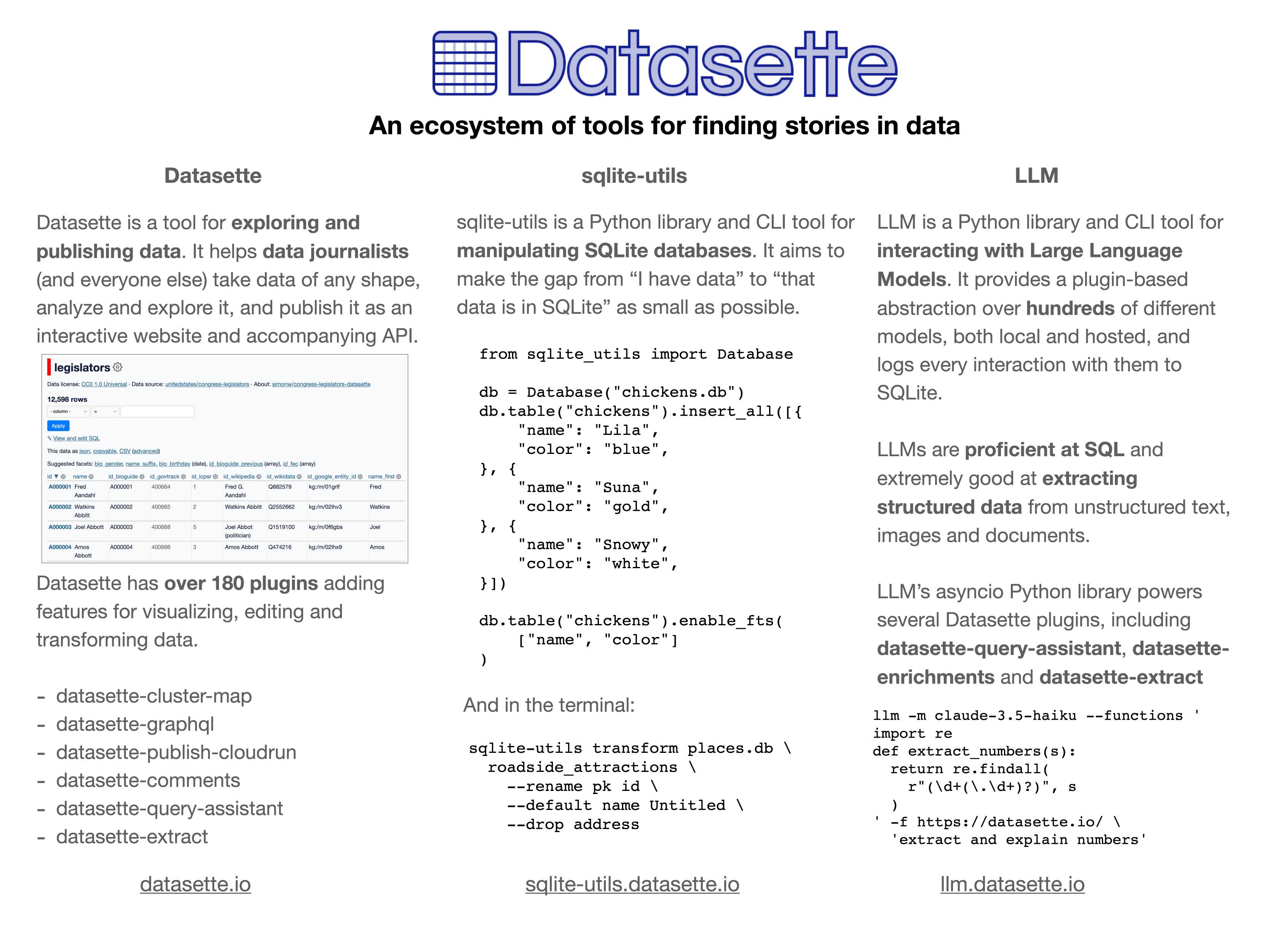
If you're at PyCon I'd love to talk to you about things I'm working on!
Update: Thanks to everyone who came along. Here's a 6MB photo of the poster setup. The museums were all from my www.niche-museums.com site and the pelicans riding a bicycle SVGs came from my pelican-riding-a-bicycle tag.

Today I learned - from a very short "we're sponsoring Python" sponsor blurb by Meta during the opening PyCon US welcome talks - that Python is now "the most-used language at Meta" - if you consider all of the different functional areas spread across the company.
They also have "over 3,000 Python developers working in the language every day".
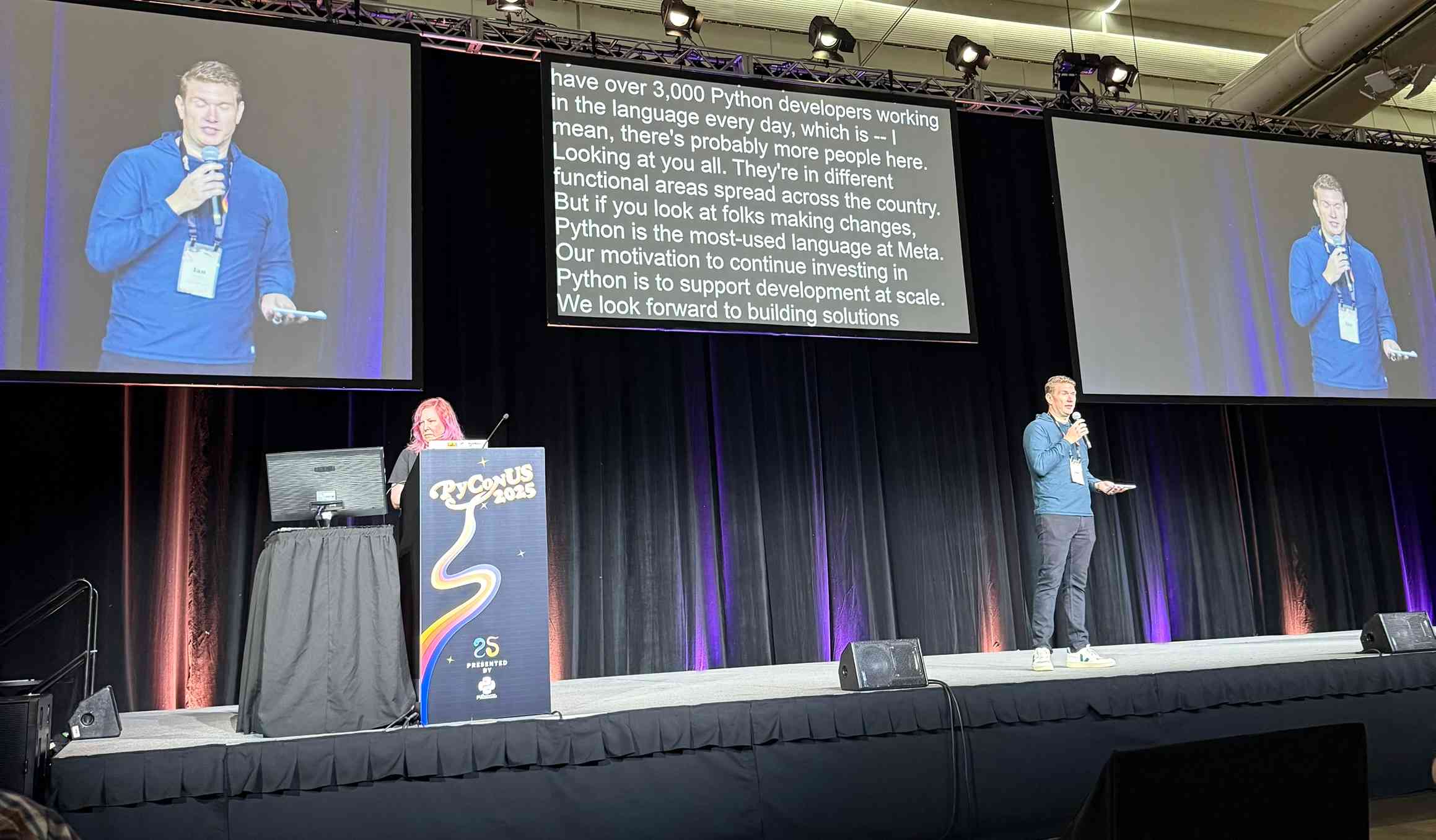
The live captions for the event are once again provided by the excellent White Coat Captioning - real human beings! This got a cheer when it was pointed out by the conference chair a few moments earlier.
It's interesting how much my perception of o3 as being the latest, best model released by OpenAI is tarnished by the co-release of o4-mini. I'm also still not entirely sure how to compare o3 to o1-pro, especially given o1-pro is 15x more expensive via the OpenAI API.
Achievement unlocked: tap danced in the local community college dance recital.
Poker Face season two just started on Peacock (the US streaming service). It's my favorite thing on TV right now. I've started threads on MetaFilter FanFare for episodes one, two and three.
I had some notes in a GitHub issue thread in a private repository that I wanted to export as Markdown. I realized that I could get them using a combination of several recent projects.
Here's what I ran:
export GITHUB_TOKEN="$(llm keys get github)"
llm -f issue:https://github.com/simonw/todos/issues/170 \
  -m echo --no-log | jq .prompt -r > notes.md
I have a GitHub personal access token stored in my LLM keys, for use with Anthony Shaw's llm-github-models plugin.
My own llm-fragments-github plugin expects an optional GITHUB_TOKEN environment variable, so I set that first - here's an issue to have it use the github key instead.
With that set, the issue: fragment loader can take a URL to a private GitHub issue thread and load it via the API using the token, then concatenate the comments together as Markdown. Here's the code for that.
Fragments are meant to be used as input to LLMs. I built a llm-echo plugin recently which adds a fake LLM called "echo" which simply echos its input back out again.
Adding --no-log prevents that junk data from being stored in my LLM log database.
The output is JSON with a "prompt" key for the original prompt. I use jq .prompt to extract that out, then -r to get it as raw text (not a "JSON string").
... and I write the result to notes.md.
I'm disappointed at how little good writing there is out there about effective prompting.
Here's an example: what's the best prompt to use to summarize an article?
That feels like such an obvious thing, and yet I haven't even seen that being well explored!
It's actually a surprisingly deep topic. I like using tricks like "directly quote the sentences that best illustrate the overall themes" and "identify the most surprising ideas", but I'd love to see a thorough breakdown of all the tricks I haven't seen yet.
Our local BBQ spot here in El Granada - Breakwater Barbecue - had a soft opening this weekend in their new location.
Here's the new building. They're still working on replacing the sign from the previous restaurant occupant:

It's actually our old railway station! From 1905 to 1920 the Ocean Shore Railroad ran steam trains from San Francisco down through Half Moon Bay most of the way to Santa Cruz, though they never quite connected the two cities.
The restaurant has some photos on the wall of the old railroad. Here's what that same building looked like >100 years ago.

Having tried a few of the Qwen 3 models now my favorite is a bit of a surprise to me: I'm really enjoying Qwen3-8B.
I've been running prompts through the MLX 4bit quantized version, mlx-community/Qwen3-8B-4bit. I'm using llm-mlx like this:
llm install llm-mlx
llm mlx download-model mlx-community/Qwen3-8B-4bit
This pulls 4.3GB of data and saves it to ~/.cache/huggingface/hub/models--mlx-community--Qwen3-8B-4bit.
I assigned it a default alias:
llm aliases set q3 mlx-community/Qwen3-8B-4bit
I also added a default option for that model - this saves me from adding -o unlimited 1 to every prompt which disables the default output token limit:
llm models options set q3 unlimited 1
And now I can run prompts:
llm -m q3 'brainstorm questions I can ask my friend who I think is secretly from Atlantis that will not tip her off to my suspicions'
Qwen3 is a "reasoning" model, so it starts each prompt with a <think> block containing its chain of thought. Reading these is always really fun. Here's the full response I got for the above question.
I'm finding Qwen3-8B to be surprisingly capable for useful things too. It can summarize short articles. It can write simple SQL queries given a question and a schema. It can figure out what a simple web app does by reading the HTML and JavaScript. It can write Python code to meet a paragraph long spec - for that one it "reasoned" for an unreasonably long time but it did eventually get to a useful answer.
All this while consuming between 4 and 5GB of memory, depending on the length of the prompt.
I think it's pretty extraordinary that a few GBs of floating point numbers can usefully achieve these various tasks, especially using so little memory that it's not an imposition on the rest of the things I want to run on my laptop at the same time.
It's not in their release notes yet but Anthropic pushed some big new features today. Alex Albert:
We've improved web search and rolled it out worldwide to all paid plans. Web search now combines light Research functionality, allowing Claude to automatically adjust search depth based on your question.
Anthropic announced Claude Research a few weeks ago as a product that can combine web search with search against your private Google Workspace - I'm not clear on how much of that product we get in this "light Research" functionality.
I'm most excited about this detail:
You can also drop a web link in any chat and Claude will fetch the content for you.
In my experiments so far the user-agent it uses is Mozilla/5.0 AppleWebKit/537.36 (KHTML, like Gecko; compatible; Claude-User/1.0; +Claude-User@anthropic.com). It appears to obey robots.txt.
I was grumbling to myself about how if we're going to give in, ditch the proper definition and use "vibe coding" to refer to all forms of AI-assisted programming, where do we draw the line?
Is it "vibe coding" if my IDE suggests the completion of a single line of code? How about if I copy and paste in a three line "escape HTML characters" function from ChatGPT? What if I copy and paste some code from StackOverflow that it turns out was AI-generated by someone else? How much AI-assistance does it take to switch from programming to "vibe coding"?
Then I realized that the answer was staring me in the face. There is no clear line. It's all in the vibes.
If you want to create completely free software for other people to use, the absolute best delivery mechanism right now is static HTML and JavaScript served from a free web host with an established reputation.
Thanks to WebAssembly the set of potential software that can be served in this way is vast and, I think, under appreciated. Pyodide means we can ship client-side Python applications now!
This assumes that you would like your gift to the world to keep working for as long as possible, while granting you the freedom to lose interest and move onto other projects without needing to keep covering expenses far into the future.
Even the cheapest hosting plan requires you to monitor and update billing details every few years. Domains have to be renewed. Anything that runs server-side will inevitably need to be upgraded someday - and the longer you wait between upgrades the harder those become.
My top choice for this kind of thing in 2025 is GitHub, using GitHub Pages. It's free for public repositories and I haven't seen GitHub break a working URL that they have hosted in the 17+ years since they first launched.
A few years ago I'd have recommended Heroku on the basis that their free plan had stayed reliable for more than a decade, but Salesforce took that accumulated goodwill and incinerated it in 2022.
It almost goes without saying that you should release it under an open source license. The license alone is not enough to ensure regular human beings can make use of what you have built though: give people a link to something that works!
My post on o3 guessing locations from photos made it to Hacker News and by far the most interesting comments are from SamPatt, a self-described competitive GeoGuessr player.
In a thread about meta-knowledge of the StreetView card uses in different regions:
The photography matters a great deal - they're categorized into "Generations" of coverage. Gen 2 is low resolution, Gen 3 is pretty good but has a distinct car blur, Gen 4 is highest quality. Each country tends to have only one or two categories of coverage, and some are so distinct you can immediately know a location based solely on that (India is the best example here). [...]
Nigeria and Tunisia have follow cars. Senegal, Montenegro and Albania have large rifts in the sky where the panorama stitching software did a poor job. Some parts of Russia had recent forest fires and are very smokey. One road in Turkey is in absurdly thick fog. The list is endless, which is why it's so fun!
Sam also has his own custom Obsidian flashcard deck "with hundreds of entries to help me remember road lines, power poles, bollards, architecture, license plates, etc".
I asked Sam how closely the GeoGuessr community track updates to street view imagery, and unsurprisingly those are a big deal. Sam pointed me to this 10 minute video review by zi8gzag of the latest big update from three weeks ago:
This is one of the biggest updates in years in my opinion. It could be the biggest update since the 2022 update that gave Gen 4 to Nigeria, Senegal, and Rwanda. It's definitely on the same level as the Kazakhstan update or the Germany update in my opinion.
Last September I posted a series of long ranty comments on Lobste.rs about the latest instance of the immortal conspiracy theory (here it goes again) about apps spying on you through your microphone to serve you targeted ads.
On the basis that it's always a great idea to backfill content on your blog, I just extracted my best comments from that thread and turned them into this full post here, back-dated to September 2nd which is when I wrote the comments.
My rant was in response to the story In Leak, Facebook Partner Brags About Listening to Your Phone’s Microphone to Serve Ads for Stuff You Mention. Here's how it starts:
Which is more likely?
- All of the conspiracy theories are real! The industry managed to keep the evidence from us for decades, but finally a marketing agency of a local newspaper chain has blown the lid off the whole thing, in a bunch of blog posts and PDFs and on a podcast.
- Everyone believed that their phone was listening to them even when it wasn’t. The marketing agency of a local newspaper chain were the first group to be caught taking advantage of that widespread paranoia and use it to try and dupe people into spending money with them, despite the tech not actually working like that.
My money continues to be on number 2.
You can read the rest here. Or skip straight to why I think this matters so much:
Privacy is important. People who are sufficiently engaged need to be able to understand exactly what’s going on, so they can e.g. campaign for legislators to reign in the most egregious abuses.
I think it’s harmful letting people continue to believe things about privacy that are not true, when we should instead be helping them understand the things that are true.
Fun fact: there's no rule that says you can't create a new blog today and backfill (and backdate) it with your writing from other platforms or sources, even going back many years.
I'd love to see more people do this!
(Inspired by this tweet by John F. Wu introducing his new blog. I did this myself when I relaunched this blog back in 2017.)
In today's example of how Google's AI overviews are the worst form of AI-assisted search (previously, hallucinating Encanto 2), it turns out you can type in any made-up phrase you like and tag "meaning" on the end and Google will provide you with an entirely made-up justification for the phrase.
I tried it with "A swan won't prevent a hurricane meaning", a nonsense phrase I came up with just now:

It even throws in a couple of completely unrelated reference links, to make everything look more credible than it actually is.
I think this was first spotted by @writtenbymeaghan on Threads.
An underestimated challenge in making productive use of LLMs is that it can feel like cheating.
One trick I've found that helps is to make sure that I am putting in way more text than the LLM is spitting out .
This goes for code: I'll pipe in a previous project for it to modify, or ask it to combine two, or paste in my research notes.
It also goes for writing. I hardly ever publish material that was written by an LLM, but I feel least icky about content where I had an extensive voice conversation with the model and then asked it to turn that into notes.
I have a hunch that overcoming the feeling of guilt associated with using LLMs is one of the most important skills required to make effective use of them!
My gold standard for LLM usage remains this: would I be proud to stake my own credibility on the quality of the end result?
Related, this excellent advice from Laurie Voss:
Is what you're doing taking a large amount of text and asking the LLM to convert it into a smaller amount of text? Then it's probably going to be great at it. If you're asking it to convert into a roughly equal amount of text it will be so-so. If you're asking it to create more text than you gave it, forget about it.
Now that Llama has very real competition in open weight models (Gemma 3, latest Mistrals, DeepSeek, Qwen) I think their janky license is becoming much more of a liability for them. It's just limiting enough that it could be the deciding factor for using something else.
It frustrates me when support sites for online services fail to link to the things they are talking about. Cloudflare's Find zone and account IDs page for example provides a four step process for finding my account ID that starts at the root of their dashboard, including a screenshot of where I should click.
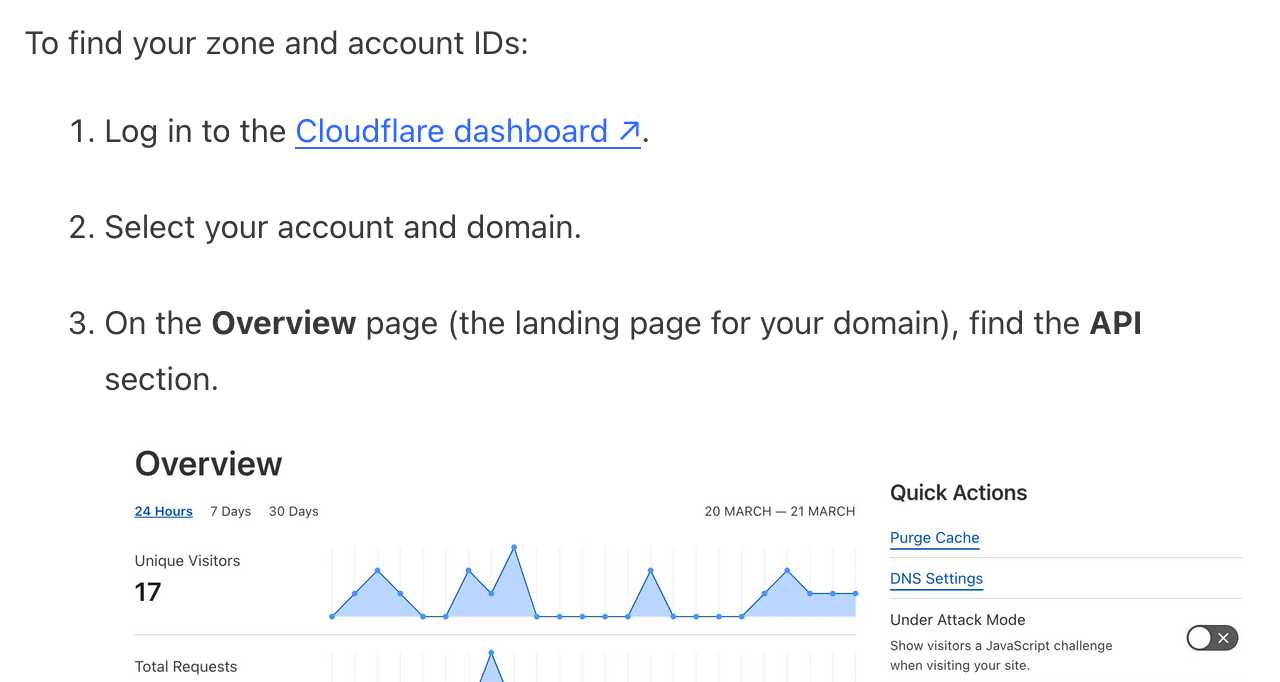
In Cloudflare's case it's harder to link to the correct dashboard page because the URL differs for different users, but that shouldn't be a show-stopper for getting this to work. Set up dash.cloudflare.com/redirects/find-account-id and link to that!
... I just noticed they do have a mechanism like that which they use elsewhere. On the R2 authentication page they link to:
https://dash.cloudflare.com/?to=/:account/r2/api-tokens
The "find account ID" flow presumably can't do the same thing because there is no single page displaying that information - it's shown in a sidebar on the page for each of your Cloudflare domains.
Believing AI vendors who promise you that they won't train on your data is a huge competitive advantage these days.
These proposed API integrations where your LLM agent talks to someone else's LLM tool-using agent are the API version of that thing where someone uses ChatGPT to turn their bullets into an email and the recipient uses ChatGPT to summarize it back to bullet points.