Notes
Filters: Sorted by date
A couple of weeks ago I was invited to OpenAI's headquarters for a "preview event", for which I had to sign both an NDA and a video release waiver. I suspected it might relate to either GPT-5 or the OpenAI open weight models... and GPT-5 it was!
OpenAI had invited five developers: Claire Vo, Theo Browne, Ben Hylak, Shawn @swyx Wang, and myself. We were all given early access to the new models and asked to spend a couple of hours (of paid time, see my disclosures) experimenting with them, while being filmed by a professional camera crew.
The resulting video is now up on YouTube. Unsurprisingly most of my edits related to SVGs of pelicans.
Two interesting examples of inference speed as a flagship feature of LLM services today.
First, Cerebras announced two new monthly plans for their extremely high speed hosted model service: Cerebras Code Pro ($50/month, 1,000 messages a day) and Cerebras Code Max ($200/month, 5,000/day). The model they are selling here is Qwen's Qwen3-Coder-480B-A35B-Instruct, likely the best available open weights coding model right now and one that was released just ten days ago. Ten days from model release to third-party subscription service feels like some kind of record.
Cerebras claim they can serve the model at an astonishing 2,000 tokens per second - four times the speed of Claude Sonnet 4 in their demo video.
Also today, Moonshot announced a new hosted version of their trillion parameter Kimi K2 model called kimi-k2-turbo-preview:
🆕 Say hello to kimi-k2-turbo-preview Same model. Same context. NOW 4× FASTER.
⚡️ From 10 tok/s to 40 tok/s.
💰 Limited-Time Launch Price (50% off until Sept 1)
- $0.30 / million input tokens (cache hit)
- $1.20 / million input tokens (cache miss)
- $5.00 / million output tokens
👉 Explore more: platform.moonshot.ai
This is twice the price of their regular model for 4x the speed (increasing to 4x the price in September). No details yet on how they achieved the speed-up.
I am interested to see how much market demand there is for faster performance like this. I've experimented with Cerebras in the past and found that the speed really does make iterating on code with live previews feel a whole lot more interactive.
This morning I sent out the third edition of my LLM digest newsletter for my $10/month and higher sponsors on GitHub. It included the following section headers:
- Claude Code
- Model releases in July
- Gold medal performances in the IMO
- Reverse engineering system prompts
- Tools I'm using at the moment
The newsletter is a condensed summary of highlights from the past month of my blog. I published 98 posts in July - the concept for the newsletter is that you can pay me for the version that only takes 10 minutes to read!
Here are the newsletters I sent out for June 2025 and May 2025, if you want a taste of what you'll be getting as a sponsor. New sponsors instantly get access to the archive of previous newsletters, including the one I sent this morning.
Update: I also sent out my much longer, more frequent and free weekly-ish newsletter - this edition covers just the last three days because there's been so much going on. That one is entirely copy-and-pasted from my blog so if you read me via feeds you'll have seen it all already.
Here are a few more model releases from today, to round out a very busy July:
- Cohere released Command A Vision, their first multi-modal (image input) LLM. Like their others it's open weights under Creative Commons Attribution Non-Commercial, so you need to license it (or use their paid API) if you want to use it commercially.
- San Francisco AI startup Deep Cogito released four open weights hybrid reasoning models, cogito-v2-preview-deepseek-671B-MoE, cogito-v2-preview-llama-405B, cogito-v2-preview-llama-109B-MoE and cogito-v2-preview-llama-70B. These follow their v1 preview models in April at smaller 3B, 8B, 14B, 32B and 70B sizes. It looks like their unique contribution here is "distilling inference-time reasoning back into the model’s parameters" - demonstrating a form of self-improvement. I haven't tried any of their models myself yet.
- Mistral released Codestral 25.08, an update to their Codestral model which is specialized for fill-in‑the‑middle autocomplete as seen in text editors like VS Code, Zed and Cursor.
- And an anonymous stealth preview model called Horizon Alpha running on OpenRouter was released yesterday and is attracting a lot of attention.
Something that has become undeniable this month is that the best available open weight models now come from the Chinese AI labs.
I continue to have a lot of love for Mistral, Gemma and Llama but my feeling is that Qwen, Moonshot and Z.ai have positively smoked them over the course of July.
Here's what came out this month, with links to my notes on each one:
- Moonshot Kimi-K2-Instruct - 11th July, 1 trillion parameters
- Qwen Qwen3-235B-A22B-Instruct-2507 - 21st July, 235 billion
- Qwen Qwen3-Coder-480B-A35B-Instruct - 22nd July, 480 billion
- Qwen Qwen3-235B-A22B-Thinking-2507 - 25th July, 235 billion
- Z.ai GLM-4.5 and GLM-4.5 Air - 28th July, 355 and 106 billion
- Qwen Qwen3-30B-A3B-Instruct-2507 - 29th July, 30 billion
- Qwen Qwen3-30B-A3B-Thinking-2507 - 30th July, 30 billion
- Qwen Qwen3-Coder-30B-A3B-Instruct - 31st July, 30 billion (released after I first posted this note)
Notably absent from this list is DeepSeek, but that's only because their last model release was DeepSeek-R1-0528 back in April.
The only janky license among them is Kimi K2, which uses a non-OSI-compliant modified MIT. Qwen's models are all Apache 2 and Z.ai's are MIT.
The larger Chinese models all offer their own APIs and are increasingly available from other providers. I've been able to run versions of the Qwen 30B and GLM-4.5 Air 106B models on my own laptop.
I can't help but wonder if part of the reason for the delay in release of OpenAI's open weights model comes from a desire to be notably better than this truly impressive lineup of Chinese models.
Update August 5th 2025: The OpenAI open weight models came out and they are very impressive.
A few months ago I added a tool to my blog for bulk-applying tags to old content. It works as an extension to my existing search interface, letting me run searches and then quickly apply a tag to relevant results.
Since adding this I've been much more aggressive in categorizing my older content, including adding new tags when I spot an interesting trend that warrants its own page.
Today I added system-prompts and applied it to 41 existing posts that talk about system prompts for LLM systems, including a bunch that directly quote system prompts that have been deliberately published or leaked.
Other tags I've added recently include press-quotes for times I've been quoted in the press, agent-definitions for my ongoing collection of different ways people define "agents" and paper-review for posts where I review an academic paper.
If you're running low on disk space and are a uv user, don't forget about uv cache prune:
uv cache pruneremoves all unused cache entries. For example, the cache directory may contain entries created in previous uv versions that are no longer necessary and can be safely removed.uv cache pruneis safe to run periodically, to keep the cache directory clean.
My Mac just ran out of space. I ran OmniDiskSweeper and noticed that the ~/.cache/uv directory was 63.4GB - so I ran this:
uv cache prune
Pruning cache at: /Users/simon/.cache/uv
Removed 1156394 files (37.3GiB)
And now my computer can breathe again!
The more time I spend using LLMs for code, the less I worry for my career - even as their coding capabilities continue to improve.
Using LLMs as part of my process helps me understand how much of my job isn't just bashing out code.
My job is to identify problems that can be solved with code, then solve them, then verify that the solution works and has actually addressed the problem.
A more advanced LLM may eventually be able to completely handle the middle piece. It can help with the first and last pieces, but only when operated by someone who understands both the problems to be solved and how to interact with the LLM to help solve them.
No matter how good these things get, they will still need someone to find problems for them to solve, define those problems and confirm that they are solved. That's a job - one that other humans will be happy to outsource to an expert practitioner.
It's also about 80% of what I do as a software developer already.
Something I've realized about LLM tool use is that it means that if you can reduce a problem to something that can be solved by an LLM in a sandbox using tools in a loop, you can brute force that problem.
The challenge then becomes identifying those problems and figuring out how to configure a sandbox for them, what tools to provide and how to define the success criteria for the model.
That still takes significant skill and experience, but it's at a higher level than chewing through that problem using trial and error by hand.
My x86 assembly experiment with Claude Code was the thing that made this click for me.
Quitting programming as a career right now because of LLMs would be like quitting carpentry as a career thanks to the invention of the table saw.
Sometimes a service with a free plan will decide to stop supporting it. I understand why this happens, but I'm often disappointed at the treatment of existing user's data. It's easy to imagine users forgetting about their old accounts, missing the relevant emails and then discovering too late that their data is gone.
Inspired by today's news about PlanetScale PostgreSQL I signed into PlanetScale and found I had a long-forgotten trial account there with a three-year-old database on their free tier. That free tier was retired in March 2024.
Here's the screen that greeted me in their control panel:
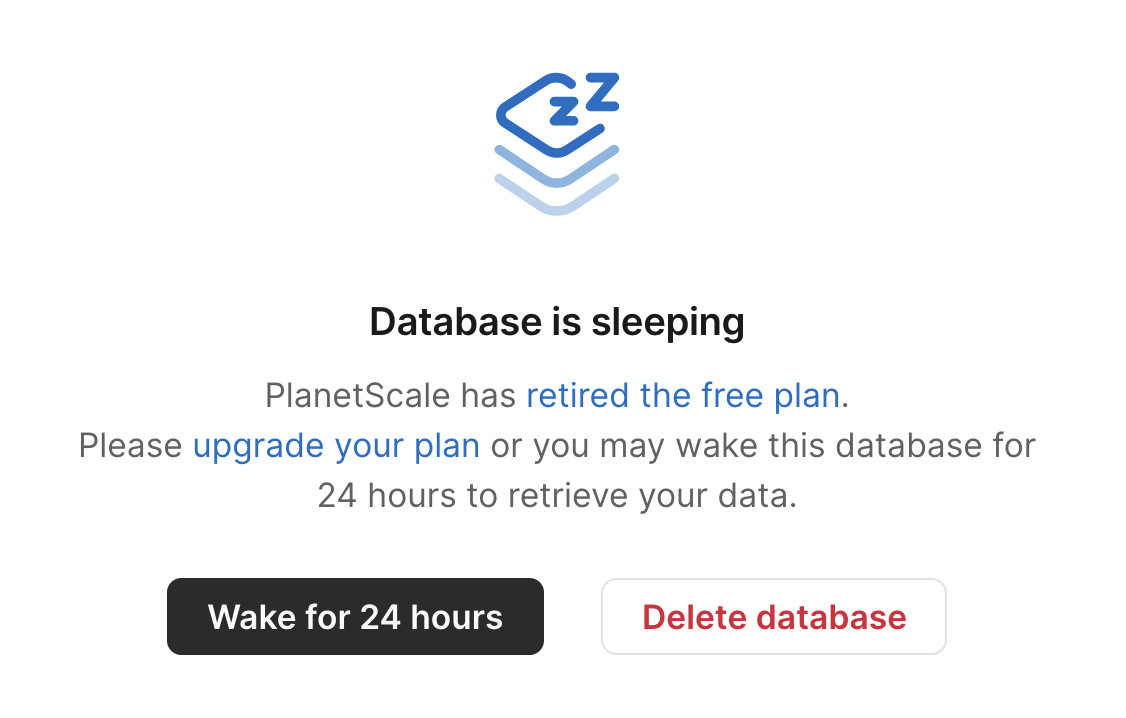
What a great way to handle retiring a free plan! My data is still there, and I have the option to spin up a database for 24 hours to help get it back out again.
Using LLMs for code archaeology is pretty fun.
I stumbled across this blog entry from 2003 today, in which I had gotten briefly excited about ColdFusion and implemented an experimental PHP template engine that used XML tags to achieve a similar effect:
<h1>%title%</h1>
<sql id="recent">
select title
from entries
order by added desc
limit 0, %limit%
</sql>
<ul>
  <output sql="recent">
    <li>%title%</li>
  </output>
</ul>
I'd completely forgotten about this, and in scanning through the PHP it looked like it had extra features that I hadn't described in the post.
So... I fed my 22 year old TemplateParser.class.php file into Claude and prompted:
Write detailed markdown documentation for this template language
Here's the resulting documentation. It's pretty good, but the highlight was the Claude transcript which concluded:
This appears to be a custom template system from the mid-2000s era, designed to separate presentation logic from PHP code while maintaining database connectivity for dynamic content generation.
Mid-2000s era indeed!
I just sent out the second edition of my sponsors only monthly newsletter. Anyone who sponsors me for $10/month or more on GitHub gets this carefully hand-curated summary of the last month in AI/LLMs/my projects designed to be readable in ten minutes or less.
My regular newsletter remains free - the monthly one is the only paywalled content I produce, the idea being that you can pay me to send you less.
Here's the first edition for May 2025 as a preview of what you can expect. You'll get access to the June digest and the full archive automatically if you decide to start sponsoring.
The term context engineering has recently started to gain traction as a better alternative to prompt engineering. I like it. I think this one may have sticking power.
Here's an example tweet from Shopify CEO Tobi Lutke:
I really like the term “context engineering” over prompt engineering.
It describes the core skill better: the art of providing all the context for the task to be plausibly solvable by the LLM.
Recently amplified by Andrej Karpathy:
+1 for "context engineering" over "prompt engineering".
People associate prompts with short task descriptions you'd give an LLM in your day-to-day use. When in every industrial-strength LLM app, context engineering is the delicate art and science of filling the context window with just the right information for the next step. Science because doing this right involves task descriptions and explanations, few shot examples, RAG, related (possibly multimodal) data, tools, state and history, compacting [...] Doing this well is highly non-trivial. And art because of the guiding intuition around LLM psychology of people spirits. [...]
I've spoken favorably of prompt engineering in the past - I hoped that term could capture the inherent complexity of constructing reliable prompts. Unfortunately, most people's inferred definition is that it's a laughably pretentious term for typing things into a chatbot!
It turns out that inferred definitions are the ones that stick. I think the inferred definition of "context engineering" is likely to be much closer to the intended meaning.
Yesterday Anthropic got a bunch of buzz out of their new window.claude.complete() API which allows Claude Artifacts to run their own API calls to execute prompts.
It turns out Gemini had beaten them to that feature by over a month, but the announcement was tucked away in a bullet point of their release notes for the 20th of May:
Vibe coding apps in Canvas just got better too! With just a few prompts, you can now build fully functional personalised apps in Canvas that can use Gemini-powered features, save data between sessions and share data between multiple users.
Ethan Mollick has been building some neat demos on top of Gemini Canvas, including this text adventure starship bridge simulator.
Similar to Claude Artifacts, Gemini Canvas detects if the application uses APIs that require authentication (to run prompts, for example) and requests the user sign in with their Google account:
![Futuristic sci-fi interface screenshot showing "Helm Control" at top with navigation buttons for Helm, Comms, Science, Tactical, Engineering, and Operations, displaying red error message "[SYSTEM_ERROR] Connection to AI core failed: API error: 403. This may be an authentication issue." with command input field showing "Enter command..." and Send button, plus Google Account sign-in notification at bottom stating "You need to sign in with your Google Account to see some features" with Sign in button and X close icon](https://static.simonwillison.net/static/2025/gemini-auth.jpg)
Two interesting new products for running code in a sandbox today.
Cloudflare launched their Containers product in open beta, and added a new Sandbox library for Cloudflare Workers that can run commands in a "secure, container-based environment":
import { getSandbox } from "@cloudflare/sandbox";
const sandbox = getSandbox(env.Sandbox, "my-sandbox");
const output = sandbox.exec("ls", ["-la"]);
Vercel shipped a similar feature, introduced in Run untrusted code with Vercel Sandbox, which enables code that looks like this:
import { Sandbox } from "@vercel/sandbox";

const sandbox = await Sandbox.create();
await sandbox.writeFiles([
    { path: "script.js", stream: Buffer.from(result.text) },
  ]);
await sandbox.runCommand({
    cmd: "node",
    args: ["script.js"],
    stdout: process.stdout,
    stderr: process.stderr,
});
In both cases a major intended use-case is safely executing code that has been created by an LLM.
I've added a Disclosures section to my about page, listing my various sources of income and the companies that directly sponsor my work or have supported it in the recent past.
I do not receive any compensation writing about specific topics on this blog - no sponsored content! I plan to continue this policy. If I ever change this I will disclose that both here and in the post itself. [...]
I see my credibility as one of my most valuable assets, so it's important to be transparent about how financial interests may influence my writing here.
I took inspiration from Molly White's disclosures page.
Here's a tip that works on YouTube and almost any other web page that shows you a video. You can increase the playback rate beyond the usually-exposed 2x by running this in your browser DevTools console:
document.querySelector('video').playbackRate = 2.5
I find this is the fastest I can reasonably watch most videos at, with subtitles on to help my comprehension - it turns a 40 minute video into just 16 minutes, short enough that I don't feel too guilty taking time off whatever else I'm doing to watch it!
I continue to have fun running fantasy cooking prompts through LLMs - this time I tried "Give me a wildly ambitious recipe for zucchini cooked three ways" followed by "Go more ambitious" and now I need to get myself a centrifuge to help spherify my clarified zucchini consommé.
I wrote this recently in a conversation about whether coding agents can work as a replacement for human programmers.
The "agentic" coding tools we have right now work like this:
- A skilled individual with both deep domain understanding and deep understanding of the capabilities of the agent (including understanding what tools are available to that agent) poses a clear task to it.
- The agent writes some code relating to that task. It runs a tool to execute and test that code. It inspects the result, and if there are errors it edits the code and tries again.
- It may call other tools as well, for example a search tool to find related code or even to look up API documentation elsewhere (including via web search).
- It continues like this until it hits a loosely defined “done” state or gets stuck.
- The skilled individual then reviews what it has done and almost always finds that it has not solved the problem to their satisfaction... so they apply their expertise and domain understanding to prompt it again to try and get to that desired state.
Without the skilled individual, the “agent” is useless. It may as well not exist.
That memvid thing that's been going around recently is a trap. It's an embedding store that records the original text that has been embedded in QR codes in a video file. That's an absurd thing to do, and the only purpose of the repo is to make people who uncritically share it look foolish. Don't fall for the trap.
Every time I get into an online conversation about prompt injection it's inevitable that someone will argue that a mitigation which works 99% of the time is still worthwhile because there's no such thing as a security fix that is 100% guaranteed to work.
I don't think that's true.
If I use parameterized SQL queries my systems are 100% protected against SQL injection attacks.
If I make a mistake applying those and someone reports it to me I can fix that mistake and now I'm back up to 100%.
If our measures against SQL injection were only 99% effective none of our digital activities involving relational databases would be safe.
I don't think it is unreasonable to want a security fix that, when applied correctly, works 100% of the time.
(I first argued a version of this back in September 2022 in You can’t solve AI security problems with more AI.)
My post this morning about Design Patterns for Securing LLM Agents against Prompt Injections is an example of a blogging format I'd love to see more of: informal but informed commentary on academic papers.
Academic papers are generally hard to read. Sadly that's almost a requirement of the format: the incentives for publishing papers that make it through peer review are often at odds with producing text that's easy for non-academics to digest.
(This new Design Patterns paper bucks that trend, the writing is clear, it’s enjoyable to read and the target audience clearly includes practitioners, not just other researchers.)
In addition to breaking a paper down into more digestible chunks, writing about papers offers an extremely valuable filter. There are hundreds of new papers published every day: seeing someone who's work you respect confirm that a paper is worth your time is a really strong signal.
I added a paper-review tag this morning, gathering six posts where I’ve attempted this kind of review. Notes on the SQLite DuckDB paper in September 2022 was my first.
I apply the same principle to these as my link blog: try to add something extra, so that anyone who reads both my post and the paper itself gets a little bit of extra value from my notes.
It's this blog's 23rd birthday today!
On June 12th 2022 I celebrated Twenty years of my blog with a big post full of highlights. Looking back now I'm amused to notice that my 20th birthday post came within two weeks of my earliest writing about LLMs: A Datasette tutorial written by GPT-3 and How to use the GPT-3 language model.
My generative-ai tag has reached 1,184 posts now.
I really do feel like blogging is onto its second wind. The amount of influence you can have on the world by consistently blogging about a subject is just as high today as it was back in the 2000s when blogging first started.
The best time to start a blog may have been twenty years ago, but the second best time to start a blog is today.
OpenAI just dropped the price of their o3 model by 80% - from $10/million input tokens and $40/million output tokens to just $2/million and $8/million for the very same model. This is in advance of the release of o3-pro which apparently is coming later today (update: here it is).
This is a pretty huge shake-up in LLM pricing. o3 is now priced the same as GPT 4.1, and slightly less than GPT-4o ($2.50/$10). It’s also less than Anthropic’s Claude Sonnet 4 ($3/$15) and Opus 4 ($15/$75) and sits in between Google’s Gemini 2.5 Pro for >200,00 tokens ($2.50/$15) and 2.5 Pro for <200,000 ($1.25/$10).
I’ve updated my llm-prices.com pricing calculator with the new rate.
How have they dropped the price so much? OpenAI's Adam Groth credits ongoing optimization work:
thanks to the engineers optimizing inferencing.
Solomon Hykes just presented the best definition of an AI agent I've seen yet, on stage at the AI Engineer World's Fair:
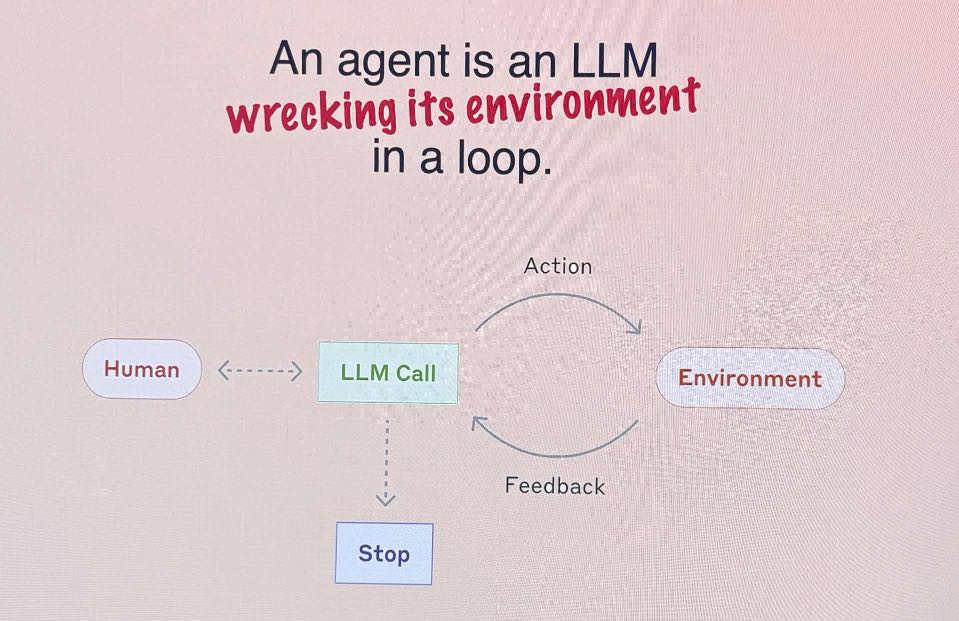
An AI agent is an LLM wrecking its environment in a loop.
I collect AI agent definitions and I really like this how this one combines the currently popular "tools in a loop" one (see Anthropic) with the classic academic definition that I think dates back to at least the 90s:
An agent is something that acts in an environment; it does something. Agents include worms, dogs, thermostats, airplanes, robots, humans, companies, and countries.
We're hosting the sixth in our series of Datasette Public Office Hours livestream sessions this Friday, 6th of June at 2pm PST (here's that time in your location).
The topic is going to be tool support in LLM, as introduced here.
I'll be walking through the new features, and we're also inviting five minute lightning demos from community members who are doing fun things with the new capabilities. If you'd like to present one of those please get in touch via this form.
Here's a link to add it to Google Calendar.
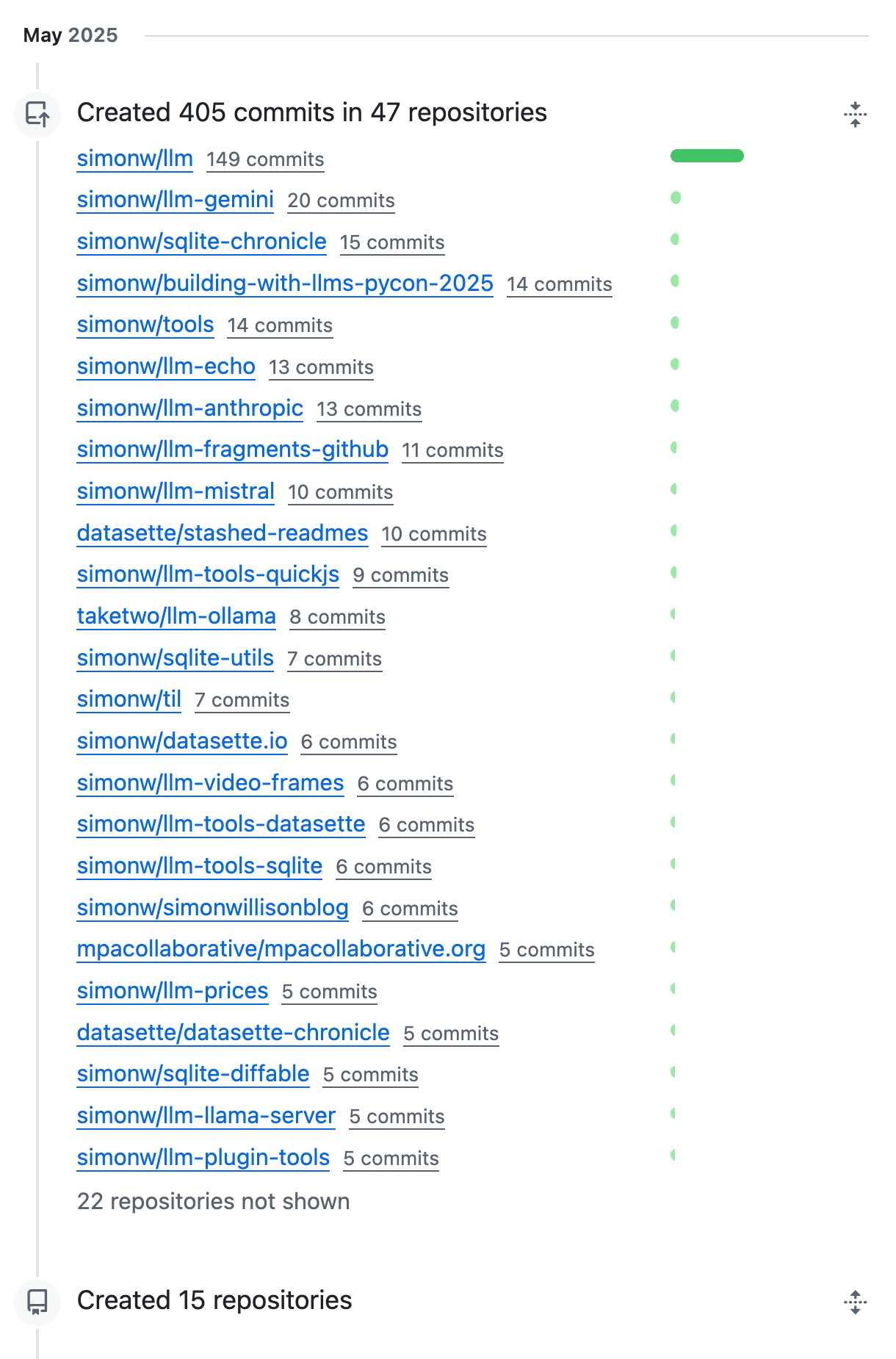
OK, May was a busy month for coding on GitHub. I blame tool support!
I've been having some good results recently asking reasoning LLMs for "implementation plans" for features I'm working on.
I dump either the whole codebase in or the most relevent sections, then dump in my issue thread with several comments describing my planned feature, then ask it to provide an implementation plan for what I've outlined so far.
I'm finding this really valuable, because the model will often spot corners of the codebase that will need to be changed that I haven't thought about yet.
My two preferred models for this at the moment are Gemini 2.5 Flash and o4-mini, because they both have reasoning abilities, long context support (1m tokens for Flash, 200,000 for o4-mini) and they're both really cheap: most of the time the prompt costs me 15 cents or less, depending on the amount of code I feed in.
They rarely get the implementation plan exactly right, but that doesn't matter: what I'm looking for with these prompts is hints that tip me off to parts of the codebase I might not have considered yet.
(I wrote this as a draft in June 2025 but only noticed and hit publish on it in February 2026, I think it's an interesting time capsule of how I was using the models at the time.)
If you've found web development frustrating over the past 5-10 years, here's something that has worked worked great for me: give yourself permission to avoid any form of frontend build system (so no npm / React / TypeScript / JSX / Babel / Vite / Tailwind etc) and code in HTML and JavaScript like it's 2009.
The joy came flooding back to me! It turns out browser APIs are really good now.
You don't even need jQuery to paper over the gaps any more - use document.querySelectorAll() and fetch() directly and see how much value you can build with a few dozen lines of code.