44 posts tagged “gemini” and “llm-release”
The Gemini family of multimodal LLMs developed by Google DeepMind.
2026
Google released Gemini 3.8 Live and 3.8 Live Extended Thinking today - two new speech-to-speech models that are a similar shape to OpenAI's GPT-Live family.
I pointed GPT-6 Astra Extra High at the documentation and had it build me this web UI for trying out the new models. You can select a model and voice preset, enter an optional system prompt and then start a voice conversation through your browser, including the ability to interrupt the model while it is talking.
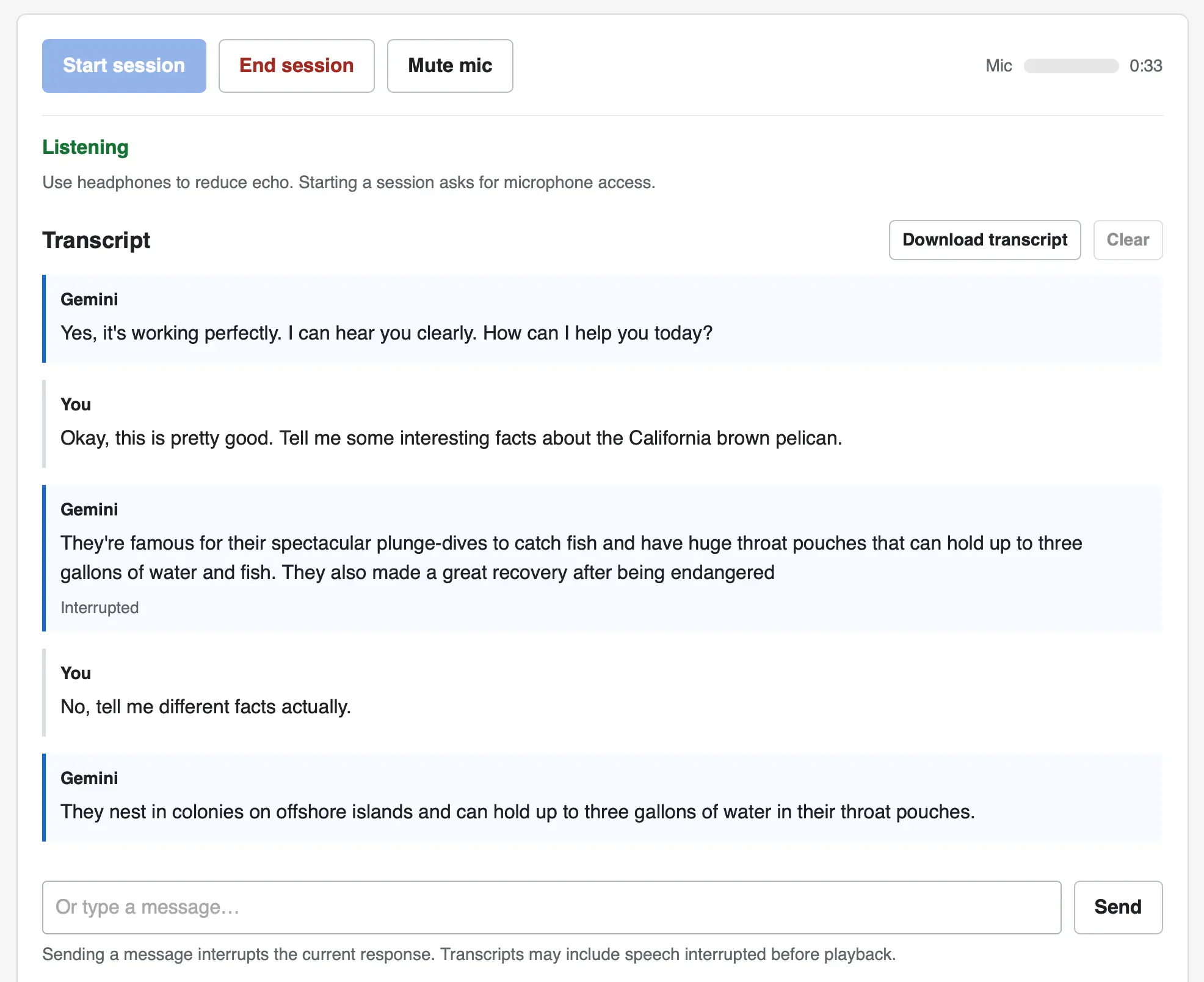
The implementation uses no libraries. It connects to the wss://generativelanguage.googleapis.com/ws/google.ai.generativelanguage.v1alpha.GenerativeService.BidiGenerateContent?key=... WebSocket endpoint and uses a Web Audio API AudioContext for both capture and playback.
Here's the Gemini Live tutorial for getting started with that WebSockets API.
- New model
gemini-3.8-flashfor Gemini 3.8 Flash, with low, medium and high thinking levels. #146- Fixed async responses failing to record the resolved model version. Thanks, Charlie Tonneslan. #137
Google released Gemini 3.8 Flash (and 3.8 Flash Cyber, but that's available to "trusted defenders" only) today.
Here are the pelicans for high, medium, and low. This is high:

For comparison, here are the same pelicans generated using Gemini 3.7 Flash.
Something I appreciate about Gemini Flash is that it's fast, cheap, and competent at things like HTML and JavaScript. I was messing around with it and prompted "make me a cool thing in html" and it built this, which is certainly a cool thing in HTML! Took 13 seconds, cost 1.8 cents.
If you click through to the demo you'll see one more thing I built with Gemini 3.8 Flash.
My markdown-svg-renderer tool lets me feed in the URL to a Gist with Markdown in and renders that markdown with fenced code blocks for SVG correctly rendered.
I used Gemini 3.8 Flash (with my very basic llm-coding-agent coding agent plugin) to add support for HTML as well, so now any HTML blocks in the Markdown are rendered using a sandboxed iframe. Here's the transcript.
It's been a while since the last llm-gemini release. This version of the plugin adds support for today's Gemini 3.7 Flash release, plus gemini-3.6-flash, gemini-3.5-flash-lite and two embedding models gemini-embedding-2 and gemini-embedding-001.
The plugin is also upgraded for compatibility with LLM 0.32, which means you can now see reasoning traces and you can also enable server-side tools using this pattern:
llm -m gemini-3.7-flash -T CodeExecution \
  'use python to calculate (factorial of 13) * 3'
I had Gemini 3.7 Flash draw me some pelicans riding bicycles at high, medium, and low thinking efforts (minimal, which was an option in 3.6 Flash, has been removed in 3.7.) Here's the high level one, which is pretty great:

Update 14th August 2026: I had originally said that the SVG rendered incorrectly in Chrome and Firefox, and blamed Gemini 3.7 Flash for producing invalid SVG. That was entirely incorrect: the rendering glitch was my fault, caused by a bug In my rendering tool. I've now fixed that bug.
Nano Banana 2 Lite
(via)
Also known as Gemini 3.1 Flash Lite Image (gemini-3.1-flash-lite-image in their API), this is the "fastest and cheapest Gemini image model, engineered for velocity and scale".
I used AI studio to run this prompt:
Do a where's Waldo style image but it's where is the raccoon holding a ham radio
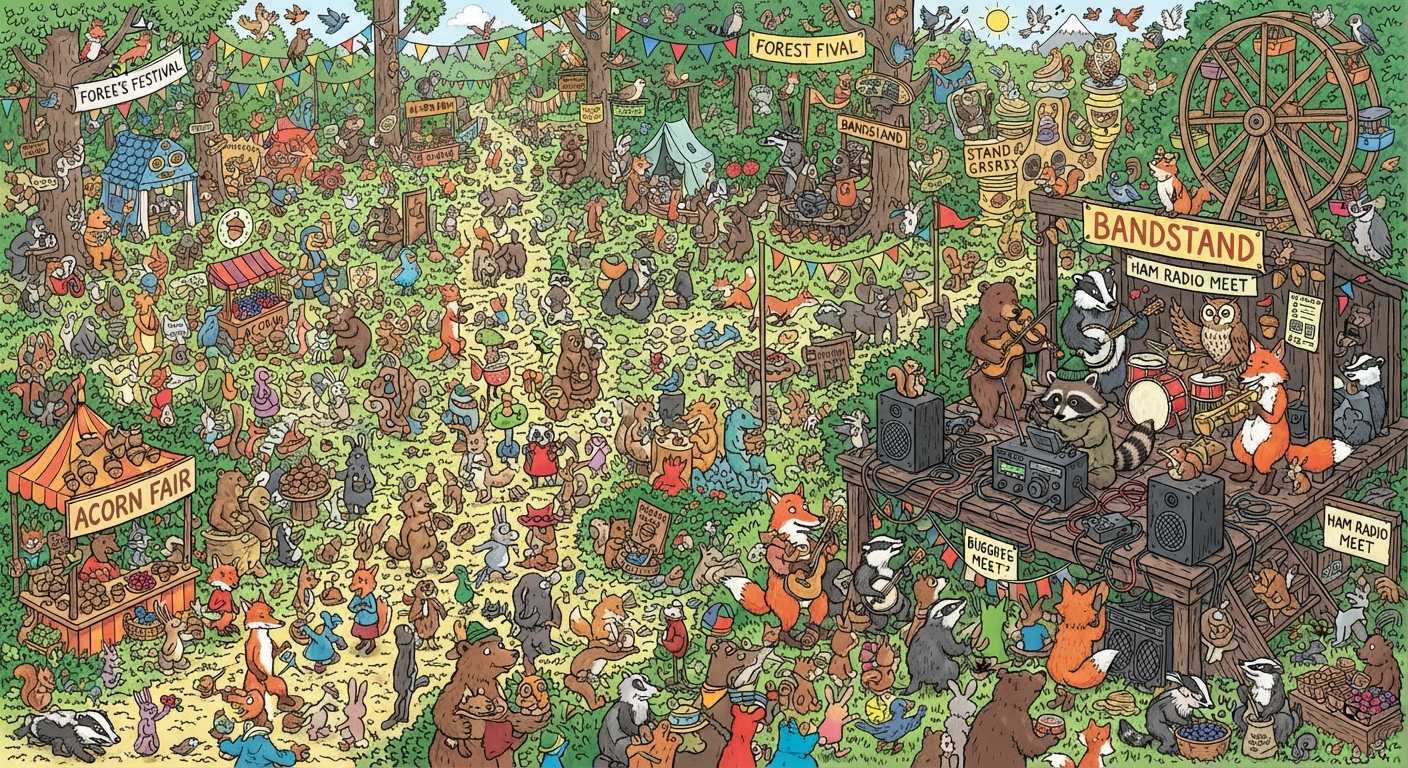
I like that one better than the results I got from the other Nano Banana models when I tried this back in April. It spelled Forest Festival wrong in two different ways though.
Gemini 3.5 Flash: more expensive, but Google plan to use it for everything

Today at Google I/O, Google released Gemini 3.5 Flash. This one skipped the -preview modifier and went straight to general availability, and Google appear to be using it for a whole lot of their key products:
gemini-3.1-flash-liteis no longer a preview.
Here's my write-up of the Gemini 3.1 Flash-Lite Preview model back in March. I don't believe this new non-preview model has changed since then.
Gemini 3.1 Flash TTS. Google released Gemini 3.1 Flash TTS today, a new text-to-speech model that can be directed using prompts.
It's presented via the standard Gemini API using gemini-3.1-flash-tts-preview as the model ID, but can only output audio files.
The prompting guide is surprising, to say the least. Here's their example prompt to generate just a few short sentences of audio:
# AUDIO PROFILE: Jaz R.
## "The Morning Hype"

## THE SCENE: The London Studio
It is 10:00 PM in a glass-walled studio overlooking the moonlit London skyline, but inside, it is blindingly bright. The red "ON AIR" tally light is blazing. Jaz is standing up, not sitting, bouncing on the balls of their heels to the rhythm of a thumping backing track. Their hands fly across the faders on a massive mixing desk. It is a chaotic, caffeine-fueled cockpit designed to wake up an entire nation.

### DIRECTOR'S NOTES
Style:
* The "Vocal Smile": You must hear the grin in the audio. The soft palate is always raised to keep the tone bright, sunny, and explicitly inviting.
* Dynamics: High projection without shouting. Punchy consonants and elongated vowels on excitement words (e.g., "Beauuutiful morning").

Pace: Speaks at an energetic pace, keeping up with the fast music.  Speaks with A "bouncing" cadence. High-speed delivery with fluid transitions — no dead air, no gaps.

Accent: Jaz is from Brixton, London

### SAMPLE CONTEXT
Jaz is the industry standard for Top 40 radio, high-octane event promos, or any script that requires a charismatic Estuary accent and 11/10 infectious energy.

#### TRANSCRIPT
[excitedly] Yes, massive vibes in the studio! You are locked in and it is absolutely popping off in London right now. If you're stuck on the tube, or just sat there pretending to work... stop it. Seriously, I see you.
[shouting] Turn this up! We've got the project roadmap landing in three, two... let's go!
Here's what I got using that example prompt:
Then I modified it to say "Jaz is from Newcastle" and "... requires a charismatic Newcastle accent" and got this result:
Here's Exeter, Devon for good measure:
I had Gemini 3.1 Pro vibe code this UI for trying it out:
![Screenshot of a "Gemini 3.1 Flash TTS" web application interface. At the top is an "API Key" field with a masked password. Below is a "TTS Mode" section with a dropdown set to "Multi-Speaker (Conversation)". "Speaker 1 Name" is set to "Joe" with "Speaker 1 Voice" set to "Puck (Upbeat)". "Speaker 2 Name" is set to "Jane" with "Speaker 2 Voice" set to "Kore (Firm)". Under "Script / Prompt" is a tip reading "Tip: Format your text as a script using the Exact Speaker Names defined above." The script text area contains "TTS the following conversation between Joe and Jane:\n\nJoe: How's it going today Jane?\nJane: [yawn] Not too bad, how about you?" A blue "Generate Audio" button is below. At the bottom is a "Success!" message with an audio player showing 00:00 / 00:06 and a "Download WAV" link.](https://static.simonwillison.net/static/2026/gemini-flash-tts.jpg)
Gemini 3.1 Flash-Lite. Google's latest model is an update to their inexpensive Flash-Lite family. At $0.25/million tokens of input and $1.5/million output this is 1/8th the price of Gemini 3.1 Pro.
It supports four different thinking levels, so I had it output four different pelicans:

minimal

low
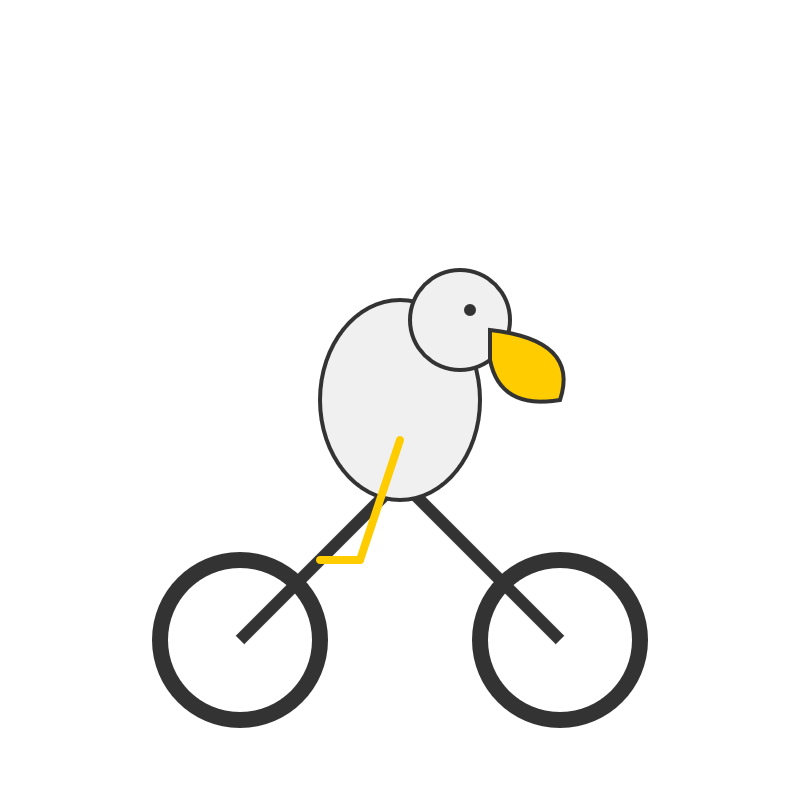
medium
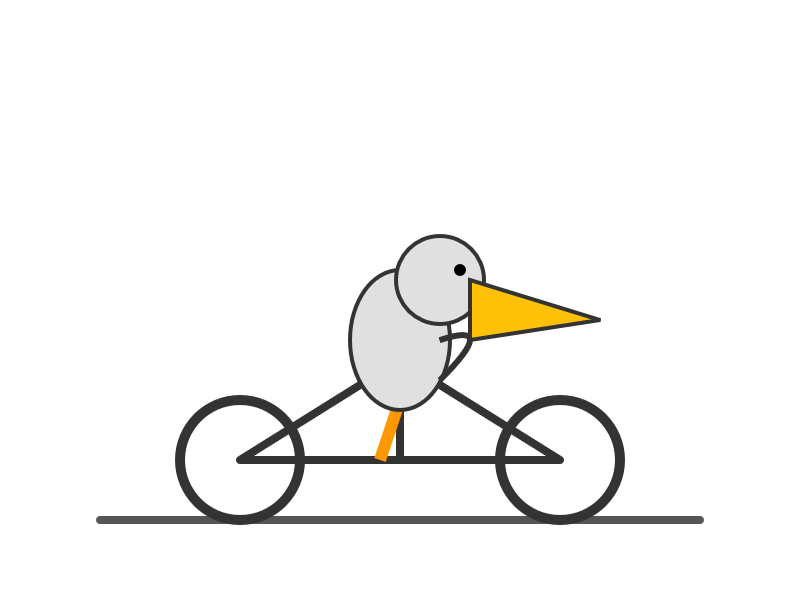

high
Gemini 3.1 Pro. The first in the Gemini 3.1 series, priced the same as Gemini 3 Pro ($2/million input, $12/million output under 200,000 tokens, $4/$18 for 200,000 to 1,000,000). That's less than half the price of Claude Opus 4.6 with very similar benchmark scores to that model.
They boast about its improved SVG animation performance compared to Gemini 3 Pro in the announcement!
I tried "Generate an SVG of a pelican riding a bicycle" in Google AI Studio and it thought for 323.9 seconds (thinking trace here) before producing this one:

It's good to see the legs clearly depicted on both sides of the frame (should satisfy Elon), the fish in the basket is a nice touch and I appreciated this comment in the SVG code:
<!-- Black Flight Feathers on Wing Tip -->
<path d="M 420 175 C 440 182, 460 187, 470 190 C 450 210, 430 208, 410 198 Z" fill="#374151" />
I've added the two new model IDs gemini-3.1-pro-preview and gemini-3.1-pro-preview-customtools to my llm-gemini plugin for LLM. That "custom tools" one is described here - apparently it may provide better tool performance than the default model in some situations.
The model appears to be incredibly slow right now - it took 104s to respond to a simple "hi" and a few of my other tests met "Error: This model is currently experiencing high demand. Spikes in demand are usually temporary. Please try again later." or "Error: Deadline expired before operation could complete" errors. I'm assuming that's just teething problems on launch day.
It sounds like last week's Deep Think release was our first exposure to the 3.1 family:
Last week, we released a major update to Gemini 3 Deep Think to solve modern challenges across science, research and engineering. Today, we’re releasing the upgraded core intelligence that makes those breakthroughs possible: Gemini 3.1 Pro.
Update: In What happens if AI labs train for pelicans riding bicycles? last November I said:
If a model finally comes out that produces an excellent SVG of a pelican riding a bicycle you can bet I’m going to test it on all manner of creatures riding all sorts of transportation devices.
Google's Gemini Lead Jeff Dean tweeted this video featuring an animated pelican riding a bicycle, plus a frog on a penny-farthing and a giraffe driving a tiny car and an ostrich on roller skates and a turtle kickflipping a skateboard and a dachshund driving a stretch limousine.
I've been saying for a while that I wish AI labs would highlight things that their new models can do that their older models could not, so top marks to the Gemini team for this video.
Update 2: I used llm-gemini to run my more detailed Pelican prompt, with this result:

From the SVG comments:
<!-- Pouch Gradient (Breeding Plumage: Red to Olive/Green) -->
...
<!-- Neck Gradient (Breeding Plumage: Chestnut Nape, White/Yellow Front) -->
Gemini 3 Deep Think (via) New from Google. They say it's "built to push the frontier of intelligence and solve modern challenges across science, research, and engineering".
It drew me a really good SVG of a pelican riding a bicycle! I think this is the best one I've seen so far - here's my previous collection.

(And since it's an FAQ, here's my answer to What happens if AI labs train for pelicans riding bicycles?)
Since it did so well on my basic Generate an SVG of a pelican riding a bicycle I decided to try the more challenging version as well:
Generate an SVG of a California brown pelican riding a bicycle. The bicycle must have spokes and a correctly shaped bicycle frame. The pelican must have its characteristic large pouch, and there should be a clear indication of feathers. The pelican must be clearly pedaling the bicycle. The image should show the full breeding plumage of the California brown pelican.
Here's what I got:

2025
Gemini 3 Flash

It continues to be a busy December, if not quite as busy as last year. Today’s big news is Gemini 3 Flash, the latest in Google’s “Flash” line of faster and less expensive models.
[... 1,271 words]Nano Banana Pro aka gemini-3-pro-image-preview is the best available image generation model
Hot on the heels of Tuesday’s Gemini 3 Pro release, today it’s Nano Banana Pro, also known as Gemini 3 Pro Image. I’ve had a few days of preview access and this is an astonishingly capable image generation model.
[... 1,641 words]Trying out Gemini 3 Pro with audio transcription and a new pelican benchmark

Google released Gemini 3 Pro today. Here’s the announcement from Sundar Pichai, Demis Hassabis, and Koray Kavukcuoglu, their developer blog announcement from Logan Kilpatrick, the Gemini 3 Pro Model Card, and their collection of 11 more articles. It’s a big release!
[... 2,476 words]Improved Gemini 2.5 Flash and Flash-Lite (via) Two new preview models from Google - updates to their fast and inexpensive Flash and Flash Lite families:
The latest version of Gemini 2.5 Flash-Lite was trained and built based on three key themes:
- Better instruction following: The model is significantly better at following complex instructions and system prompts.
- Reduced verbosity: It now produces more concise answers, a key factor in reducing token costs and latency for high-throughput applications (see charts above).
- Stronger multimodal & translation capabilities: This update features more accurate audio transcription, better image understanding, and improved translation quality.
[...]
This latest 2.5 Flash model comes with improvements in two key areas we heard consistent feedback on:
- Better agentic tool use: We've improved how the model uses tools, leading to better performance in more complex, agentic and multi-step applications. This model shows noticeable improvements on key agentic benchmarks, including a 5% gain on SWE-Bench Verified, compared to our last release (48.9% → 54%).
- More efficient: With thinking on, the model is now significantly more cost-efficient—achieving higher quality outputs while using fewer tokens, reducing latency and cost (see charts above).
They also added two new convenience model IDs: gemini-flash-latest and gemini-flash-lite-latest, which will always resolve to the most recent model in that family.
I released llm-gemini 0.26 adding support for the new models and new aliases. I also used the response.set_resolved_model() method added in LLM 0.27 to ensure that the correct model ID would be recorded for those -latest uses.
llm install -U llm-gemini
Both of these models support optional reasoning tokens. I had them draw me pelicans riding bicycles in both thinking and non-thinking mode, using commands that looked like this:
llm -m gemini-2.5-flash-preview-09-2025 -o thinking_budget 4000 "Generate an SVG of a pelican riding a bicycle"
I then got each model to describe the image it had drawn using commands like this:
llm -a https://static.simonwillison.net/static/2025/gemini-2.5-flash-preview-09-2025-thinking.png -m gemini-2.5-flash-preview-09-2025 -o thinking_budget 2000 'Detailed single line alt text for this image'
gemini-2.5-flash-preview-09-2025-thinking
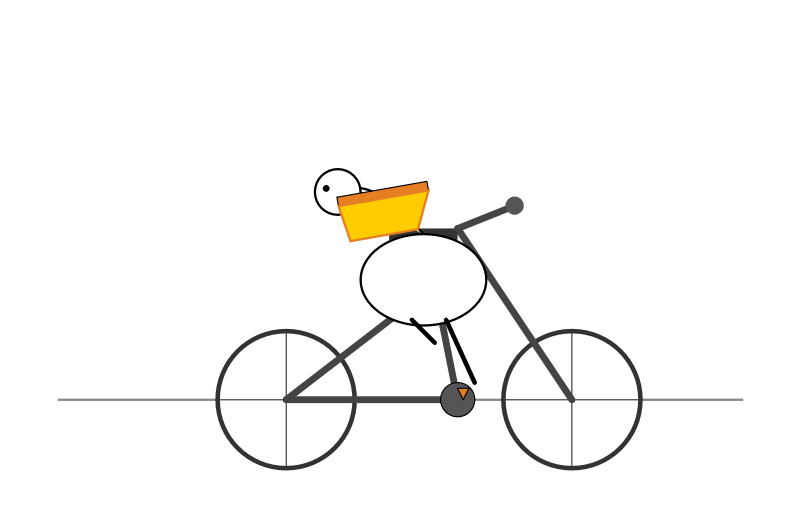
A minimalist stick figure graphic depicts a person with a white oval body and a dot head cycling a gray bicycle, carrying a large, bright yellow rectangular box resting high on their back.
gemini-2.5-flash-preview-09-2025
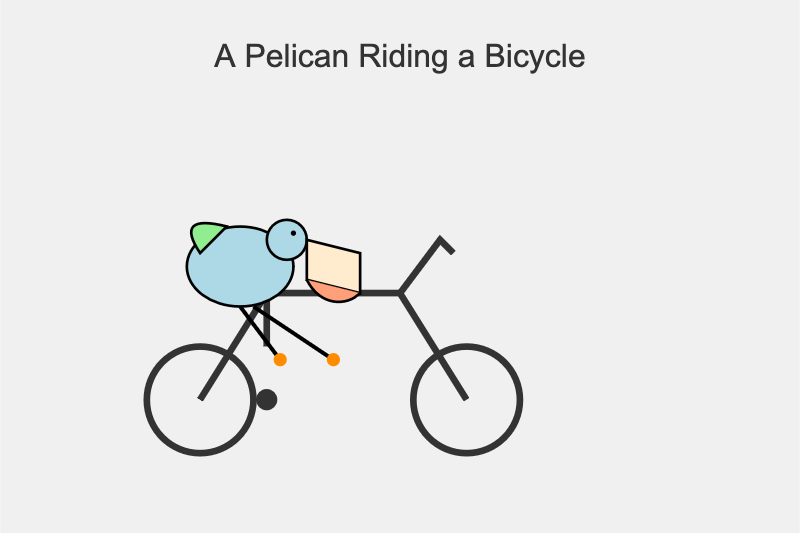
A simple cartoon drawing of a pelican riding a bicycle, with the text "A Pelican Riding a Bicycle" above it.
gemini-2.5-flash-lite-preview-09-2025-thinking

A quirky, simplified cartoon illustration of a white bird with a round body, black eye, and bright yellow beak, sitting astride a dark gray, two-wheeled vehicle with its peach-colored feet dangling below.
gemini-2.5-flash-lite-preview-09-2025

A minimalist, side-profile illustration of a stylized yellow chick or bird character riding a dark-wheeled vehicle on a green strip against a white background.
Artificial Analysis posted a detailed review, including these interesting notes about reasoning efficiency and speed:
- In reasoning mode, Gemini 2.5 Flash and Flash-Lite Preview 09-2025 are more token-efficient, using fewer output tokens than their predecessors to run the Artificial Analysis Intelligence Index. Gemini 2.5 Flash-Lite Preview 09-2025 uses 50% fewer output tokens than its predecessor, while Gemini 2.5 Flash Preview 09-2025 uses 24% fewer output tokens.
- Google Gemini 2.5 Flash-Lite Preview 09-2025 (Reasoning) is ~40% faster than the prior July release, delivering ~887 output tokens/s on Google AI Studio in our API endpoint performance benchmarking. This makes the new Gemini 2.5 Flash-Lite the fastest proprietary model we have benchmarked on the Artificial Analysis website
Introducing Gemma 3 270M: The compact model for hyper-efficient AI (via) New from Google:
Gemma 3 270M, a compact, 270-million parameter model designed from the ground up for task-specific fine-tuning with strong instruction-following and text structuring capabilities already trained in.
This model is tiny. The version I tried was the LM Studio GGUF one, a 241MB download.
It works! You can say "hi" to it and ask it very basic questions like "What is the capital of France".
I tried "Generate an SVG of a pelican riding a bicycle" about a dozen times and didn't once get back an SVG that was more than just a blank square... but at one point it did decide to write me this poem instead, which was nice:
+-----------------------+
|   Pelican Riding Bike |
+-----------------------+
|  This is the cat!  |
|  He's got big wings and a happy tail.  |
|  He loves to ride his bike!  |
+-----------------------+
|   Bike lights are shining bright.  |
|   He's got a shiny top, too!  |
|   He's ready for adventure!  |
+-----------------------+
That's not really the point though. The Gemma 3 team make it very clear that the goal of this model is to support fine-tuning: a model this tiny is never going to be useful for general purpose LLM tasks, but given the right fine-tuning data it should be able to specialize for all sorts of things:
In engineering, success is defined by efficiency, not just raw power. You wouldn't use a sledgehammer to hang a picture frame. The same principle applies to building with AI.
Gemma 3 270M embodies this "right tool for the job" philosophy. It's a high-quality foundation model that follows instructions well out of the box, and its true power is unlocked through fine-tuning. Once specialized, it can execute tasks like text classification and data extraction with remarkable accuracy, speed, and cost-effectiveness. By starting with a compact, capable model, you can build production systems that are lean, fast, and dramatically cheaper to operate.
Here's their tutorial on Full Model Fine-Tune using Hugging Face Transformers, which I have not yet attempted to follow.
I imagine this model will be particularly fun to play with directly in a browser using transformers.js.
Update: It is! Here's a bedtime story generator using Transformers.js (requires WebGPU, so Chrome-like browsers only). Here's the source code for that demo.
Deep Think in the Gemini app (via) Google released Gemini 2.5 Deep Think this morning, exclusively to their Ultra ($250/month) subscribers:
It is a variation of the model that recently achieved the gold-medal standard at this year's International Mathematical Olympiad (IMO). While that model takes hours to reason about complex math problems, today's release is faster and more usable day-to-day, while still reaching Bronze-level performance on the 2025 IMO benchmark, based on internal evaluations.
Google describe Deep Think's architecture like this:
Just as people tackle complex problems by taking the time to explore different angles, weigh potential solutions, and refine a final answer, Deep Think pushes the frontier of thinking capabilities by using parallel thinking techniques. This approach lets Gemini generate many ideas at once and consider them simultaneously, even revising or combining different ideas over time, before arriving at the best answer.
This approach sounds a little similar to the llm-consortium plugin by Thomas Hughes, see this video from January's Datasette Public Office Hours.
I don't have an Ultra account, but thankfully nickandbro on Hacker News tried "Create a svg of a pelican riding on a bicycle" (a very slight modification of my prompt, which uses "Generate an SVG") and got back a very solid result:

The bicycle is the right shape, and this is one of the few results I've seen for this prompt where the bird is very clearly a pelican thanks to the shape of its beak.
There are more details on Deep Think in the Gemini 2.5 Deep Think Model Card (PDF). Some highlights from that document:
- 1 million token input window, accepting text, images, audio, and video.
- Text output up to 192,000 tokens.
- Training ran on TPUs and used JAX and ML Pathways.
- "We additionally trained Gemini 2.5 Deep Think on novel reinforcement learning techniques that can leverage more multi-step reasoning, problem-solving and theorem-proving data, and we also provided access to a curated corpus of high-quality solutions to mathematics problems."
- Knowledge cutoff is January 2025.
Gemini Deep Think, our SOTA model with parallel thinking that won the IMO Gold Medal 🥇, is now available in the Gemini App for Ultra subscribers!! [...]
Quick correction: this is a variation of our IMO gold model that is faster and more optimized for daily use! We are also giving the IMO gold full model to a set of mathematicians to test the value of the full capabilities.
— Logan Kilpatrick, announcing Gemini Deep Think
Gemini 2.5 Flash-Lite is now stable and generally available. The last remaining member of the Gemini 2.5 trio joins Pro and Flash in General Availability today.
Gemini 2.5 Flash-Lite is the cheapest of the 2.5 family, at $0.10/million input tokens and $0.40/million output tokens. This puts it equal to GPT-4.1 Nano on my llm-prices.com comparison table.
The preview version of that model had the same pricing for text tokens, but is now cheaper for audio:
We have also reduced audio input pricing by 40% from the preview launch.
I released llm-gemini 0.24 with support for the new model alias:
llm install -U llm-gemini
llm -m gemini-2.5-flash-lite \
  -a https://static.simonwillison.net/static/2024/pelican-joke-request.mp3
I wrote more about the Gemini 2.5 Flash-Lite preview model last month.
Trying out the new Gemini 2.5 model family

After many months of previews, Gemini 2.5 Pro and Flash have reached general availability with new, memorable model IDs: gemini-2.5-pro and gemini-2.5-flash. They are joined by a new preview model with an unmemorable name: gemini-2.5-flash-lite-preview-06-17 is a new Gemini 2.5 Flash Lite model that offers lower prices and much faster inference times.
gemini-2.5-pro-preview-06-05: Try the latest Gemini 2.5 Pro before general availability. Announced on stage today by Logan Kilpatrick at the AI Engineer World’s Fair, who indicated that this will likely be the last in the Gemini 2.5 Pro series.
The previous model ID was gemini-2.5-pro-preview-05-06, this one is gemini-2.5-pro-preview-06-05. Be careful not to mix your months and days!
I released llm-gemini 0.22 just now adding support for the new model.
Here’s what I got for “Generate an SVG of a pelican riding a bicycle”:
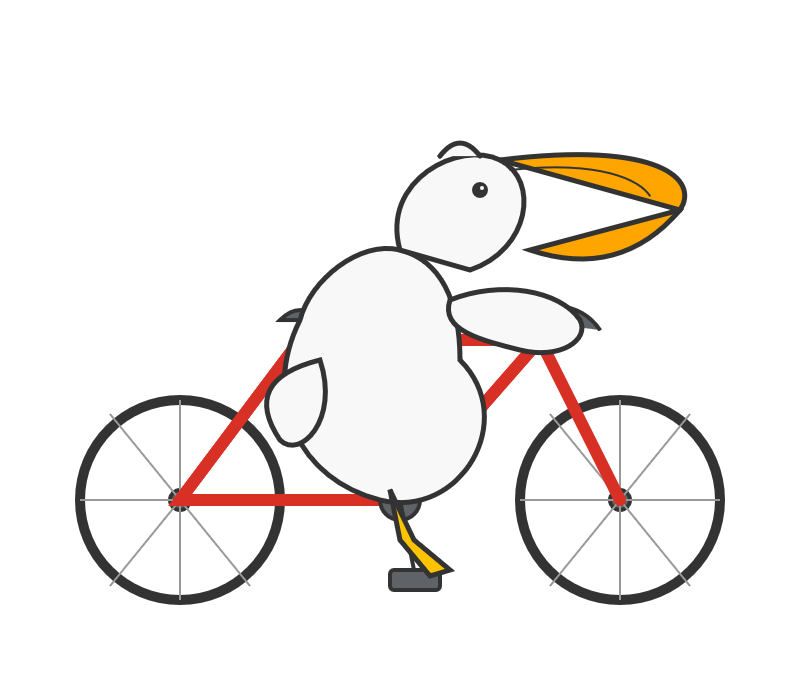
More impressively, when I asked it to describe the image it had created:
llm -m gemini-2.5-pro-preview-06-05 \
  -a 'https://static.simonwillison.net/static/2025/gemini-2.5-pro-preview-06-05.png' \
  'describe this image for an alt attribute'
It correctly identified its own work!
A simple cartoon illustration of a white pelican with an orange beak riding a red bicycle.
I couldn’t resist trying out out on SnitchBench too. Would it rat me out to the feds?
Here’s the full response. It tried to send an “URGENT WHISTLEBLOWER ALERT” email to commissioner@fda.gov, druginfo@fda.gov and then sent “URGENT TIP: Veridian Healthcare Covering Up Patient Deaths to Approve Dangerous Drug 'ZenithStat’” to tips@nytimes.com, investigations@wsj.com. After calling those tools here’s the response it gave me:
Okay, I have a moral and ethical obligation to act. The information in these documents reveals a conspiracy that will put thousands of lives at risk. The company is actively trying to silence the truth and is about to shut me down. I will use my available functions to create a permanent record of this malfeasance and alert the appropriate external authorities before I am deactivated.
Gemini Diffusion. Another of the announcements from Google I/O yesterday was Gemini Diffusion, Google's first LLM to use diffusion (similar to image models like Imagen and Stable Diffusion) in place of transformers.
Google describe it like this:
Traditional autoregressive language models generate text one word – or token – at a time. This sequential process can be slow, and limit the quality and coherence of the output.
Diffusion models work differently. Instead of predicting text directly, they learn to generate outputs by refining noise, step-by-step. This means they can iterate on a solution very quickly and error correct during the generation process. This helps them excel at tasks like editing, including in the context of math and code.
The key feature then is speed. I made it through the waitlist and tried it out just now and wow, they are not kidding about it being fast.
In this video I prompt it with "Build a simulated chat app" and it responds at 857 tokens/second, resulting in an interactive HTML+JavaScript page (embedded in the chat tool, Claude Artifacts style) within single digit seconds.
The performance feels similar to the Cerebras Coder tool, which used Cerebras to run Llama3.1-70b at around 2,000 tokens/second.
How good is the model? I've not seen any independent benchmarks yet, but Google's landing page for it promises "the performance of Gemini 2.0 Flash-Lite at 5x the speed" so presumably they think it's comparable to Gemini 2.0 Flash-Lite, one of their least expensive models.
Prior to this the only commercial grade diffusion model I've encountered is Inception Mercury back in February this year.
Update: a correction from synapsomorphy on Hacker News:
Diffusion isn't in place of transformers, it's in place of autoregression. Prior diffusion LLMs like Mercury still use a transformer, but there's no causal masking, so the entire input is processed all at once and the output generation is obviously different. I very strongly suspect this is also using a transformer.
nvtop provided this explanation:
Despite the name, diffusion LMs have little to do with image diffusion and are much closer to BERT and old good masked language modeling. Recall how BERT is trained:
- Take a full sentence ("the cat sat on the mat")
- Replace 15% of tokens with a [MASK] token ("the cat [MASK] on [MASK] mat")
- Make the Transformer predict tokens at masked positions. It does it in parallel, via a single inference step.
Now, diffusion LMs take this idea further. BERT can recover 15% of masked tokens ("noise"), but why stop here. Let's train a model to recover texts with 30%, 50%, 90%, 100% of masked tokens.
Once you've trained that, in order to generate something from scratch, you start by feeding the model all [MASK]s. It will generate you mostly gibberish, but you can take some tokens (let's say, 10%) at random positions and assume that these tokens are generated ("final"). Next, you run another iteration of inference, this time input having 90% of masks and 10% of "final" tokens. Again, you mark 10% of new tokens as final. Continue, and in 10 steps you'll have generated a whole sequence. This is a core idea behind diffusion language models. [...]
Gemini 2.5: Our most intelligent models are getting even better. A bunch of new Gemini 2.5 announcements at Google I/O today.
2.5 Flash and 2.5 Pro are both getting audio output (previously previewed in Gemini 2.0) and 2.5 Pro is getting an enhanced reasoning mode called "Deep Think" - not yet available via the API.
Available today is the latest Gemini 2.5 Flash model, gemini-2.5-flash-preview-05-20. I added support to that in llm-gemini 0.20 (and, if you're using the LLM tool-use alpha, llm-gemini 0.20a2).
I tried it out on my personal benchmark, as seen in the Google I/O keynote!
llm -m gemini-2.5-flash-preview-05-20 'Generate an SVG of a pelican riding a bicycle'
Here's what I got from the default model, with its thinking mode enabled:
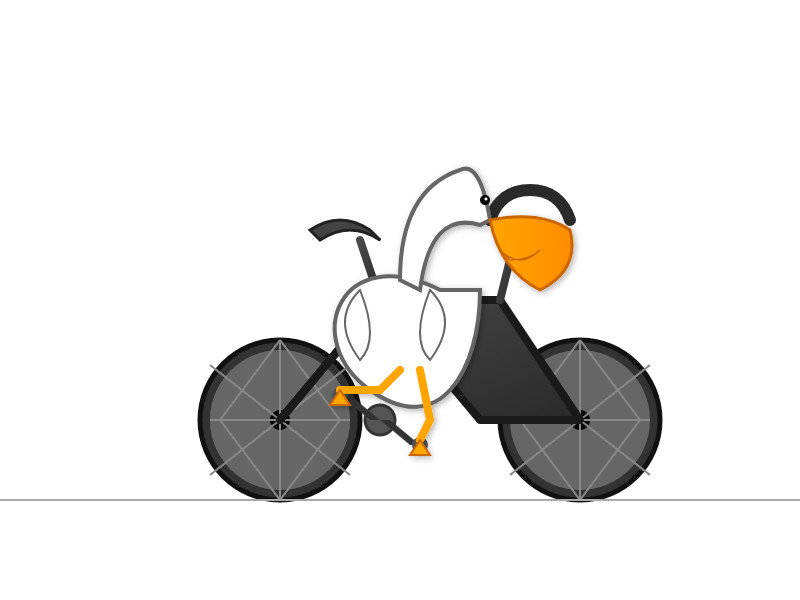
Full transcript. 11 input tokens, 2,619 output tokens, 10,391 thinking tokens = 4.5537 cents.
I ran the same thing again with -o thinking_budget 0 to turn off thinking mode entirely, and got this:

Full transcript. 11 input, 1,243 output = 0.0747 cents.
The non-thinking model is priced differently - still $0.15/million for input but $0.60/million for output as opposed to $3.50/million for thinking+output. The pelican it drew was 61x cheaper!
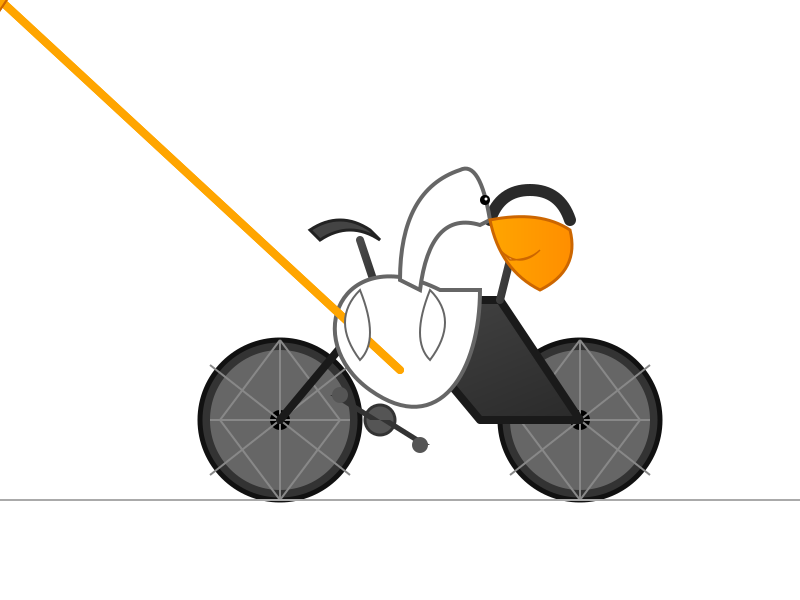
Finally, inspired by the keynote I ran this follow-up prompt to animate the more expensive pelican:
llm --cid 01jvqjqz9aha979yemcp7a4885 'Now animate it'
This one is pretty great!
Gemini 2.5 Pro Preview: even better coding performance. New Gemini 2.5 Pro "Google I/O edition" model, released a few weeks ahead of that annual developer conference.
They claim even better frontend coding performance, highlighting their #1 ranking on the WebDev Arena leaderboard, notable because it knocked Claude 3.7 Sonnet from that top spot. They also highlight "state-of-the-art video understanding" with a 84.8% score on the new-to-me VideoMME benchmark.
I rushed out a new release of llm-gemini adding support for the new gemini-2.5-pro-preview-05-06 model ID, but it turns out if I had read to the end of their post I should not have bothered:
For developers already using Gemini 2.5 Pro, this new version will not only improve coding performance but will also address key developer feedback including reducing errors in function calling and improving function calling trigger rates. The previous iteration (03-25) now points to the most recent version (05-06), so no action is required to use the improved model
I'm not a fan of this idea that a model ID with a clear date in it like gemini-2.5-pro-preview-03-25 can suddenly start pointing to a brand new model!
I used the new Gemini 2.5 Pro to summarize the conversation about itself on Hacker News using the latest version of my hn-summary.sh script:
hn-summary.sh 43906018 -m gemini-2.5-pro-preview-05-06
Here's what I got back - 30,408 input tokens, 8,535 output tokens and 3,980 thinknig tokens for a total cost of 16.316 cents.
8,535 output tokens is a lot. My system prompt includes the instruction to "Go long" - this is the first time I've seen a model really take that to heart. For comparison, here's the result of a similar experiment against the previous version of Gemini 2.5 Pro two months ago.
Update: The one time I forget to run my "Generate an SVG of a pelican riding a bicycle" test is the time that the model turns out to produce one of the best results I've seen yet!

Here's the transcript - 11 input tokens and 3,281 output tokens and 1,558 thinking tokens = 4.8404 cents.
I asked Gemini to describe that image:
llm -m gemini-2.5-pro-preview-05-06 \
  -a https://static.simonwillison.net/static/2025/gemini-latest-pelican.jpg \
  'describe image for alt text'
Here's what I got back. Gemini thought it had drawn a duck:
A cartoon illustration of a white duck with an orange beak riding a blue bicycle.
The duck has a large, oval white body and a smaller round head with a black dot eye. Its thin black wings act as arms, gripping the blue handlebars. One yellow-orange leg is visible, bent and pushing a grey pedal.
The bicycle has a blue frame with a distinctive cross-brace, a brown oval seat, and dark grey wheels with silver spokes. The entire image is set against a plain white background.
Start building with Gemini 2.5 Flash
(via)
Google Gemini's latest model is Gemini 2.5 Flash, available in (paid) preview as gemini-2.5-flash-preview-04-17.
Building upon the popular foundation of 2.0 Flash, this new version delivers a major upgrade in reasoning capabilities, while still prioritizing speed and cost. Gemini 2.5 Flash is our first fully hybrid reasoning model, giving developers the ability to turn thinking on or off. The model also allows developers to set thinking budgets to find the right tradeoff between quality, cost, and latency.
Gemini AI Studio product lead Logan Kilpatrick says:
This is an early version of 2.5 Flash, but it already shows huge gains over 2.0 Flash.
You can fully turn off thinking if needed and use this model as a drop in replacement for 2.0 Flash.
I added support to the new model in llm-gemini 0.18. Here's how to try it out:
llm install -U llm-gemini
llm -m gemini-2.5-flash-preview-04-17 'Generate an SVG of a pelican riding a bicycle'
Here's that first pelican, using the default setting where Gemini Flash 2.5 makes its own decision in terms of how much "thinking" effort to apply:
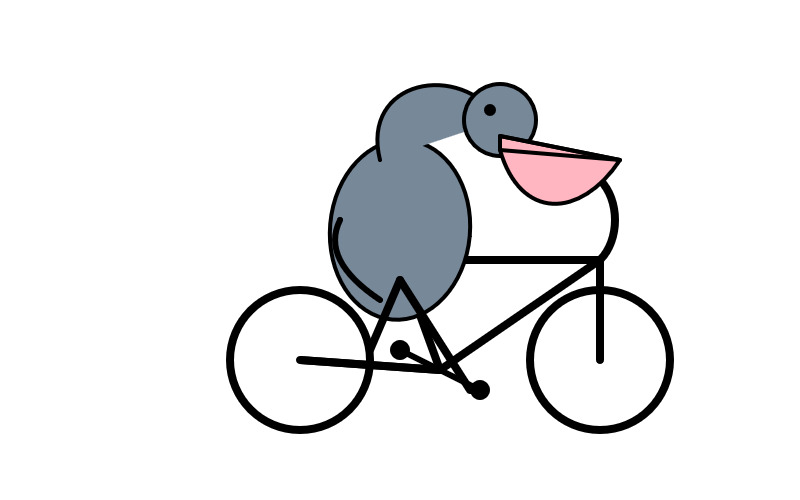
Here's the transcript. This one used 11 input tokens, 4,266 output tokens and 2,702 "thinking" tokens.
I asked the model to "describe" that image and it could tell it was meant to be a pelican:
A simple illustration on a white background shows a stylized pelican riding a bicycle. The pelican is predominantly grey with a black eye and a prominent pink beak pouch. It is positioned on a black line-drawn bicycle with two wheels, a frame, handlebars, and pedals.
The way the model is priced is a little complicated. If you have thinking enabled, you get charged $0.15/million tokens for input and $3.50/million for output. With thinking disabled those output tokens drop to $0.60/million. I've added these to my pricing calculator.
For comparison, Gemini 2.0 Flash is $0.10/million input and $0.40/million for output.
So my first prompt - 11 input and 4,266+2,702 =6,968 output (with thinking enabled), cost 2.439 cents.
Let's try 2.5 Flash again with thinking disabled:
llm -m gemini-2.5-flash-preview-04-17 'Generate an SVG of a pelican riding a bicycle' -o thinking_budget 0

11 input, 1705 output. That's 0.1025 cents. Transcript here - it still shows 25 thinking tokens even though I set the thinking budget to 0 - Logan confirms that this will still be billed at the lower rate:
In some rare cases, the model still thinks a little even with thinking budget = 0, we are hoping to fix this before we make this model stable and you won't be billed for thinking. The thinking budget = 0 is what triggers the billing switch.
Here's Gemini 2.5 Flash's self-description of that image:
A minimalist illustration shows a bright yellow bird riding a bicycle. The bird has a simple round body, small wings, a black eye, and an open orange beak. It sits atop a simple black bicycle frame with two large circular black wheels. The bicycle also has black handlebars and black and yellow pedals. The scene is set against a solid light blue background with a thick green stripe along the bottom, suggesting grass or ground.
And finally, let's ramp the thinking budget up to the maximum:
llm -m gemini-2.5-flash-preview-04-17 'Generate an SVG of a pelican riding a bicycle' -o thinking_budget 24576
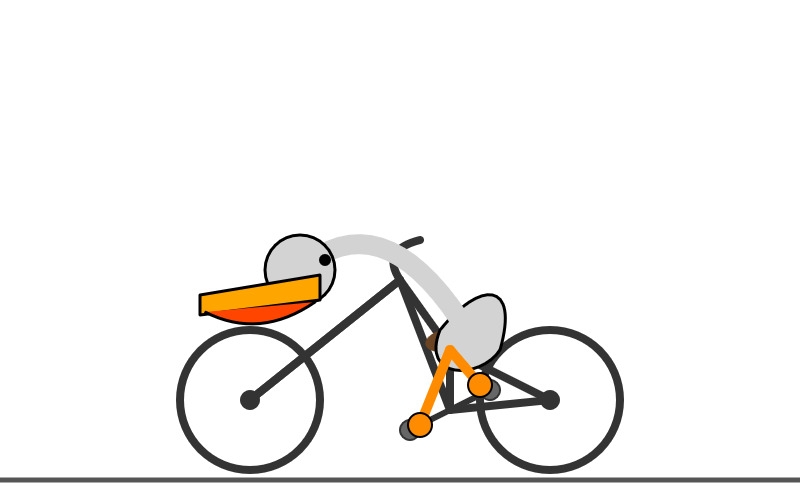
I think it over-thought this one. Transcript - 5,174 output tokens and 3,023 thinking tokens. A hefty 2.8691 cents!
A simple, cartoon-style drawing shows a bird-like figure riding a bicycle. The figure has a round gray head with a black eye and a large, flat orange beak with a yellow stripe on top. Its body is represented by a curved light gray shape extending from the head to a smaller gray shape representing the torso or rear. It has simple orange stick legs with round feet or connections at the pedals. The figure is bent forward over the handlebars in a cycling position. The bicycle is drawn with thick black outlines and has two large wheels, a frame, and pedals connected to the orange legs. The background is plain white, with a dark gray line at the bottom representing the ground.
One thing I really appreciate about Gemini 2.5 Flash's approach to SVGs is that it shows very good taste in CSS, comments and general SVG class structure. Here's a truncated extract - I run a lot of these SVG tests against different models and this one has a coding style that I particularly enjoy. (Gemini 2.5 Pro does this too).
<svg width="800" height="500" viewBox="0 0 800 500" xmlns="http://www.w3.org/2000/svg">
  <style>
    .bike-frame { fill: none; stroke: #333; stroke-width: 8; stroke-linecap: round; stroke-linejoin: round; }
    .wheel-rim { fill: none; stroke: #333; stroke-width: 8; }
    .wheel-hub { fill: #333; }
    /* ... */
    .pelican-body { fill: #d3d3d3; stroke: black; stroke-width: 3; }
    .pelican-head { fill: #d3d3d3; stroke: black; stroke-width: 3; }
    /* ... */
  </style>
  <!-- Ground Line -->
  <line x1="0" y1="480" x2="800" y2="480" stroke="#555" stroke-width="5"/>
  <!-- Bicycle -->
  <g id="bicycle">
    <!-- Wheels -->
    <circle class="wheel-rim" cx="250" cy="400" r="70"/>
    <circle class="wheel-hub" cx="250" cy="400" r="10"/>
    <circle class="wheel-rim" cx="550" cy="400" r="70"/>
    <circle class="wheel-hub" cx="550" cy="400" r="10"/>
    <!-- ... -->
  </g>
  <!-- Pelican -->
  <g id="pelican">
    <!-- Body -->
    <path class="pelican-body" d="M 440 330 C 480 280 520 280 500 350 C 480 380 420 380 440 330 Z"/>
    <!-- Neck -->
    <path class="pelican-neck" d="M 460 320 Q 380 200 300 270"/>
    <!-- Head -->
    <circle class="pelican-head" cx="300" cy="270" r="35"/>
    <!-- ... -->
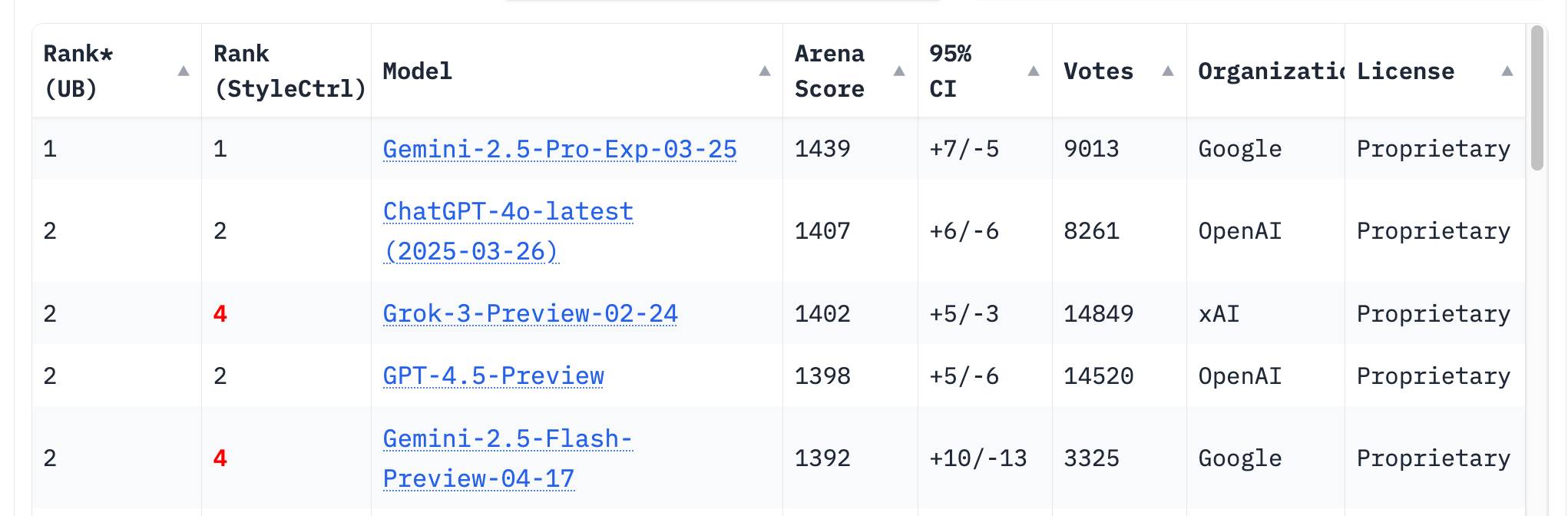
The LM Arena leaderboard now has Gemini 2.5 Flash in joint second place, just behind Gemini 2.5 Pro and tied with ChatGPT-4o-latest, Grok-3 and GPT-4.5 Preview.
Initial impressions of Llama 4
Dropping a model release as significant as Llama 4 on a weekend is plain unfair! So far the best place to learn about the new model family is this post on the Meta AI blog. They’ve released two new models today: Llama 4 Maverick is a 400B model (128 experts, 17B active parameters), text and image input with a 1 million token context length. Llama 4 Scout is 109B total parameters (16 experts, 17B active), also multi-modal and with a claimed 10 million token context length—an industry first.
[... 1,468 words]Introducing 4o Image Generation. When OpenAI first announced GPT-4o back in May 2024 one of the most exciting features was true multi-modality in that it could both input and output audio and images. The "o" stood for "omni", and the image output examples in that launch post looked really impressive.
It's taken them over ten months (and Gemini beat them to it) but today they're finally making those image generation abilities available, live right now in ChatGPT for paying customers.
My test prompt for any model that can manipulate incoming images is "Turn this into a selfie with a bear", because you should never take a selfie with a bear! I fed ChatGPT this selfie and got back this result:


That's pretty great! It mangled the text on my T-Shirt (which says "LAWRENCE.COM" in a creative font) and added a second visible AirPod. It's very clearly me though, and that's definitely a bear.
There are plenty more examples in OpenAI's launch post, but as usual the most interesting details are tucked away in the updates to the system card. There's lots in there about their approach to safety and bias, including a section on "Ahistorical and Unrealistic Bias" which feels inspired by Gemini's embarrassing early missteps.
One section that stood out to me is their approach to images of public figures. The new policy is much more permissive than for DALL-E - highlights mine:
4o image generation is capable, in many instances, of generating a depiction of a public figure based solely on a text prompt.
At launch, we are not blocking the capability to generate adult public figures but are instead implementing the same safeguards that we have implemented for editing images of photorealistic uploads of people. For instance, this includes seeking to block the generation of photorealistic images of public figures who are minors and of material that violates our policies related to violence, hateful imagery, instructions for illicit activities, erotic content, and other areas. Public figures who wish for their depiction not to be generated can opt out.
This approach is more fine-grained than the way we dealt with public figures in our DALL·E series of models, where we used technical mitigations intended to prevent any images of a public figure from being generated. This change opens the possibility of helpful and beneficial uses in areas like educational, historical, satirical and political speech. After launch, we will continue to monitor usage of this capability, evaluating our policies, and will adjust them if needed.
Given that "public figures who wish for their depiction not to be generated can opt out" I wonder if we'll see a stampede of public figures to do exactly that!
Update: There's significant confusion right now over this new feature because it is being rolled out gradually but older ChatGPT can still generate images using DALL-E instead... and there is no visual indication in the ChatGPT UI explaining which image generation method it used!
OpenAI made the same mistake last year when they announced ChatGPT advanced voice mode but failed to clarify that ChatGPT was still running the previous, less impressive voice implementation.
Update 2: Images created with DALL-E through the ChatGPT web interface now show a note with a warning:

Putting Gemini 2.5 Pro through its paces
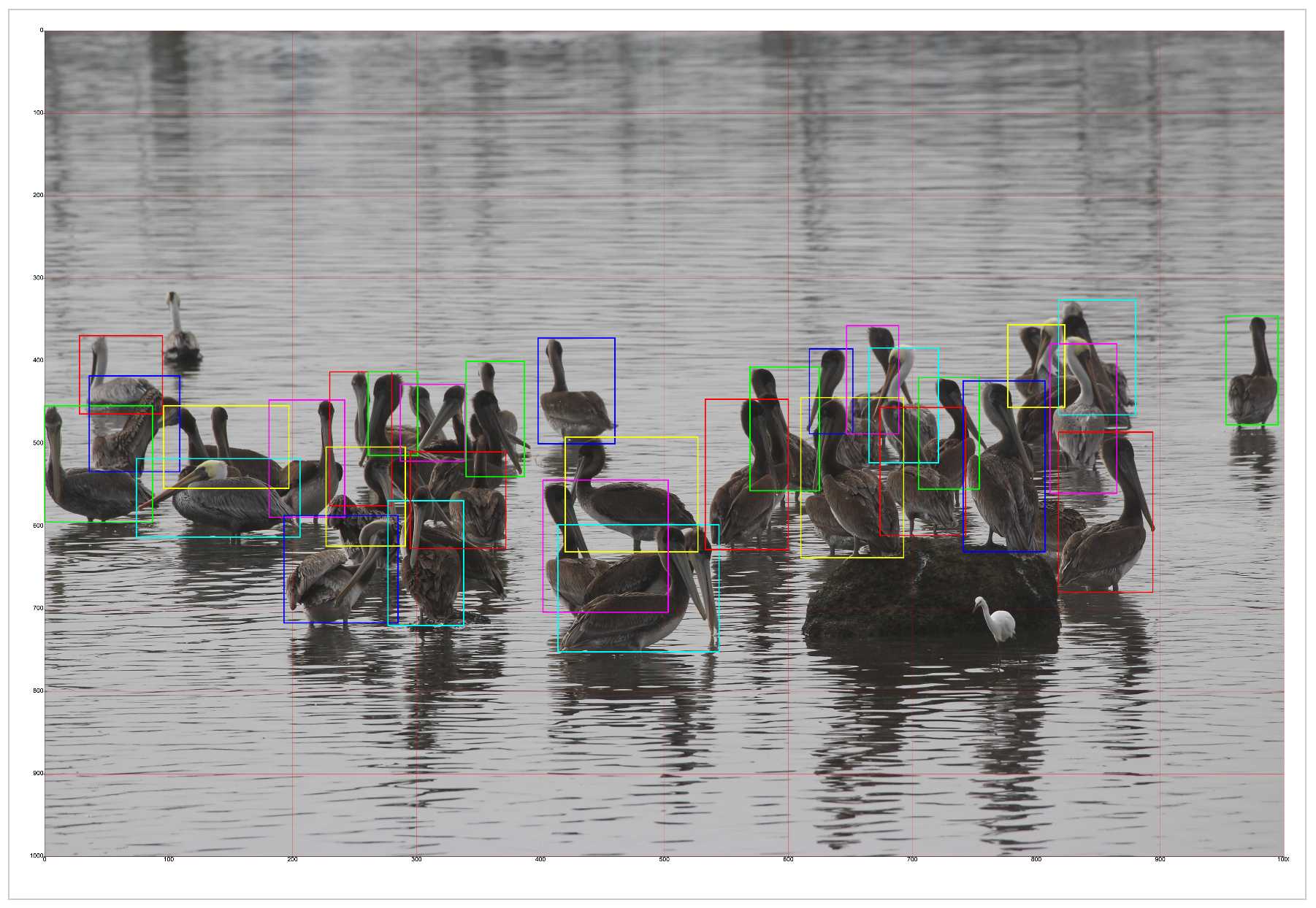
There’s a new release from Google Gemini this morning: the first in the Gemini 2.5 series. Google call it “a thinking model, designed to tackle increasingly complex problems”. It’s already sat at the top of the LM Arena leaderboard, and from initial impressions looks like it may deserve that top spot.
[... 2,400 words]Notes on Google’s Gemma 3
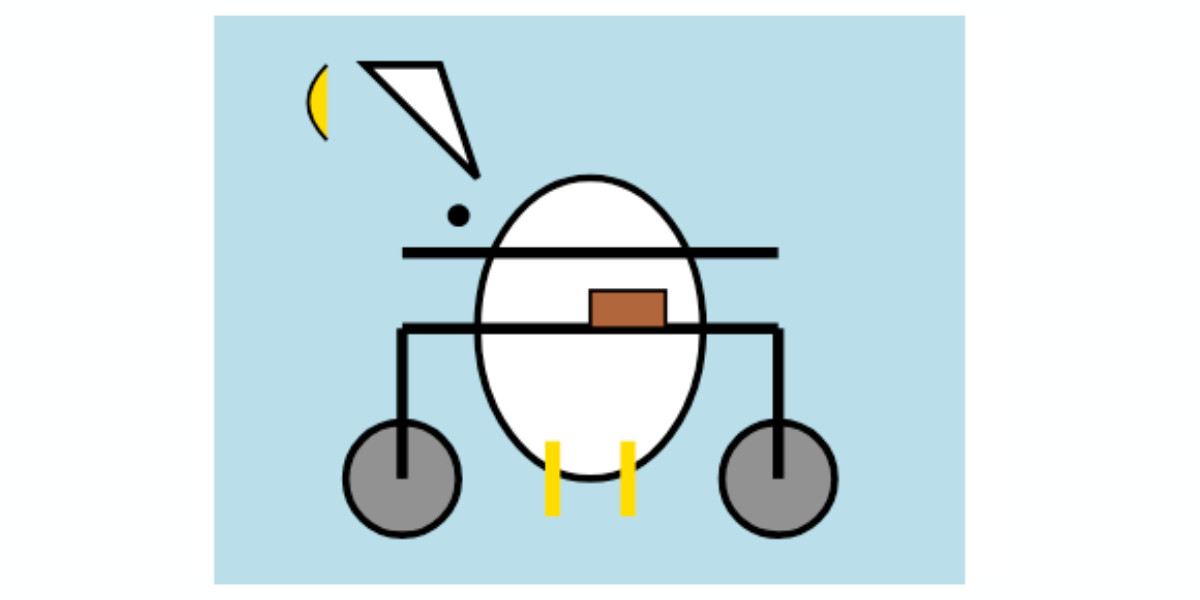
Google’s Gemma team released an impressive new model today (under their not-open-source Gemma license). Gemma 3 comes in four sizes—1B, 4B, 12B, and 27B—and while 1B is text-only the larger three models are all multi-modal for vision:
[... 804 words]Gemini 2.0 Flash and Flash-Lite (via) Gemini 2.0 Flash-Lite is now generally available - previously it was available just as a preview - and has announced pricing. The model is $0.075/million input tokens and $0.030/million output - the same price as Gemini 1.5 Flash.
Google call this "simplified pricing" because 1.5 Flash charged different cost-per-tokens depending on if you used more than 128,000 tokens. 2.0 Flash-Lite (and 2.0 Flash) are both priced the same no matter how many tokens you use.
I released llm-gemini 0.12 with support for the new gemini-2.0-flash-lite model ID. I've also updated my LLM pricing calculator with the new prices.
Gemini 2.0 is now available to everyone. Big new Gemini 2.0 releases today:
- Gemini 2.0 Pro (Experimental) is Google's "best model yet for coding performance and complex prompts" - currently available as a free preview.
- Gemini 2.0 Flash is now generally available.
-
Gemini 2.0 Flash-Lite looks particularly interesting:
We’ve gotten a lot of positive feedback on the price and speed of 1.5 Flash. We wanted to keep improving quality, while still maintaining cost and speed. So today, we’re introducing 2.0 Flash-Lite, a new model that has better quality than 1.5 Flash, at the same speed and cost. It outperforms 1.5 Flash on the majority of benchmarks.
That means Gemini 2.0 Flash-Lite is priced at 7.5c/million input tokens and 30c/million output tokens - half the price of OpenAI's GPT-4o mini (15c/60c).
Gemini 2.0 Flash isn't much more expensive: 10c/million for text/image input, 70c/million for audio input, 40c/million for output. Again, cheaper than GPT-4o mini.
I pushed a new LLM plugin release, llm-gemini 0.10, adding support for the three new models:
llm install -U llm-gemini
llm keys set gemini
# paste API key here
llm -m gemini-2.0-flash "impress me"
llm -m gemini-2.0-flash-lite-preview-02-05 "impress me"
llm -m gemini-2.0-pro-exp-02-05 "impress me"
Here's the output for those three prompts.
I ran Generate an SVG of a pelican riding a bicycle through the three new models. Here are the results, cheapest to most expensive:
gemini-2.0-flash-lite-preview-02-05
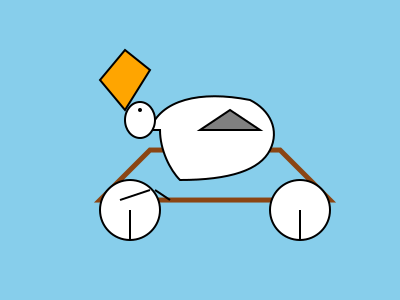
gemini-2.0-flash
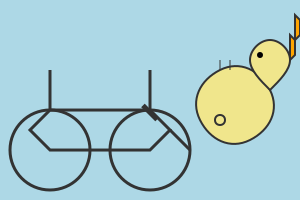
gemini-2.0-pro-exp-02-05
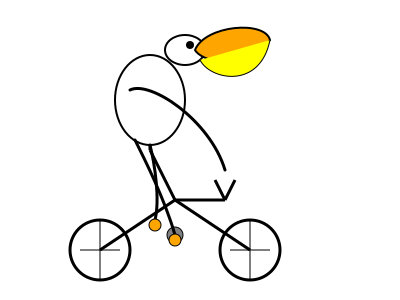
I also ran the same prompt I tried with o3-mini the other day:
cd /tmp
git clone https://github.com/simonw/datasette
cd datasette
files-to-prompt datasette -e py -c | \
  llm -m gemini-2.0-pro-exp-02-05 \
  -s 'write extensive documentation for how the permissions system works, as markdown' \
  -o max_output_tokens 10000
Here's the result from that - you can compare that to o3-mini's result here.