September 2020
87 posts: 8 entries, 10 links, 5 quotes, 64 beats
Saturday, 19th September 2020
DuckDB (via) This is a really interesting, relatively new database. It’s kind of a weird hybrid between SQLite and PostgreSQL: it uses the PostgreSQL parser but models itself after SQLite in that databases are a single file and the code is designed for use as an embedded library, distributed in a single amalgamation C++ file (SQLite uses a C amalgamation). It features a “columnar-vectorized query execution engine” inspired by MonetDB (also by the DuckDB authors) and is hence designed to run analytical queries really quickly. You can install it using “pip install duckdb”—the resulting module feels similar to Python’s sqlite3, and follows roughly the same DBAPI pattern.
Sunday, 20th September 2020
One academic who interviewed attendees of a flat-earth convention found that, almost to a person, they'd discovered the subculture via YouTube recommendations.
Tuesday, 22nd September 2020

Wednesday, 23rd September 2020
Executing advanced ALTER TABLE operations in SQLite
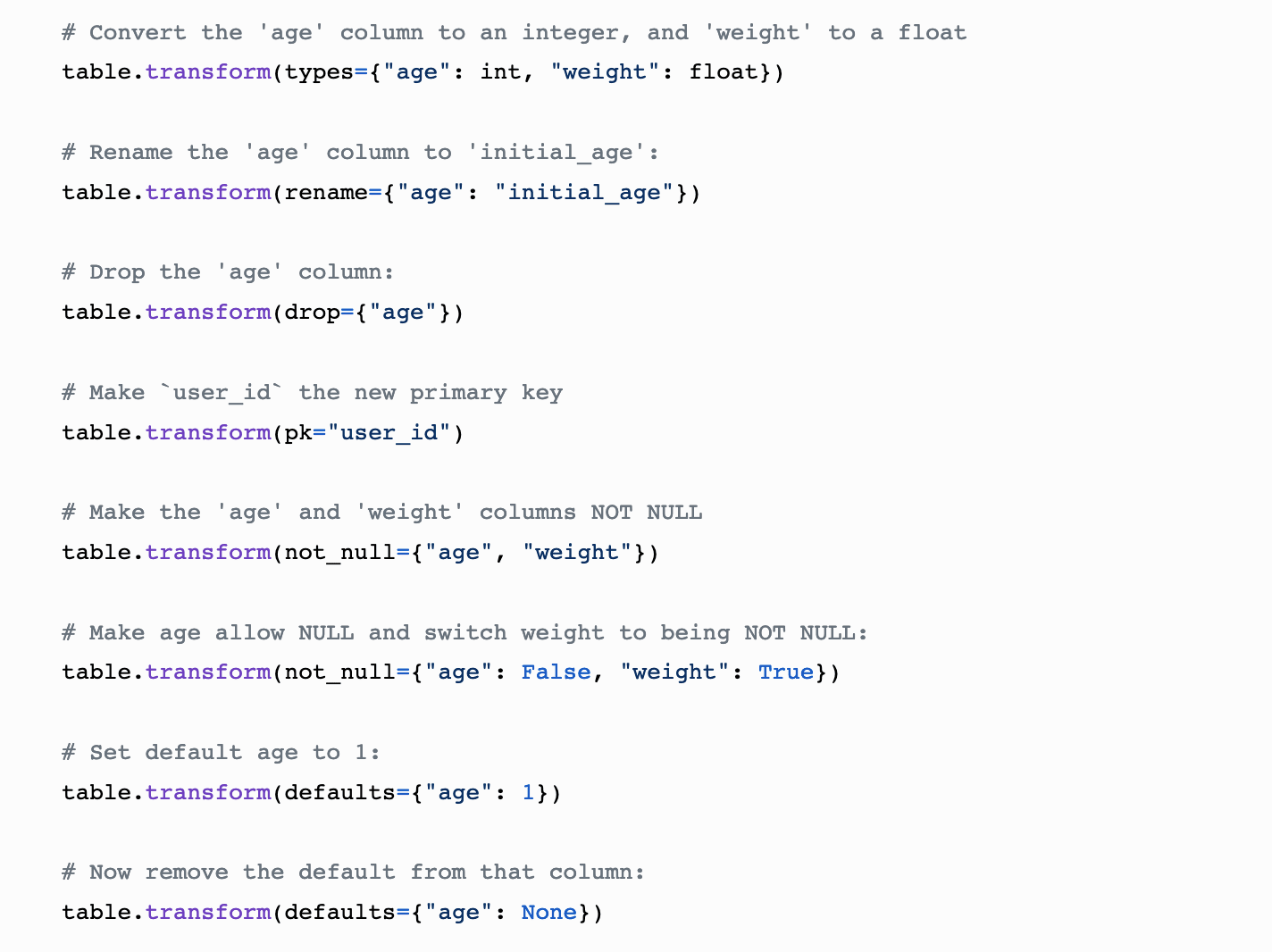
SQLite’s ALTER TABLE has some significant limitations: it can’t drop columns (UPDATE: that was fixed in SQLite 3.35.0 in March 2021), it can’t alter NOT NULL status, it can’t change column types. Since I spend a lot of time with SQLite these days I’ve written some code to fix this—both from Python and as a command-line utility.
[... 689 words]Refactoring databases with sqlite-utils extract
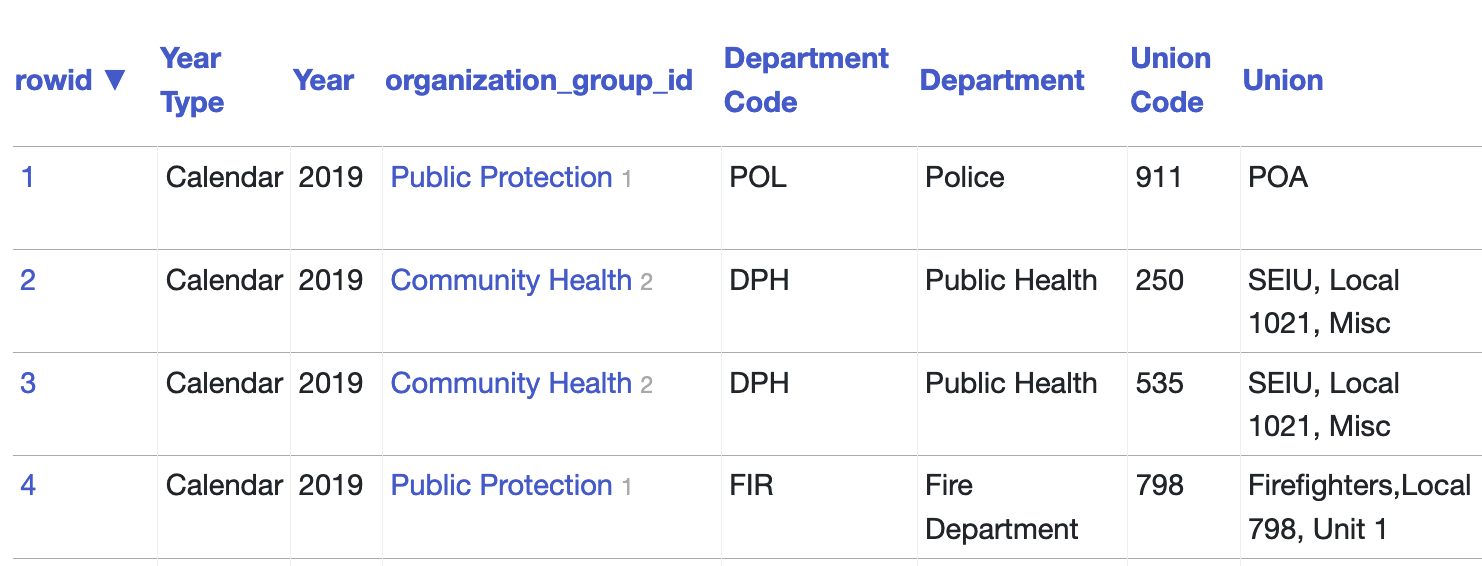
Yesterday I described the new sqlite-utils transform mechanism for applying SQLite table transformations that go beyond those supported by ALTER TABLE. The other new feature in sqlite-utils 2.20 builds on that capability to allow you to refactor a database table by extracting columns into separate tables. I’ve called it sqlite-utils extract.
Thursday, 24th September 2020
Saturday, 26th September 2020
Weeknotes: software carpentry, compiling modules for SQLite
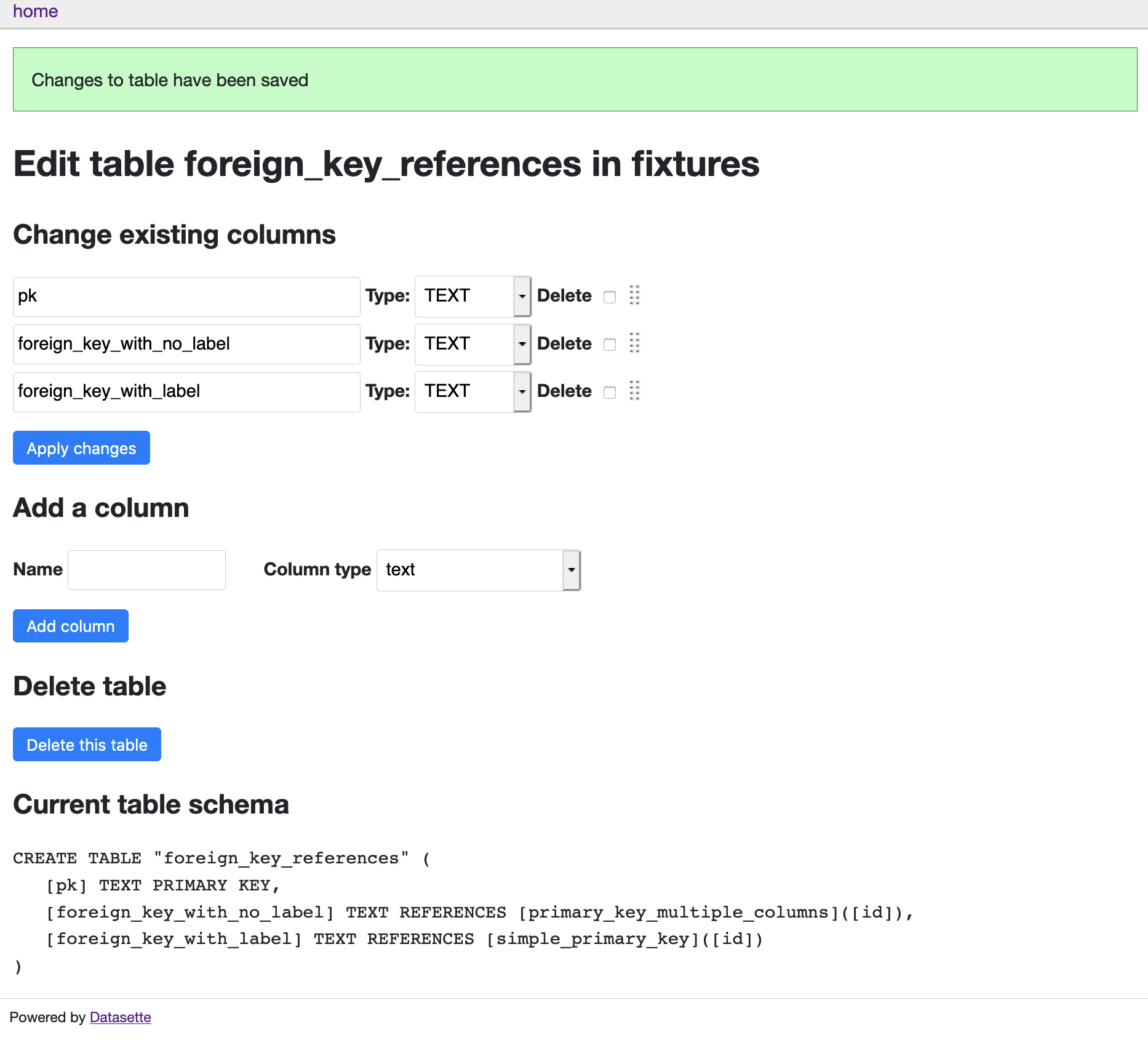
This week I completed the Software Carpentry instructor training course, added two foundational features to sqlite-utils and learned how to compile modules for SQLite.
The Bias-for-Building Fallacy is most common in orgs that worship speed. That's fine, but if you go speedily in the wrong direction, you will end up in the wrong place. That’s why teams should value velocity much more than speed: velocity being a combo of speed & direction.
Sunday, 27th September 2020
Inevitably we got round to talking about async.
As much of an unneeded complication as it is for so many day-to-day use-cases, it’s important for Python because, if and when you do need the high throughput handling of these io-bound use-cases, you don’t want to have to switch language.
The same for Django: most of what you’re doing has no need of async but you don’t want to have to change web framework just because you need a sprinkling of non-blocking IO.

Monday, 28th September 2020
datasette-dateutil (via) New Datasette plugin exposing date/time parsing custom SQL functions powered by the classic dateutil Python library.
elite-source.asm—annotated source code for Elite on the BBC Micro (via) Mark Moxon has annotated every single line of the source code for Elite on the BBC Micro, and his annotations are so clear and in-depth that I can follow it despite knowing next to nothing about assembly code (and certainly nothing about writing it for the BBC).
I was wrong. CRDTs are the future (via) Joseph Gentle has been working on collaborative editors since being a developer on Google Wave back in 2010, later building ShareJS. He’s used Operational Transforms throughout, due to their performance and memory benefits over CRDTs (Conflict-free replicated data types)—but the latest work in that space from Martin Kleppmann and other researchers has seen him finally switch allegiance to these newer algorithms. As a long-time fan of collaborative editing (ever since the Hydra/SubEthaEdit days) I thoroughly enjoyed this as an update on how things have evolved over the past decade.