6 posts tagged “tobias-lutke”
2026
Learning on the Shop floor. Tobias Lütke describes Shopify's internal coding agent tool, River, which operates entirely in public on their Slack:
River does not respond to direct messages. She politely declines and suggests to create a public channel for you and her to start working in. I myself work with river in
#tobi_riverchannel and many followed this pattern. Every conversation is therefore searchable. Anyone at Shopify can jump in. In my own channel, there are over 100 people who, react to threads, add color and add context, pick up the torch, help with the reviews, remind me how rusty I am, and importantly, learn from watching. [...]As so often with German, there is a word for the kind of environment: Lehrwerkstatt. Literally: A teaching workshop. The whole shop floor is the classroom. You learn by being near the work. Being a constant learner is one of the core values of the firm.
Shopify wants to be a Lehrwerkstatt at scale and River has now gotten us closer to this ideal than ever. It’s osmosis learning, because it does not require a curriculum, a training plan, or a manager. It just requires everyone's work to be visible to the maximum extent possible. Everyone learns from each other.
I'm reminded of how Midjourney spent its first few years with the primary interface being public Discord channels, forcing users to share their prompts and learn from each other's experiments. I continue to believe that the early success of Midjourney was tied to this mechanism, helping to compensate for how weird and finicky text-to-image prompting is.
Shopify/liquid: Performance: 53% faster parse+render, 61% fewer allocations (via) PR from Shopify CEO Tobias Lütke against Liquid, Shopify's open source Ruby template engine that was somewhat inspired by Django when Tobi first created it back in 2005.
Tobi found dozens of new performance micro-optimizations using a variant of autoresearch, Andrej Karpathy's new system for having a coding agent run hundreds of semi-autonomous experiments to find new effective techniques for training nanochat.
Tobi's implementation started two days ago with this autoresearch.md prompt file and an autoresearch.sh script for the agent to run to execute the test suite and report on benchmark scores.
The PR now lists 93 commits from around 120 automated experiments. The PR description lists what worked in detail - some examples:
- Replaced StringScanner tokenizer with
String#byteindex. Single-bytebyteindexsearching is ~40% faster than regex-basedskip_until. This alone reduced parse time by ~12%.- Pure-byte
parse_tag_token. Eliminated the costlyStringScanner#string=reset that was called for every{% %}token (878 times). Manual byte scanning for tag name + markup extraction is faster than resetting and re-scanning via StringScanner. [...]- Cached small integer
to_s. Pre-computed frozen strings for 0-999 avoid 267Integer#to_sallocations per render.
This all added up to a 53% improvement on benchmarks - truly impressive for a codebase that's been tweaked by hundreds of contributors over 20 years.
I think this illustrates a number of interesting ideas:
- Having a robust test suite - in this case 974 unit tests - is a massive unlock for working with coding agents. This kind of research effort would not be possible without first having a tried and tested suite of tests.
- The autoresearch pattern - where an agent brainstorms a multitude of potential improvements and then experiments with them one at a time - is really effective.
- If you provide an agent with a benchmarking script "make it faster" becomes an actionable goal.
- CEOs can code again! Tobi has always been more hands-on than most, but this is a much more significant contribution than anyone would expect from the leader of a company with 7,500+ employees. I've seen this pattern play out a lot over the past few months: coding agents make it feasible for people in high-interruption roles to productively work with code again.
Here's Tobi's GitHub contribution graph for the past year, showing a significant uptick following that November 2025 inflection point when coding agents got really good.
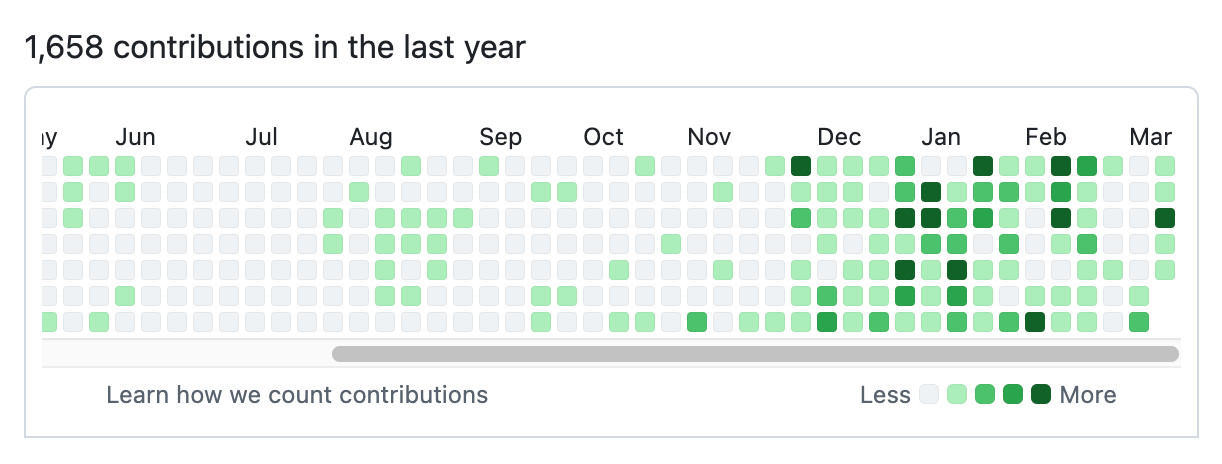
He used Pi as the coding agent and released a new pi-autoresearch plugin in collaboration with David Cortés, which maintains state in an autoresearch.jsonl file like this one.
2025
The term context engineering has recently started to gain traction as a better alternative to prompt engineering. I like it. I think this one may have sticking power.
Here's an example tweet from Shopify CEO Tobi Lutke:
I really like the term “context engineering” over prompt engineering.
It describes the core skill better: the art of providing all the context for the task to be plausibly solvable by the LLM.
Recently amplified by Andrej Karpathy:
+1 for "context engineering" over "prompt engineering".
People associate prompts with short task descriptions you'd give an LLM in your day-to-day use. When in every industrial-strength LLM app, context engineering is the delicate art and science of filling the context window with just the right information for the next step. Science because doing this right involves task descriptions and explanations, few shot examples, RAG, related (possibly multimodal) data, tools, state and history, compacting [...] Doing this well is highly non-trivial. And art because of the guiding intuition around LLM psychology of people spirits. [...]
I've spoken favorably of prompt engineering in the past - I hoped that term could capture the inherent complexity of constructing reliable prompts. Unfortunately, most people's inferred definition is that it's a laughably pretentious term for typing things into a chatbot!
It turns out that inferred definitions are the ones that stick. I think the inferred definition of "context engineering" is likely to be much closer to the intended meaning.
Using Al effectively is now a fundamental expectation of everyone at Shopify. It's a tool of all trades today, and will only grow in importance. Frankly, I don't think it's feasible to opt out of learning the skill of applying Al in your craft; you are welcome to try, but I want to be honest I cannot see this working out today, and definitely not tomorrow. Stagnation is almost certain, and stagnation is slow-motion failure. If you're not climbing, you're sliding [...]
We will add Al usage questions to our performance and peer review questionnaire. Learning to use Al well is an unobvious skill. My sense is that a lot of people give up after writing a prompt and not getting the ideal thing back immediately. Learning to prompt and load context is important, and getting peers to provide feedback on how this is going will be valuable.
— Tobias Lütke, CEO of Shopify, self-leaked memo
2023
Could you train a ChatGPT-beating model for $85,000 and run it in a browser?
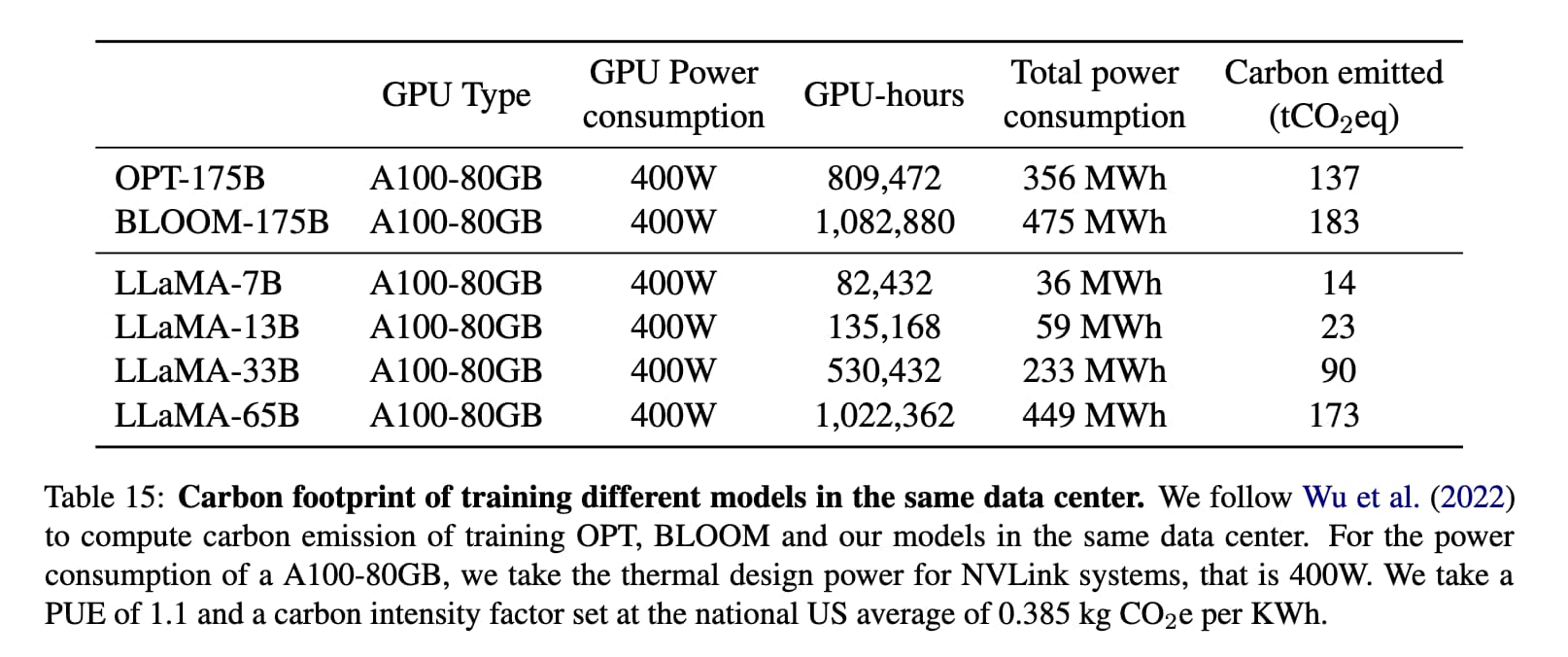
I think it’s now possible to train a large language model with similar functionality to GPT-3 for $85,000. And I think we might soon be able to run the resulting model entirely in the browser, and give it capabilities that leapfrog it ahead of ChatGPT.
[... 1,751 words]2019
For creative work, you can't cheat. My believe is that there are 5 creative hours in everyone's day. All I ask of people at Shopify is that 4 of those are channeled into the company.