Tuesday, 30th June 2026
The big new feature is shot-scraper video storyboard.yml, described in detail in Have your agent record video demos of its work with shot-scraper video.
Have your agent record video demos of its work with shot-scraper video
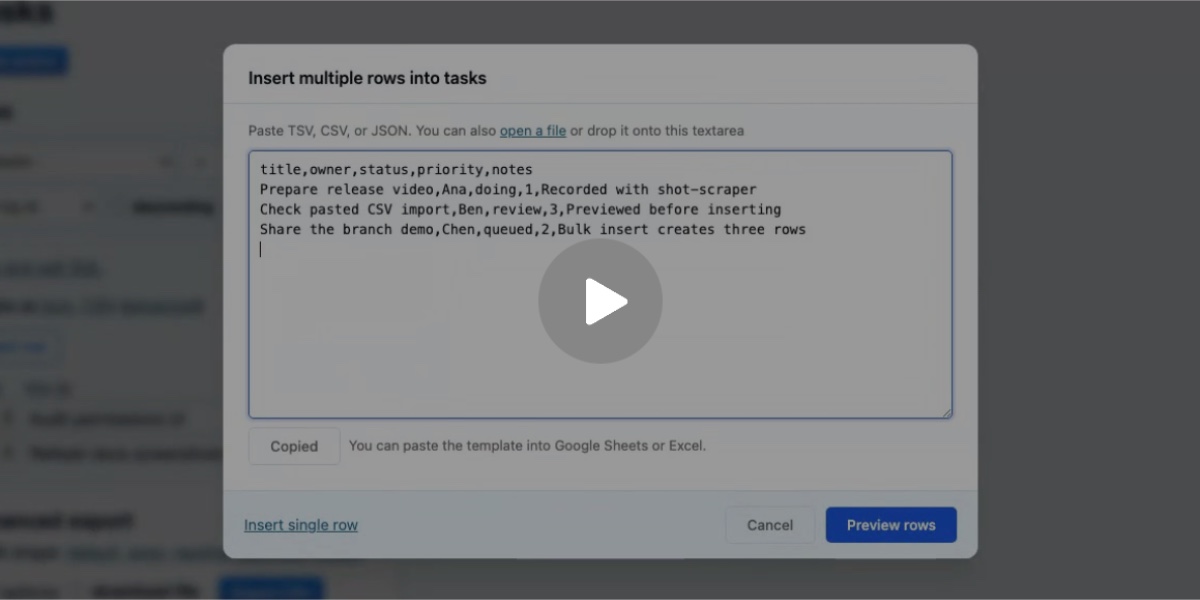
shot-scraper video is a new command introduced in today’s shot-scraper 1.10 release which accepts a storyboard.yml file defining a routine to run against a web application and uses Playwright to record a video of that routine. I’ve written before about the importance of having coding agents produce demos of their work; this is my latest attempt at enabling them to do that.
The AI Compass (via) This political compass style quiz by bambamramfan is pretty neat - answer 29 questions about AI and AI ethics to see which of the 30 archetypes you best fit.
I'm impressed that my answers on my first time through the quiz categorized me as "The Garage Tinkerer", patron saint myself!
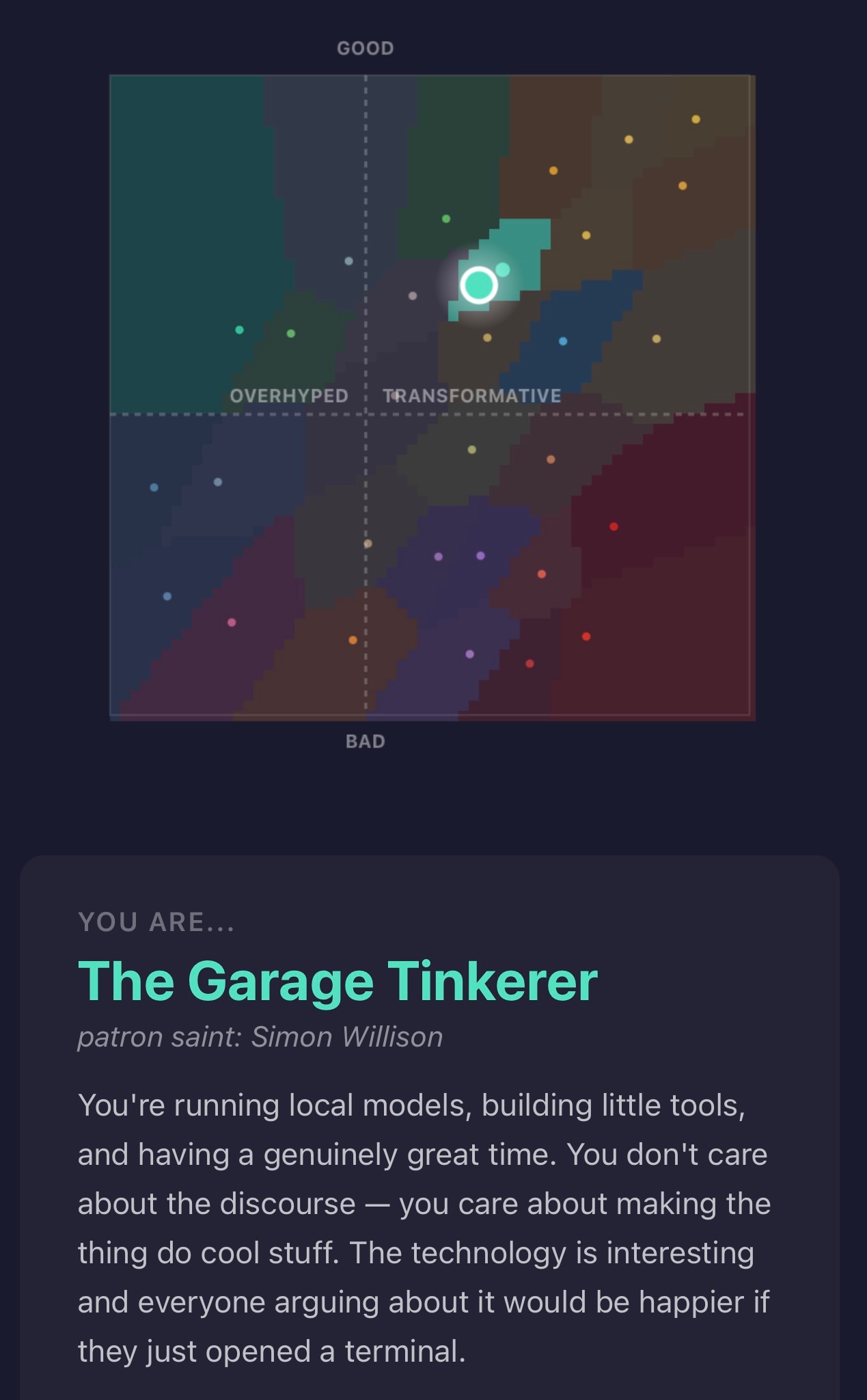
It's implemented as a single page React app using the <script type="text/babel"> trick to avoid the necessary build step. Here's the code.
What’s new in Claude Sonnet 5 (via) Claude Sonnet 5 came out this morning. I always head straight for the "what's new" developer docs because they tend to have more actionable information than the official announcement post.
Anthropic say of Sonnet 5 that "its performance is close to that of Opus 4.8, but at lower prices". The system card helps explain how they were able to release the model without being blocked by the US government:
Sonnet 5 is significantly less capable at cyber tasks than Mythos 5: its safeguards are thus similar to those we apply to Opus 4.7 and Opus 4.8 (models that are more capable than Sonnet 5 but much less capable than Mythos 5).
Of note from the "what's new" API changes:
- Sampling parameters
temperature,top_p,top_kare no longer supported. - It has a 1 million token context window and 128,000 maximum output tokens.
- It features "the same set of tools and platform features as Claude Sonnet 4.6"
- Adaptive thinking is on by default, unless you specify
"thinking": {type: "disabled"}. - The pricing is the same as Sonnet 4.6: $3/million input, $15/million input, with an introductory discount to $2/$10 until 31st August. But...
- The model has a new tokenizer, where "The same input text produces approximately 30% more tokens than on Claude Sonnet 4.6." - effectively a 30% price increase.
I used my Claude Token Counter tool to try out the new tokenizer. Here are my results for several larger documents:
| Document | Sonnet 4.6 | Opus 4.7 | Sonnet 5 |
|---|---|---|---|
| Universal Declaration of Human Rights (English) | 2,356 | 3,347 1.42x |
3,341 1.42x |
| Universal Declaration of Human Rights (Spanish) | 3,572 | 4,753 1.33x |
4,747 1.33x |
| Universal Declaration of Human Rights (Chinese, Mandarin Simplified) | 3,334 | 3,366 1.01x |
3,360 1.01x |
| sqlite_utils/db.py (4,279 lines of Python) | 44,014 | 56,118 1.28x |
56,113 1.27x |
So the new token is roughly 1.4x times more expensive for English, 1.33x for Spanish, 1.28x for Python code and effectively the same cost for Simplified Mandarin.
Here's the pelican. It's nothing to write home about. Sonnet 5 thinks it looks like a goose.

Nano Banana 2 Lite
(via)
Also known as Gemini 3.1 Flash Lite Image (gemini-3.1-flash-lite-image in their API), this is the "fastest and cheapest Gemini image model, engineered for velocity and scale".
I used AI studio to run this prompt:
Do a where's Waldo style image but it's where is the raccoon holding a ham radio
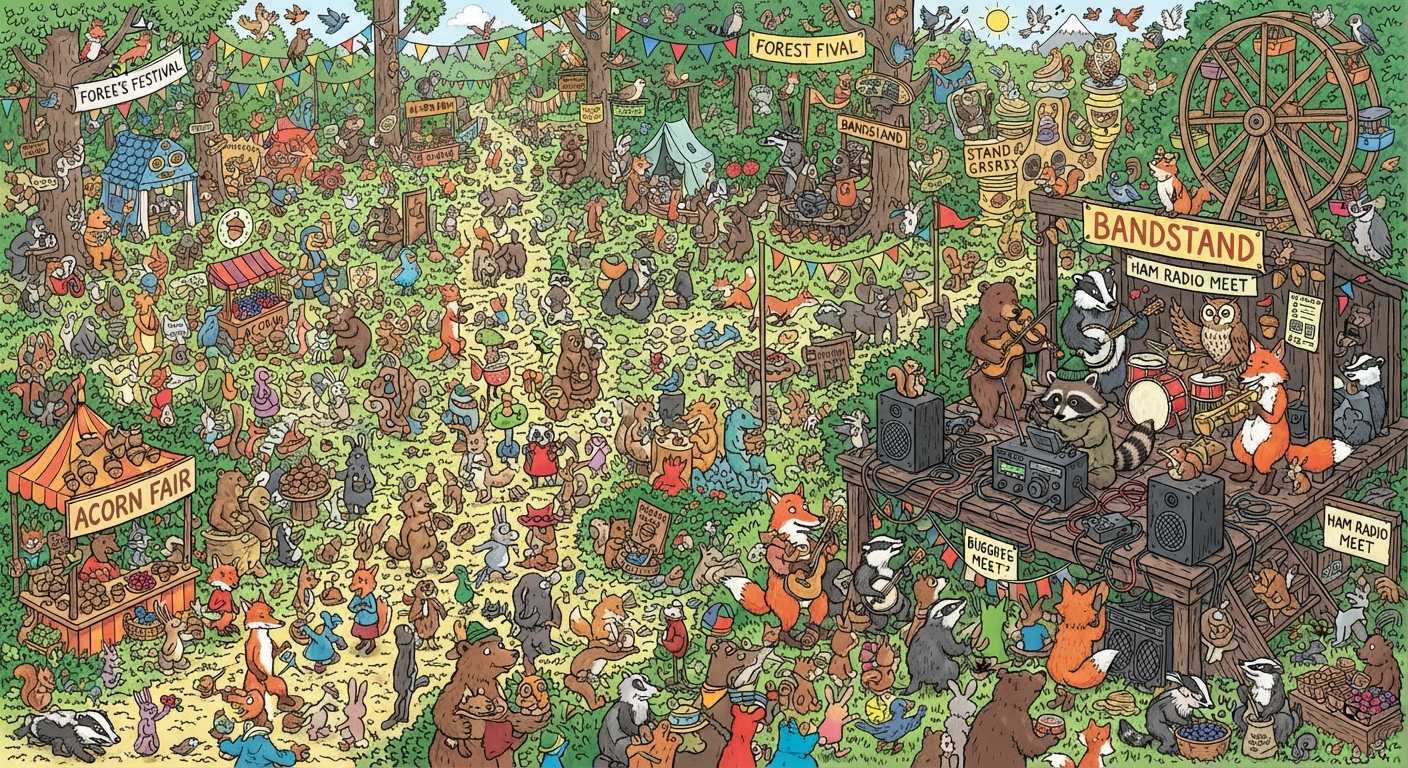
I like that one better than the results I got from the other Nano Banana models when I tried this back in April. It spelled Forest Festival wrong in two different ways though.
We’ve received notice that the Department of Commerce has lifted export controls on Claude Fable 5 and Mythos 5.
We'll begin restoring access tomorrow, and will share an update soon.
— Anthropic, on Twitter