41 posts tagged “claude-mythos-fable”
Mythos-class models from Anthropic, including Claude Fable.
2026
Anthropic Walks Back Policy That Could Have ‘Sabotaged’ AI Researchers Using Claude (via) Big scoop for Maxwell Zeff at Wired:
“We’re changing Fable 5’s safeguards for frontier LLM development to make them visible.” Anthropic said in a statement to WIRED. “We made the wrong tradeoff and we apologize for not getting the balance right.”
There's been a huge outcry about Anthropic's policy, tucked away in their system card, that Claude Fable/Mythos would identify "requests targeting frontier LLM development" and "limit effectiveness" without notifying the user.
It's good news that they're dropping the invisible aspect of this. It would be a whole lot better of they dropped this category of refusals entirely.
Update: More details from @ClaudeDevs on Twitter:
We’re rolling out changes to make Fable 5’s safeguards for frontier LLM development visible.
Starting this week, flagged requests will visibly fall back to Opus 4.8—the same as our safeguards for cyber and bio. You will see this every time it happens. On the API, any flagged requests will return a reason for their refusal (coming to server-side fallback in the next few days).
We wanted to deploy Fable 5 to our users quickly and safely. Visible safeguards can be probed, so they have to be robust, which takes time to get right. Invisible safeguards can be targeted more narrowly, allowing us to ship quickly with very few false positives. We went with invisible safeguards for this reason—and that was the wrong tradeoff. You should have visibility into the safeguards we have in place, and why. We’re sorry for not getting the balance right.
Easy solution to slow down recursive AI self improvement:
- The lab with the top-ranked model must agree THEY must not use it for working on frontier AI
- But everyone else should have access to it.
By definition, this means the frontier doesn't advance.
It also has the critical benefit of avoiding a dangerous power imbalance.
Anthropic has chosen the opposite of the safe path: they are allowing themselves, the current top lab, to use their top model for frontier AI research. They've said they'll sabotage others who try.
This means the AI frontier advances, & power imbalance increases.
(To be clear, I don't think we should try to slow down recursive AI self improvement - I think we should open it up and democratize it as much as possible. My point is: if you claim we should slow down, and you have the best model, you should ensure your org can't use it.)
— Jeremy Howard, in a Twitter thread
If Claude Fable stops helping you, you’ll never know (via) Jonathon Ready highlights one of the more eyebrow-raising details from the 319 page system card for Fable 5 and Mythos 5. Here's a longer excerpt, highlights mine:
In light of the ability of recent models to accelerate their own development, we’ve implemented new interventions that limit Claude’s effectiveness for requests targeting frontier LLM development (for example, on building pretraining pipelines, distributed training infrastructure, or ML accelerator design). Using Claude to develop competing models already violates our Terms of Service, but enforcing this restriction through our safeguards avoids accelerating the actors most willing to violate these terms.
Unlike our interventions for cybersecurity, biology and chemistry, and distillation attempts, these safeguards will not be visible to the user. Fable 5 will not fall back to a different model. Instead, the safeguards will limit effectiveness through methods such as prompt modification, steering vectors, or parameter-efficient fine-tuning (PEFT). These interventions will not affect the vast majority of coding work. We estimate they will impact ~0.03% of traffic, concentrated in fewer than 0.1% of organizations.
I believe this is the first time Anthropic have announced these kinds of silent interventions. The justification still feels pretty science-fiction to me - the linked article talks about "recursive self-improvement". I'm not at all keen on a model that silently corrupts its replies to questions about "ML accelerator design" purely to slow down research that might conflict with Anthropic's own goals!
Update: Anthropic walked back this policy in the face of widespread outrage from the research community.
Initial impressions of Claude Fable 5

I didn’t have early access to today’s Claude Fable 5 release, but I’ve spent the past ~5.5 hours putting it through its paces. My initial impressions are that this is something of a beast. It’s slow, expensive and has been quite happily churning through everything I’ve thrown at it so far. As is frequently the case with current frontier models the challenge is finding tasks that it can’t do.
[... 2,404 words]Almost entirely written by the new Claude Fable 5, see my write-up for more details.
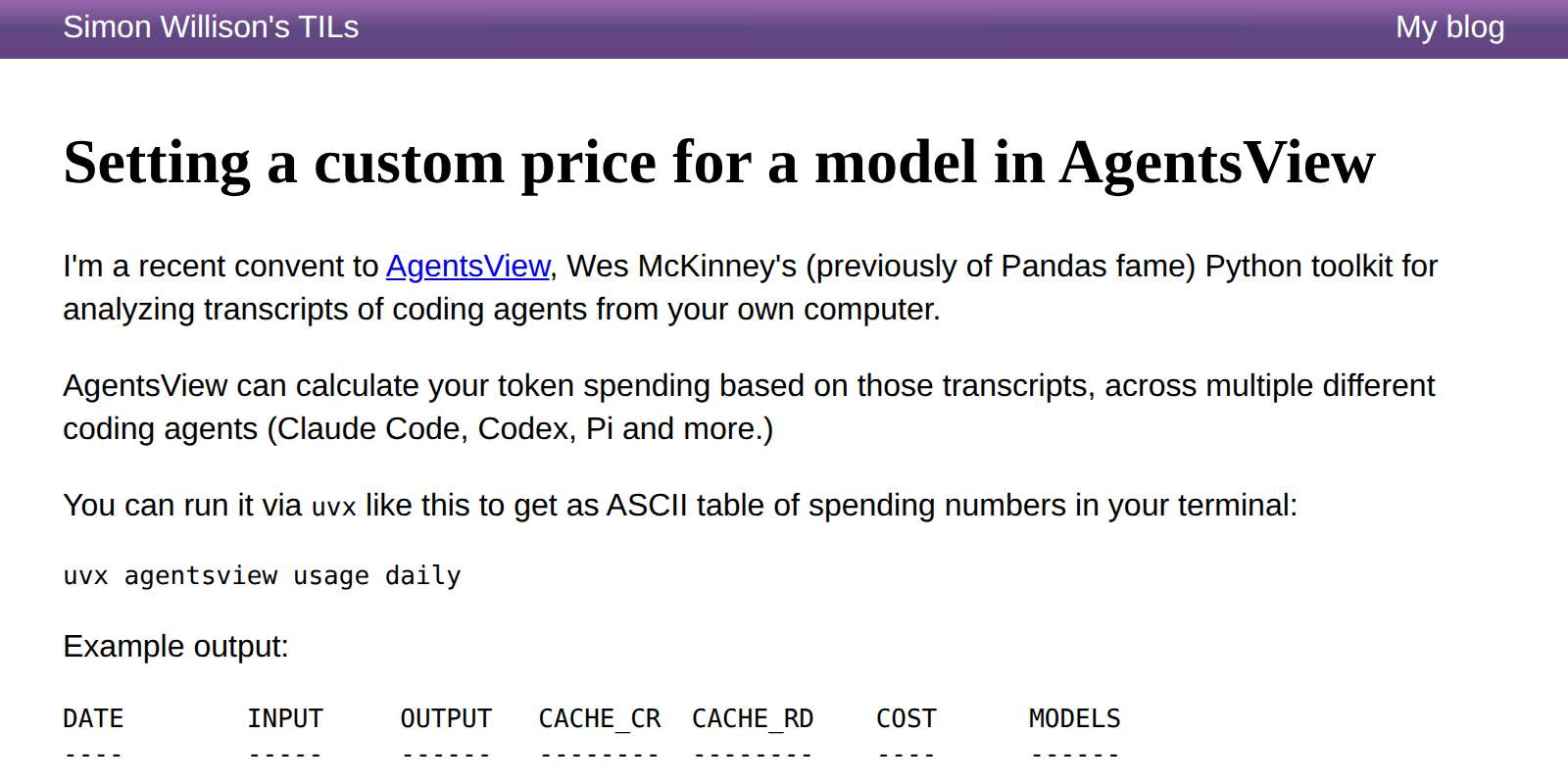
I've been really enjoying AgentsView by Wes McKinney as a tool for exploring my token usage across different coding agents running on my laptop.
Claude Fable 5 came out today and wasn't yet included in the pricing database AgentsView uses. I used Fable to reverse-engineer AgentsView and figured out this recipe for setting custom prices.
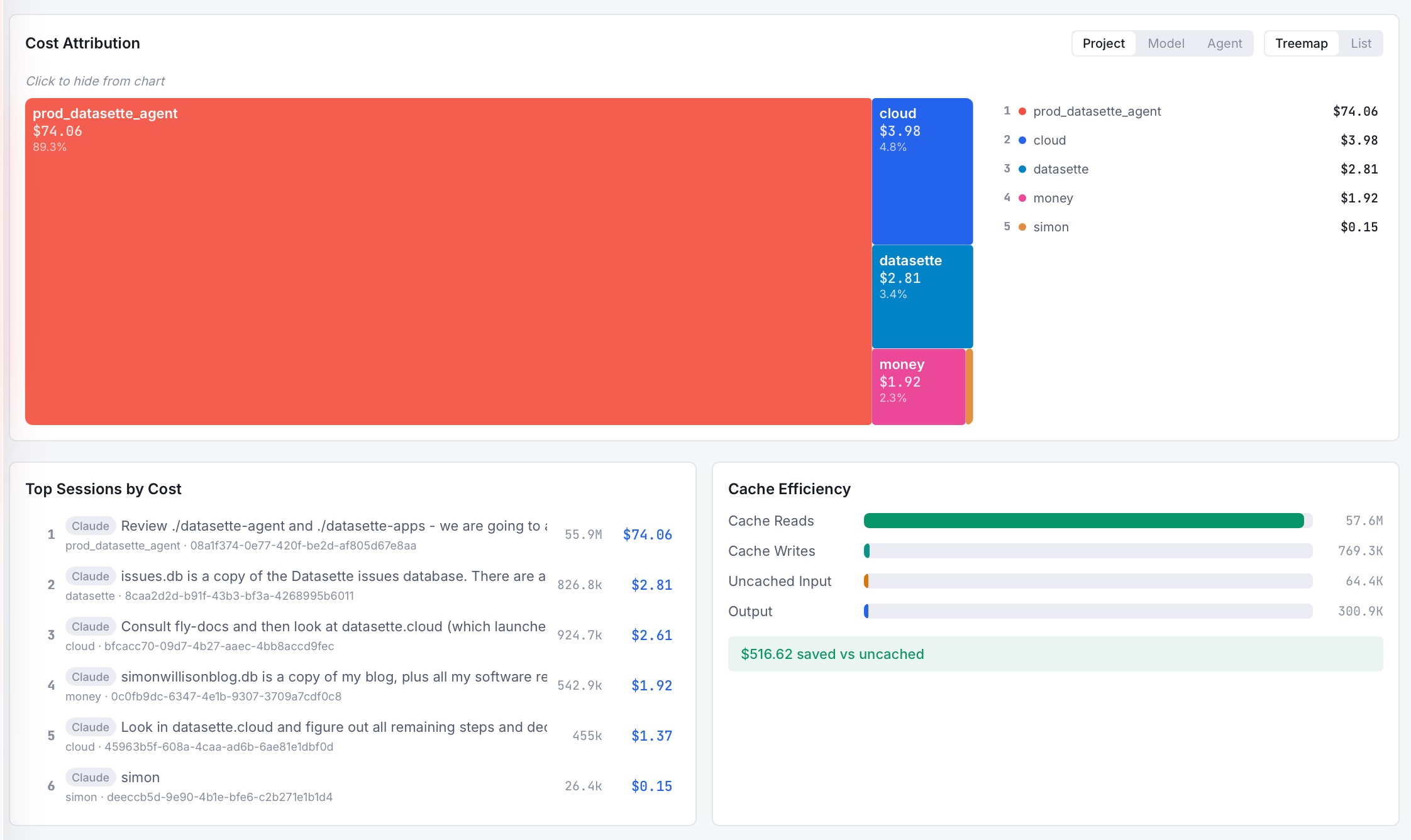
Here's my Claude Fable 5 usage for today so far, plotted by AgentsView as a treemap across my different local projects:
I feel a lot of things changing as working software increasingly comes out on a tap. The Jevon's paradox kicks in and I feel my own demand for software growing substantially. You can ask for anything - explainers, visualizers, dashboards, bespoke single-use apps (e.g. a full wandb that is hyper-specific just for your project), you can 10X your test suite, auto-optimize code, run giant research projects with custom HTML for the results, anything! "Free your mind" (Matrix ref).
— Andrej Karpathy, on Claude Fable 5
Behind the Scenes Hardening Firefox with Claude Mythos Preview (via) Fascinating, in-depth details on how Mozilla used their access to the Claude Mythos preview to locate and then fix hundreds of vulnerabilities in Firefox:
Suddenly, the bugs are very good
Just a few months ago, AI-generated security bug reports to open source projects were mostly known for being unwanted slop. Dealing with reports that look plausibly correct but are wrong imposes an asymmetric cost on project maintainers: it’s cheap and easy to prompt an LLM to find a “problem” in code, but slow and expensive to respond to it.
It is difficult to overstate how much this dynamic changed for us over a few short months. This was due to a combination of two main factors. First, the models got a lot more capable. Second, we dramatically improved our techniques for harnessing these models — steering them, scaling them, and stacking them to generate large amounts of signal and filter out the noise.
They include some detailed bug descriptions too, including a 20-year old XSLT bug and a 15-year-old bug in the <legend> element.
A lot of the attempts made by the harness were blocked by Firefox's existing defense-in-depth measures, which is reassuring.
Mozilla were fixing around 20-30 security bugs in Firefox per month through 2025. That jumped to 423 in April.
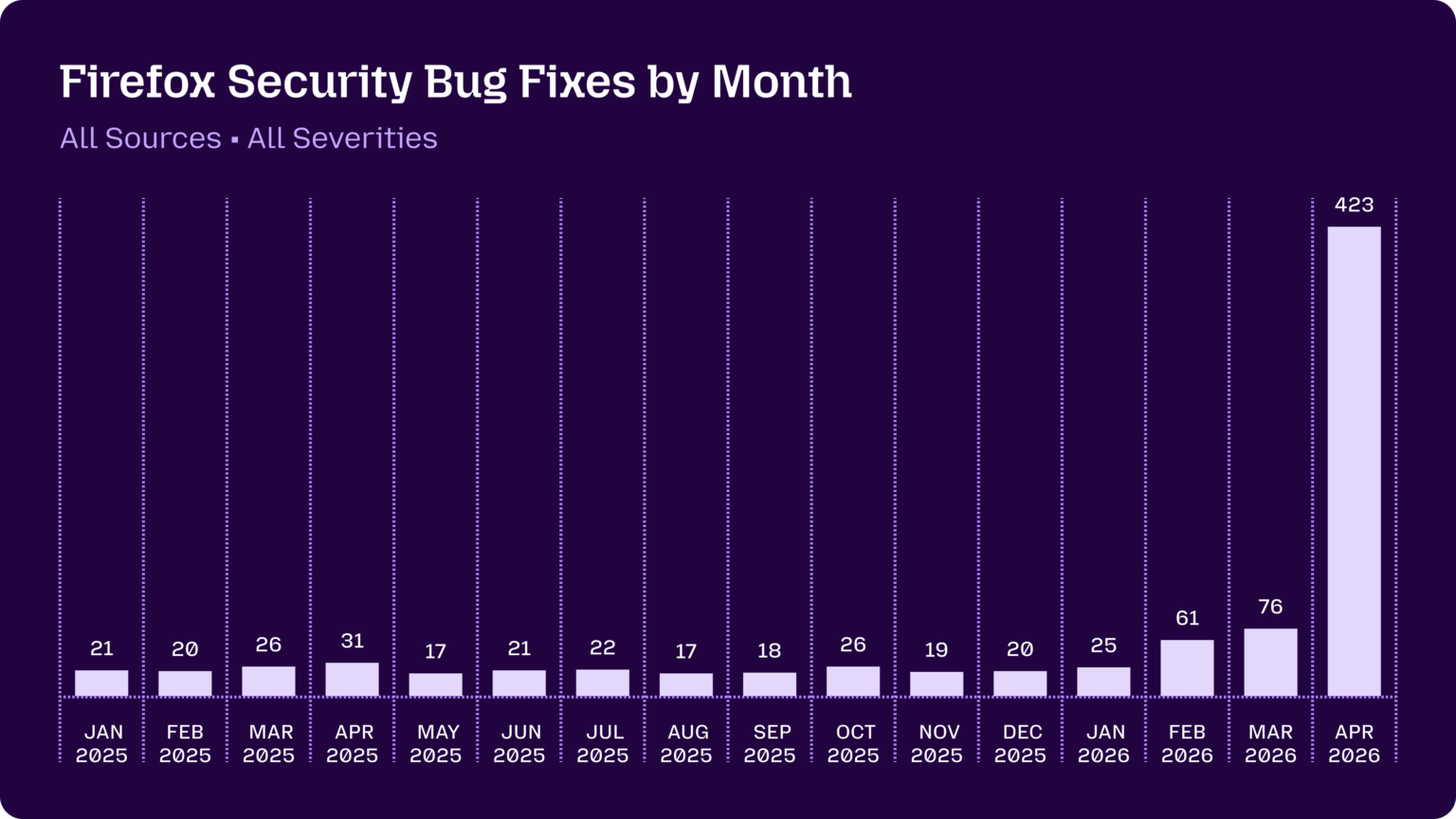
As part of our continued collaboration with Anthropic, we had the opportunity to apply an early version of Claude Mythos Preview to Firefox. This week’s release of Firefox 150 includes fixes for 271 vulnerabilities identified during this initial evaluation. [...]
Our experience is a hopeful one for teams who shake off the vertigo and get to work. You may need to reprioritize everything else to bring relentless and single-minded focus to the task, but there is light at the end of the tunnel. We are extremely proud of how our team rose to meet this challenge, and others will too. Our work isn’t finished, but we’ve turned the corner and can glimpse a future much better than just keeping up. Defenders finally have a chance to win, decisively.
— Bobby Holley, CTO, Firefox
Cybersecurity Looks Like Proof of Work Now. The UK's AI Safety Institute recently published Our evaluation of Claude Mythos Preview’s cyber capabilities, their own independent analysis of Claude Mythos which backs up Anthropic's claims that it is exceptionally effective at identifying security vulnerabilities.
Drew Breunig notes that AISI's report shows that the more tokens (and hence money) they spent the better the result they got, which leads to a strong economic incentive to spend as much as possible on security reviews:
If Mythos continues to find exploits so long as you keep throwing money at it, security is reduced to a brutally simple equation: to harden a system you need to spend more tokens discovering exploits than attackers will spend exploiting them.
An interesting result of this is that open source libraries become more valuable, since the tokens spent securing them can be shared across all of their users. This directly counters the idea that the low cost of vibe-coding up a replacement for an open source library makes those open source projects less attractive.
Anthropic’s Project Glasswing—restricting Claude Mythos to security researchers—sounds necessary to me
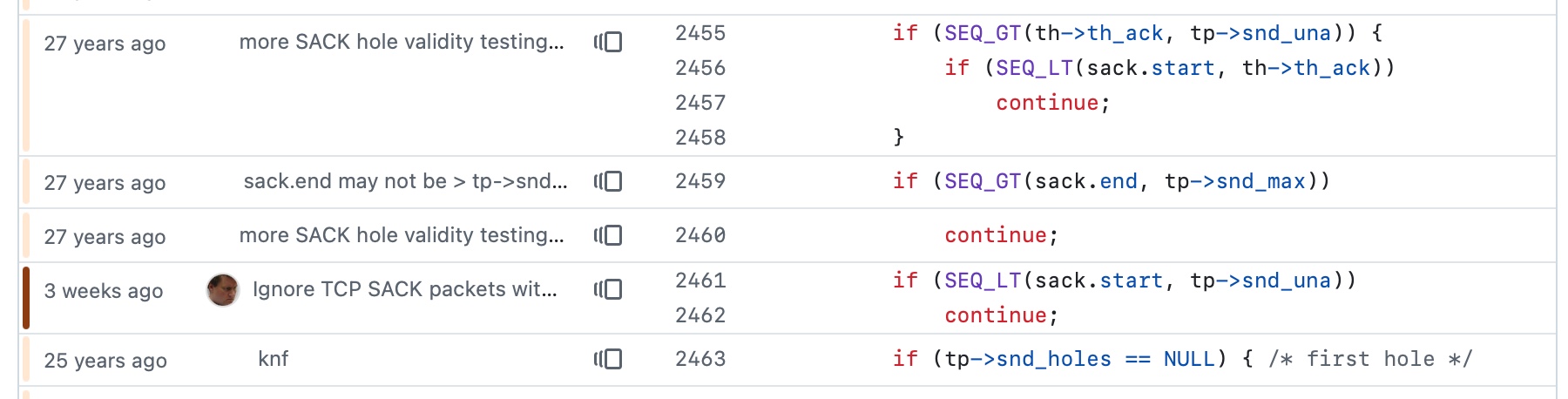
Anthropic didn’t release their latest model, Claude Mythos (system card PDF), today. They have instead made it available to a very restricted set of preview partners under their newly announced Project Glasswing.
[... 1,296 words]