4 posts tagged “mdn”
MDN, originally the Mozilla Developer Network, now MDN Web Docs to reflect its cross-browser nature.
2026
simonw/browser-compat-db. Inspired by Mozilla's new MDN MCP service - source code here - I decided to try converting their comprehensive mdn/browser-compat-data repository full of browser compatibility data into a SQLite database.
This new GitHub repo includes a Claude Code for web (Opus 4.8) generated script for doing that using sqlite-utils.
I wanted the resulting ~66MB SQLite database to be available via the GitHub CDN with open CORS headers. GitHub releases don't have those, but any file stored in a regular GitHub repository does - so I had Codex Desktop (GPT-5.5) build a GitHub Actions workflow that builds the database and then force-pushes it to a db "orphan" branch.
You can download the resulting database from here, and since it's hosted with open CORS headers you can also explore it with Datasette Lite.
2024
MDN Browser Support Timelines. I complained on Hacker News today that I wished the MDN browser compatibility ables - like this one for the Web Locks API - included an indication as to when each browser was released rather than just the browser numbers.
It turns out they do! If you click on each browser version in turn you can see an expanded area showing the browser release date:
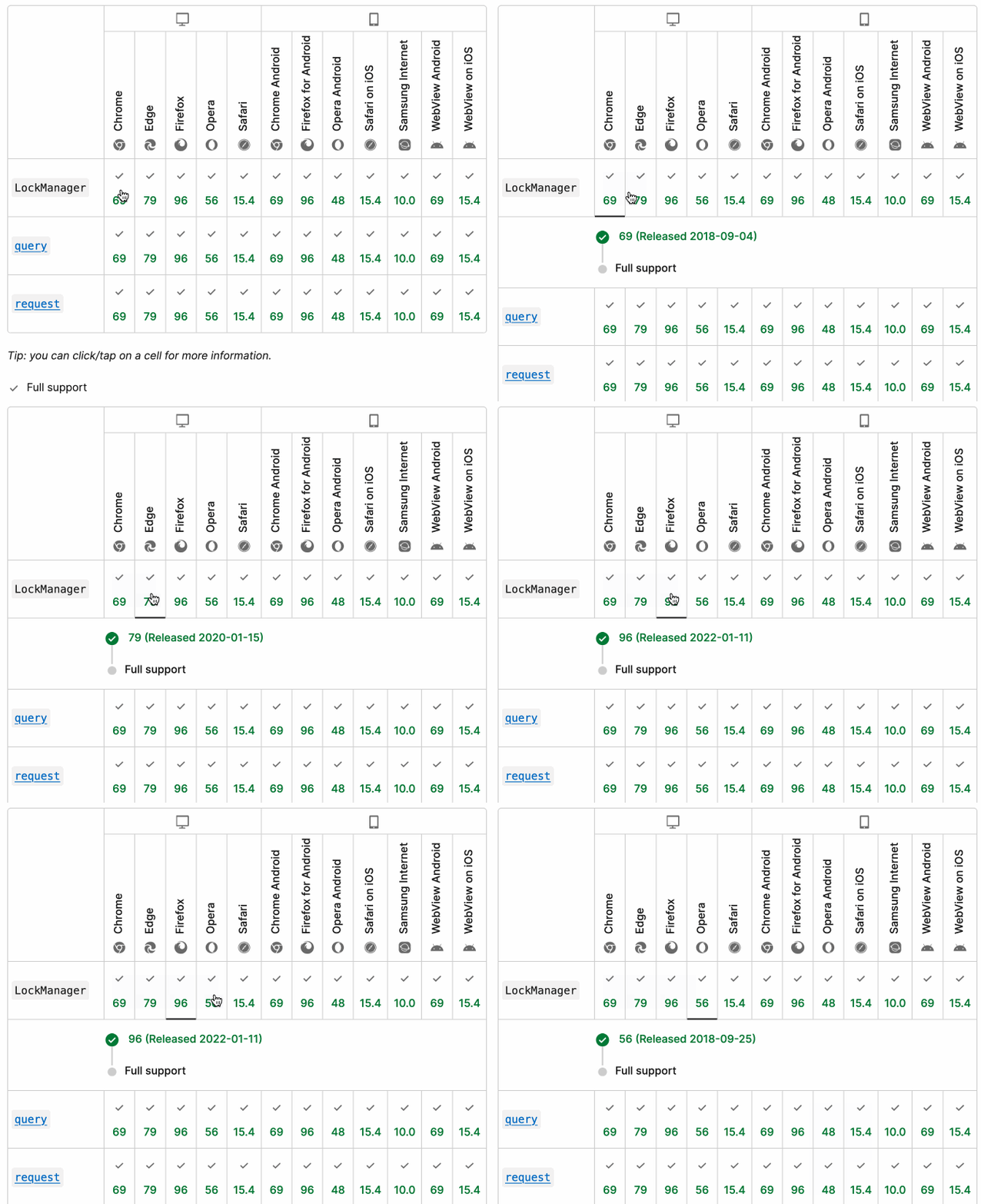
There's even an inline help tip telling you about the feature, which I've been studiously ignoring for years.
I want to see all the information at once without having to click through each browser. I had a poke around in the Firefox network tab and found https://bcd.developer.mozilla.org/bcd/api/v0/current/api.Lock.json - a JSON document containing browser support details (with release dates) for that API... and it was served using access-control-allow-origin: * which means I can hit it from my own little client-side applications.
I decided to build something with an autocomplete drop-down interface for selecting the API. That meant I'd need a list of all of the available APIs, and I used GitHub code search to find that in the mdn/browser-compat-data repository, in the api/ directory.
I needed the list of files in that directory for my autocomplete. Since there are just over 1,000 of those the regular GitHub contents API won't return them all, so I switched to the tree API instead.
Here's the finished tool - source code here:
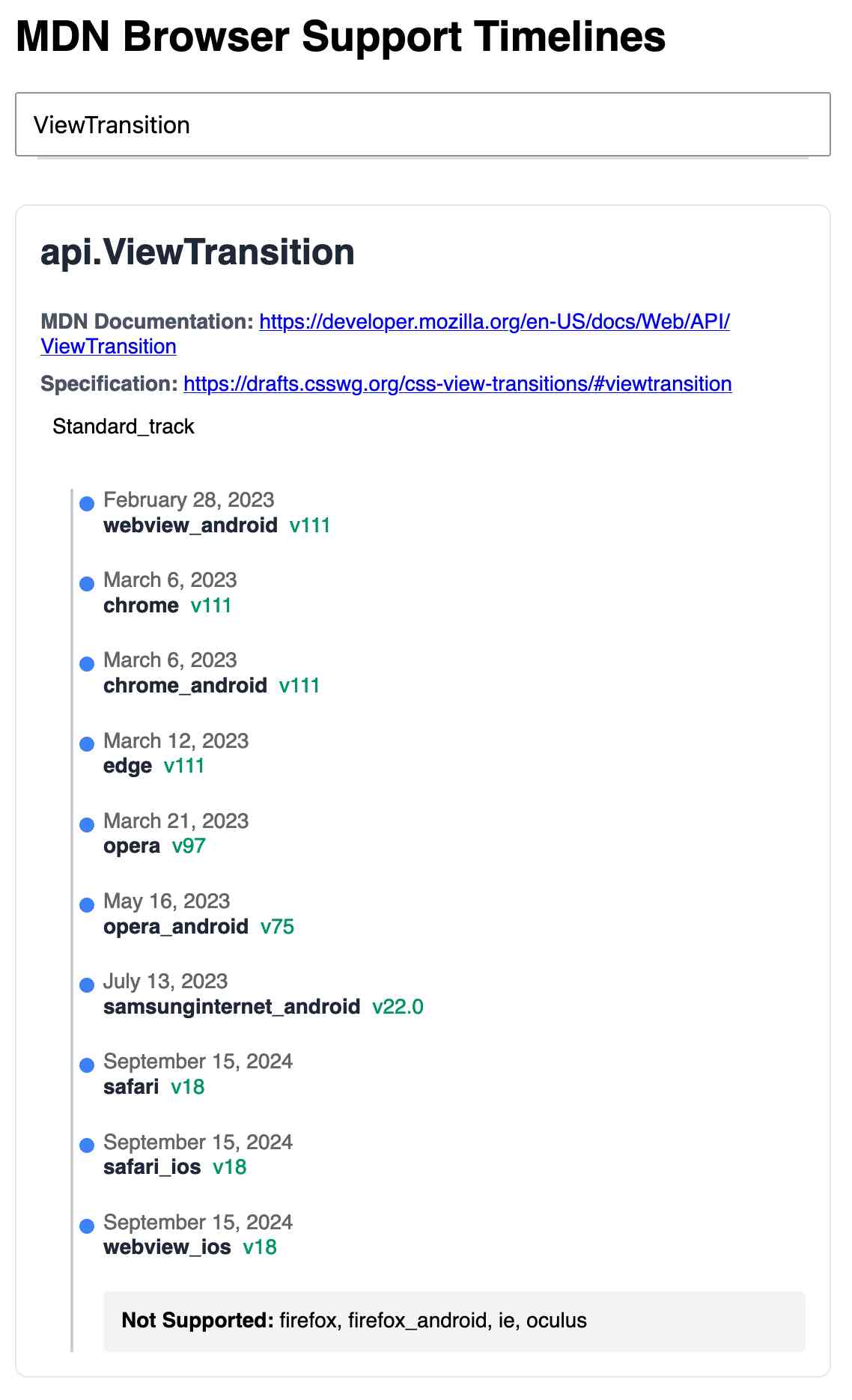
95% of the code was written by LLMs, but I did a whole lot of assembly and iterating to get it to the finished state. Three of the transcripts for that:
- Web Locks API Browser Support Timeline in which I paste in the original API JSON and ask it to come up with a timeline visualization for it.
- Enhancing API Feature Display with URL Hash where I dumped in a more complex JSON example to get it to show multiple APIs on the same page, and also had it add
#fragmentbookmarking to the tool - Fetch GitHub API Data Hierarchy where I got it to write me an async JavaScript function for fetching a directory listing from that tree API.
2021
MDN: Subdomain takeovers (via) MDN have a page about subdomain takeover attacks that focuses more on CNAME records: if you have a CNAME pointing to a common delegated hosting provider but haven’t yet provisioned your virtual host there, someone else might beat you to it and use it for an XSS attack.
“Preventing subdomain takeovers is a matter of order of operations in lifecycle management for virtual hosts and DNS.”
I now understand why Google Cloud make your “prove” your ownership of a domain before they’ll let you configure it to host e.g. a Cloud Run instance.